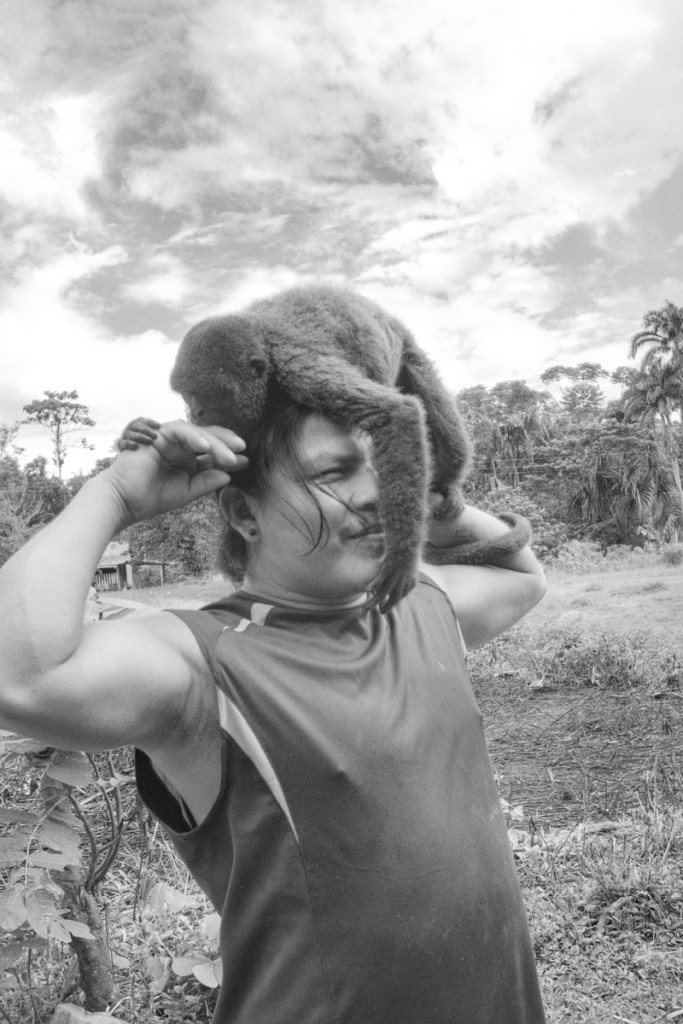
.. or how I ended up carrying a dead monkey on my shoulder in the middle of the rain forest.
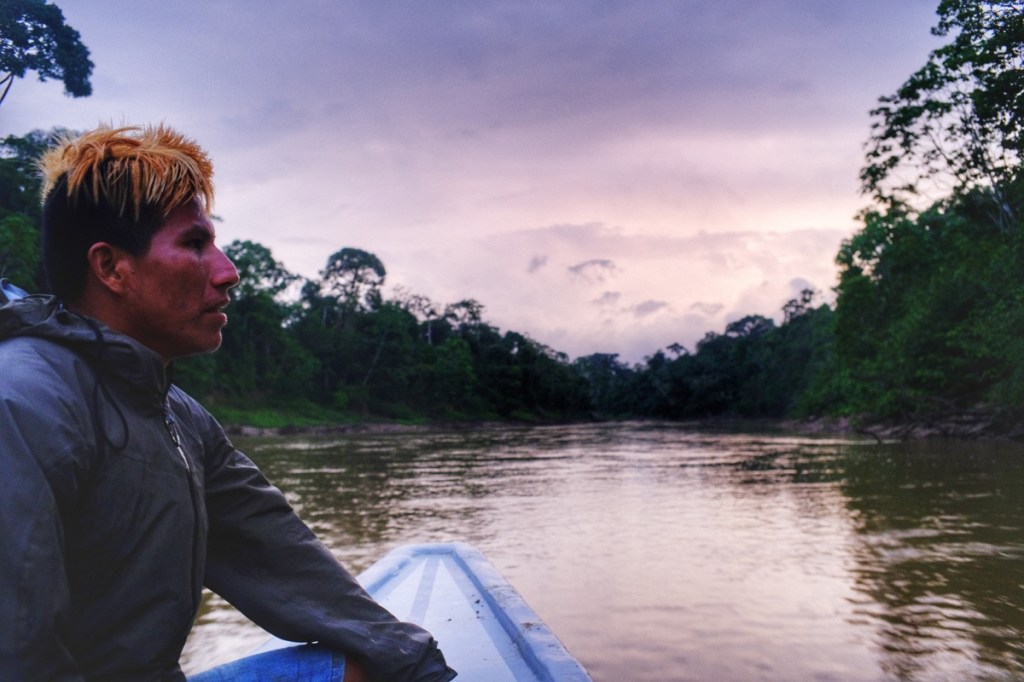
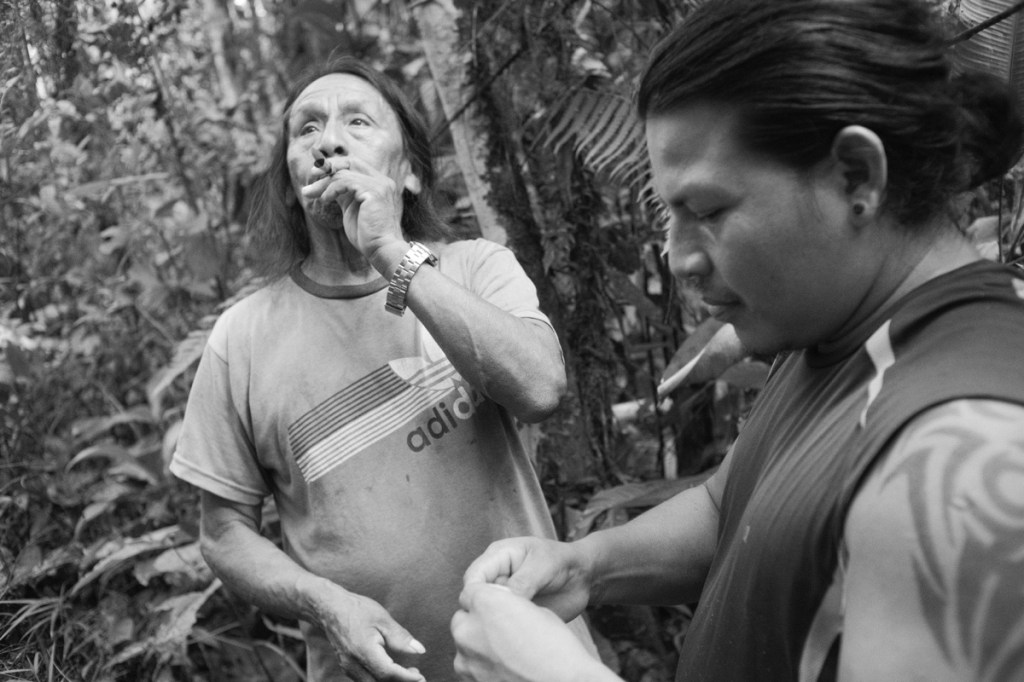
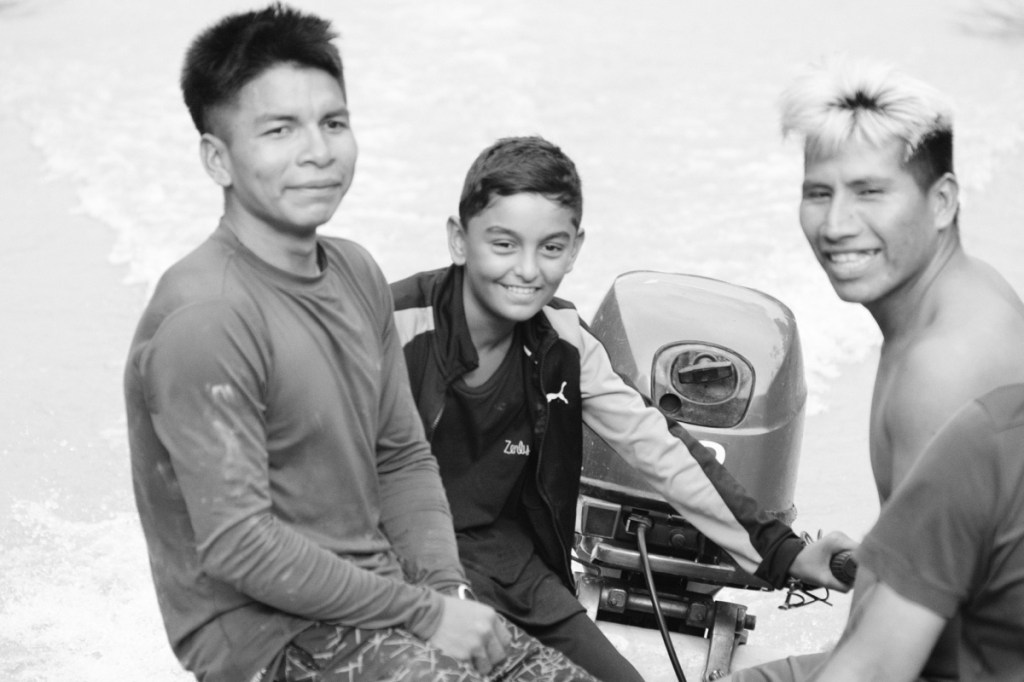
And so we finally met Wareka, our guide with whom I had been exchanging WhatsApp messages. He’s a short, strong, young man in his early thirties with a friendly smile. He comes with « Mr Paharito » (named after his ability to imitate birds) who speaks some english, to help as a translator, and two cousins; Yatey and Raoul. They’ll be our escorts into the jungle.
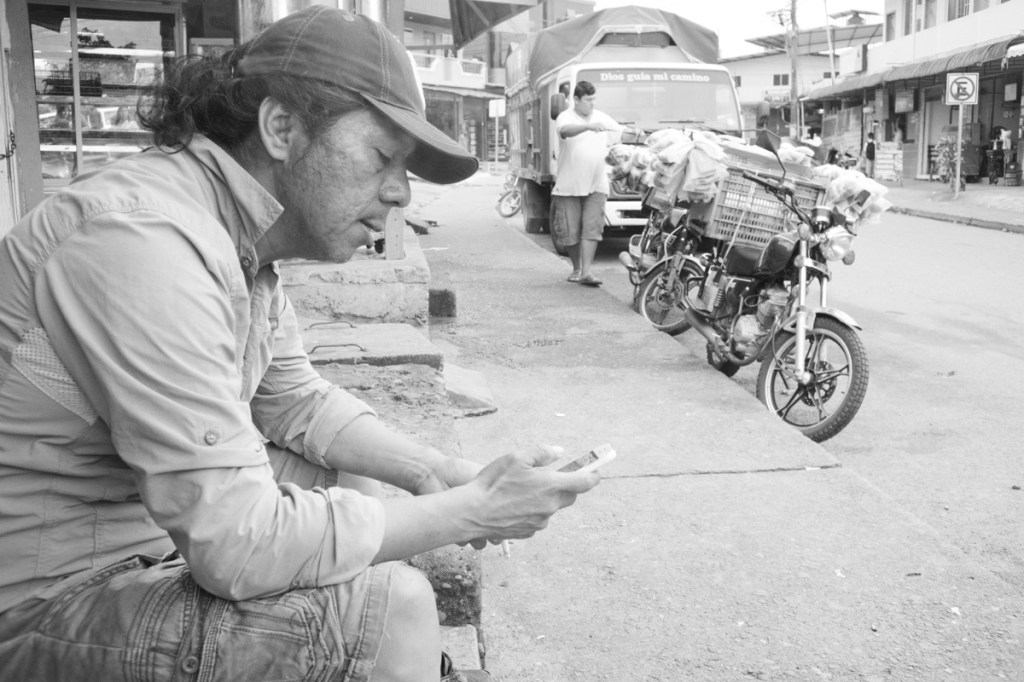
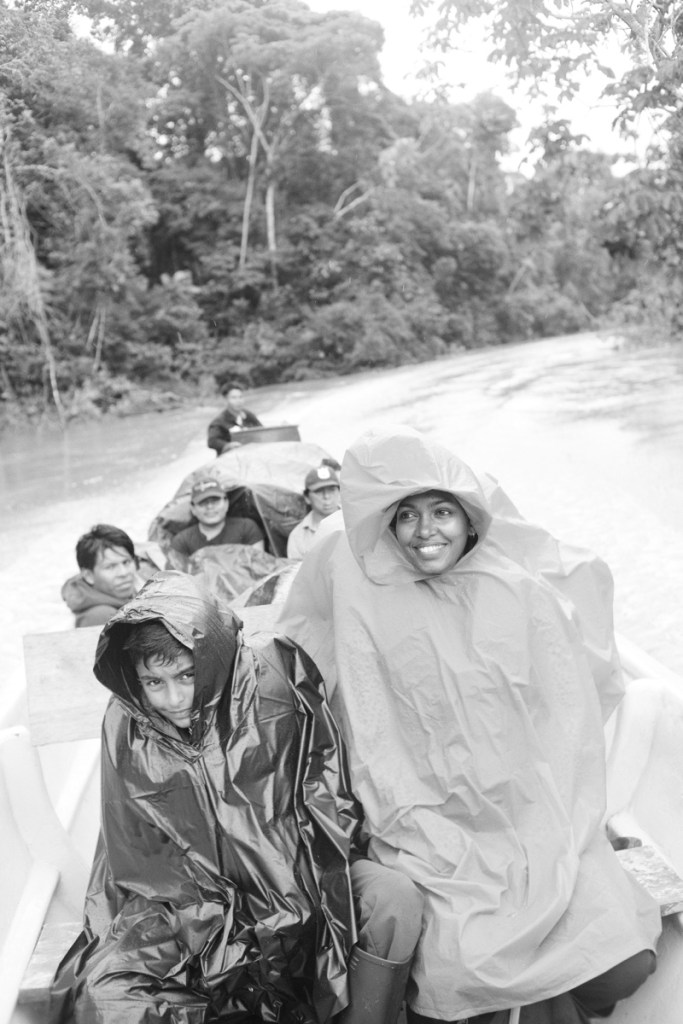
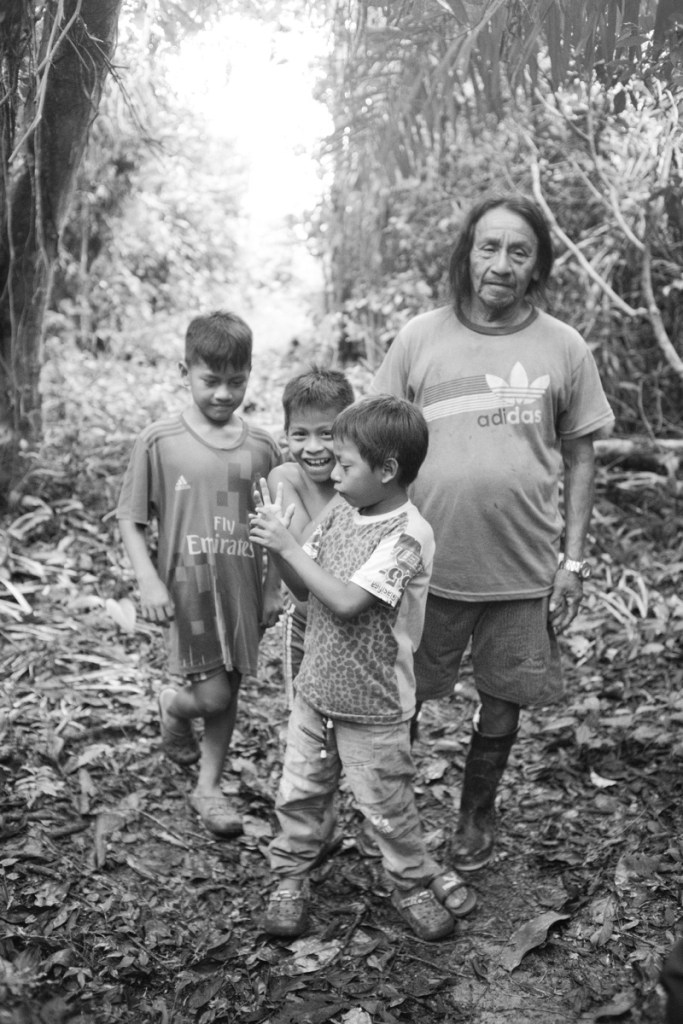
Wareka and his cousins are from the Waorani tribe who live deep in the amazon forest and have been « contact people » for some 60 years now. Tomorrow they will take us to their family and show us their customs. But first we need gum boots! They take us to a store to buy rain ponchos and a pair of gum boots for Leo; with this we’re ready for the adventure.
In the evening, we all meet for a few beers, to break the ice and learn a few words of waorani.
At thirty, Wareka has 8 children, from 3 wifes, and started his own tourism agency. (Makes me wonder what I’ve done with my life 😂)
In the discussion, they explain something about a guy called Taga, who split from the tribe because he refused to be « contact people ». Taga and his followers, the « non contact people », have been in conflict with the waoranis. We’ll be passing through their territory, and if they see us, they kill us! … But don’t worry!
I’m not sure if they pulled this up to spice up their gig, but I must admit it made us all a bit nervous !
The last night in town was disturbed by a loud storm with heavy rain, and dreams of Tagas attacking our boat!
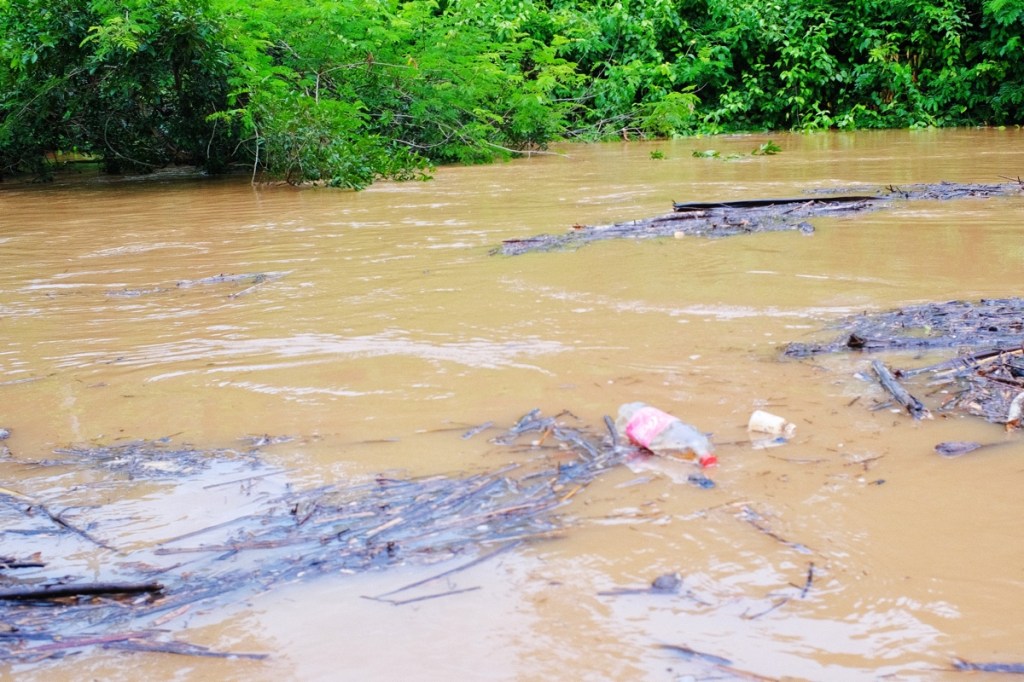
At 5:30am, it’s time to load our bags in the pickup truck and go. We cross the Napo river and head towards the Yasuni national park. For a couple of hours we follow an oil pipeline alimented by a series of extraction sites. The Ecuador jungle has been invaded -and heavily polluted- by American oil companies. (Chevron owes 80B$ to Ecuador for a case of pollution but they won’t pay a dime!)
We reach the San Francisco hotel, by the Shiripuni river, where a breakfast is awaiting us, then walk to the river; it’s 10am and the rest of the trip is by canoe.
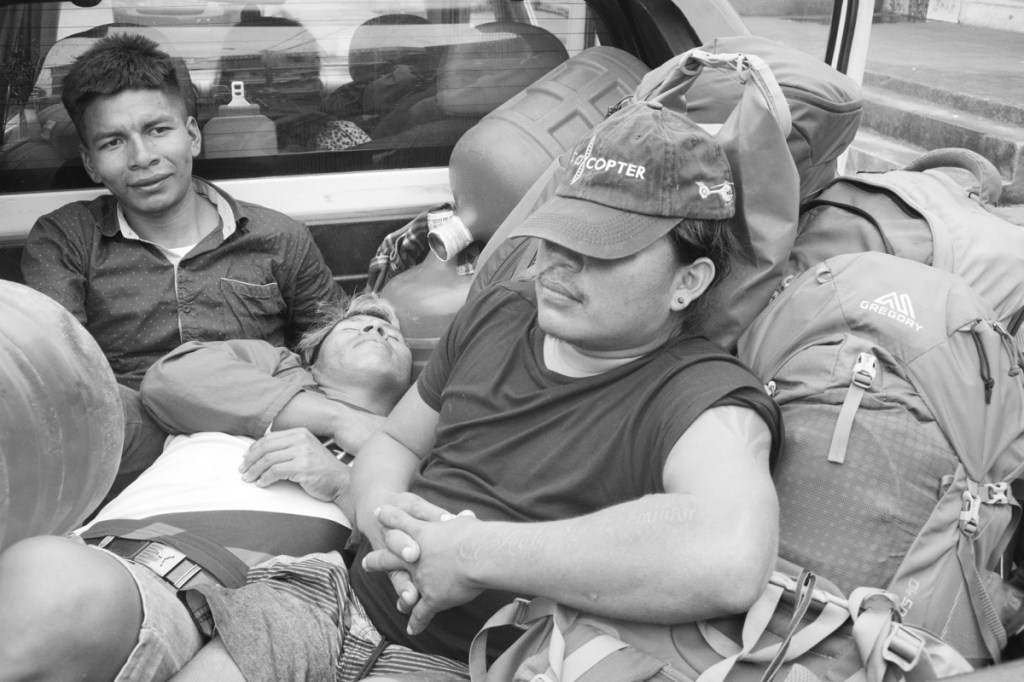
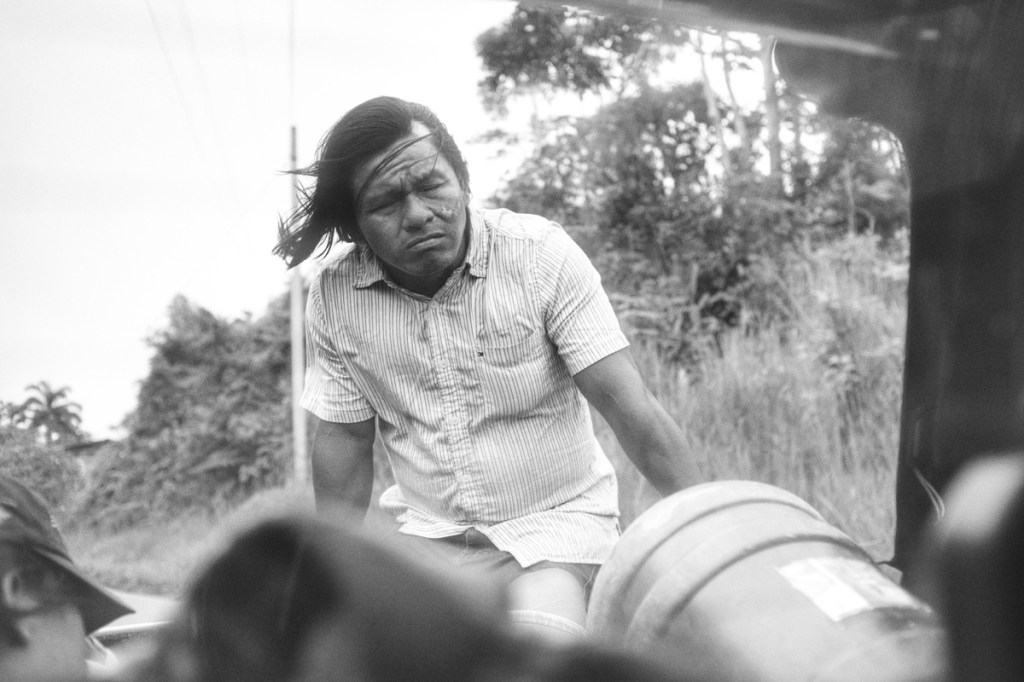
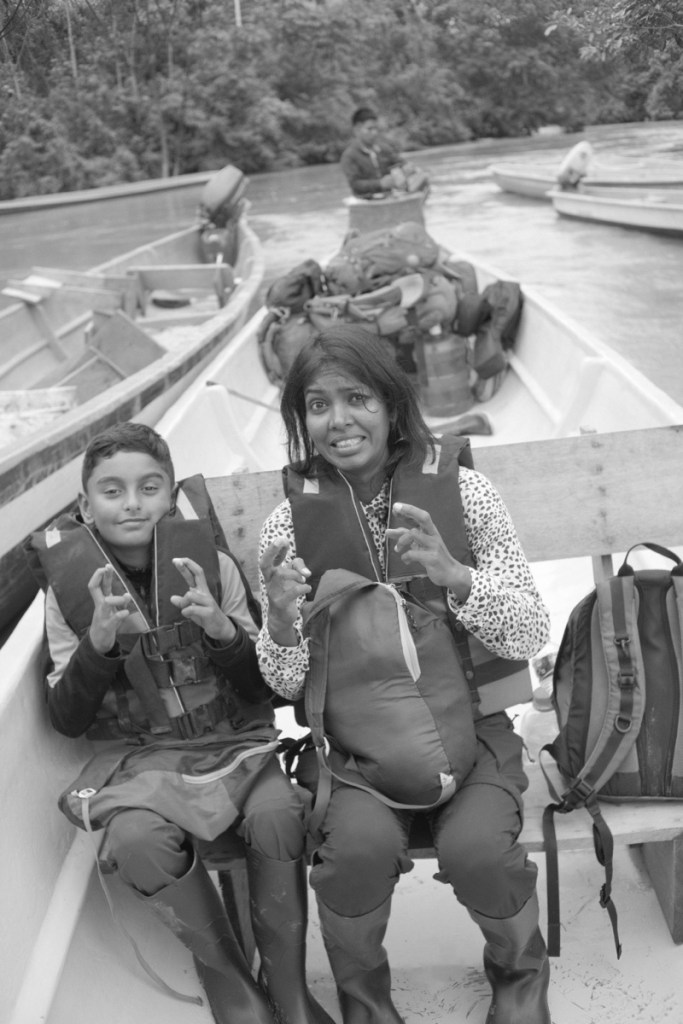
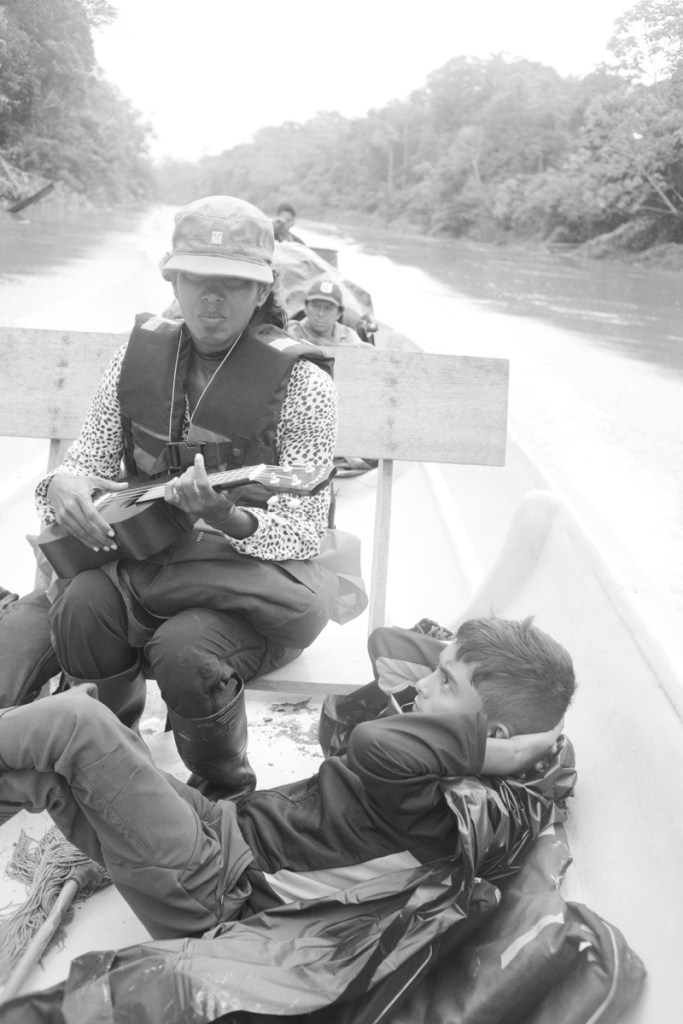
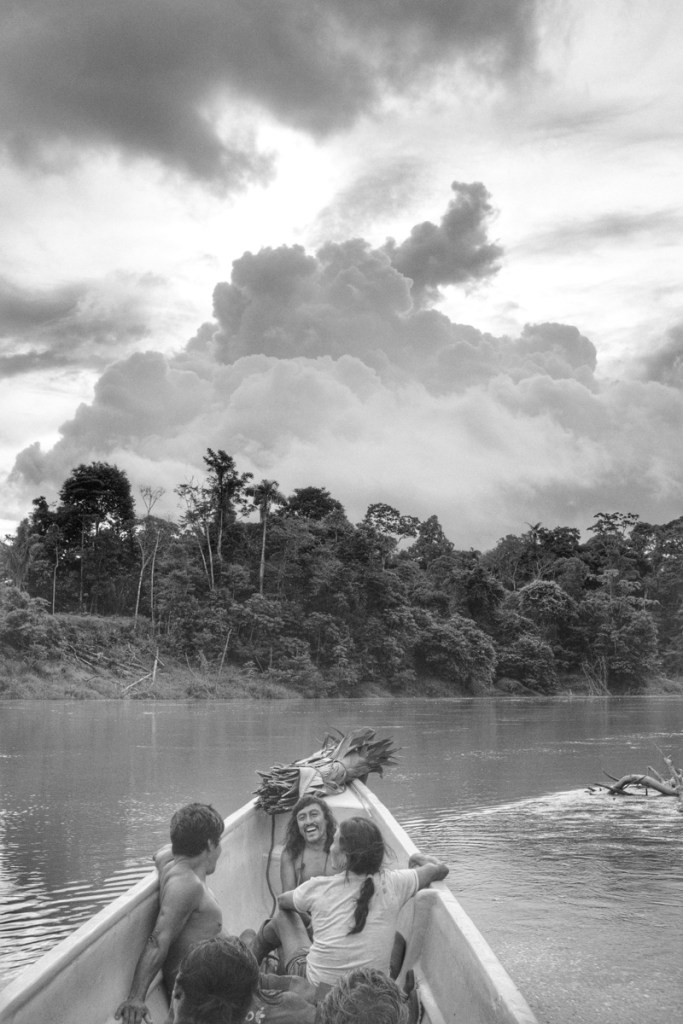
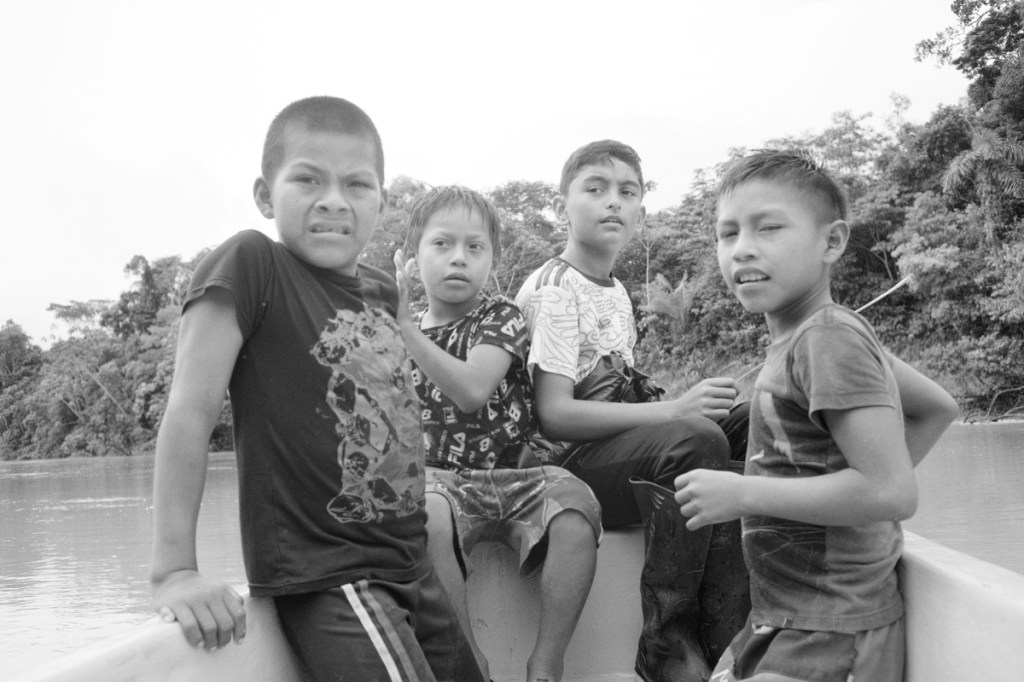
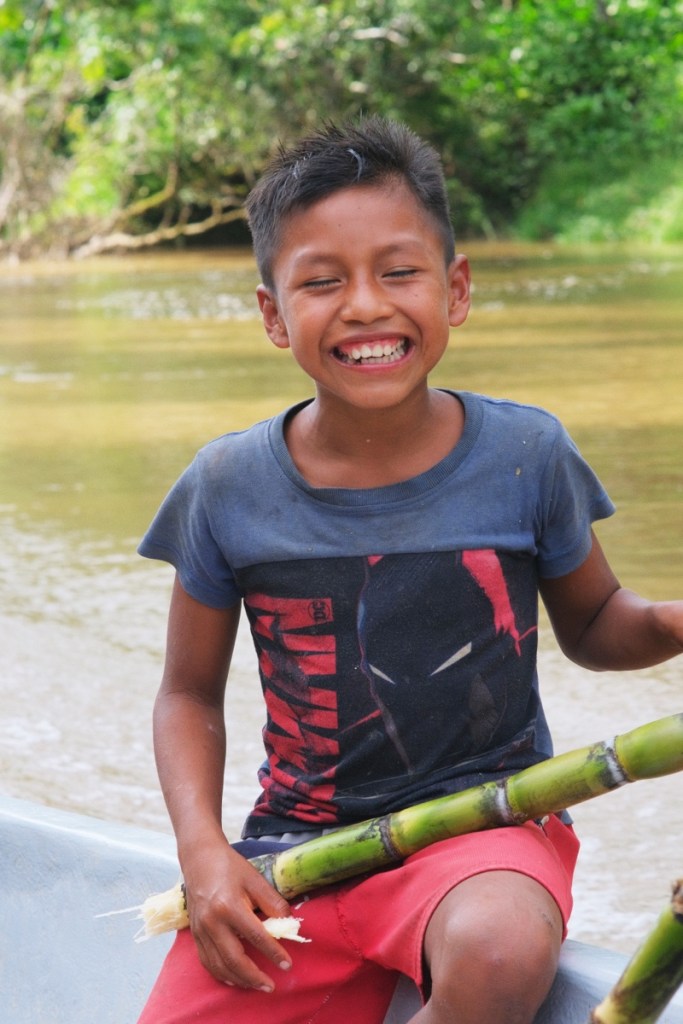
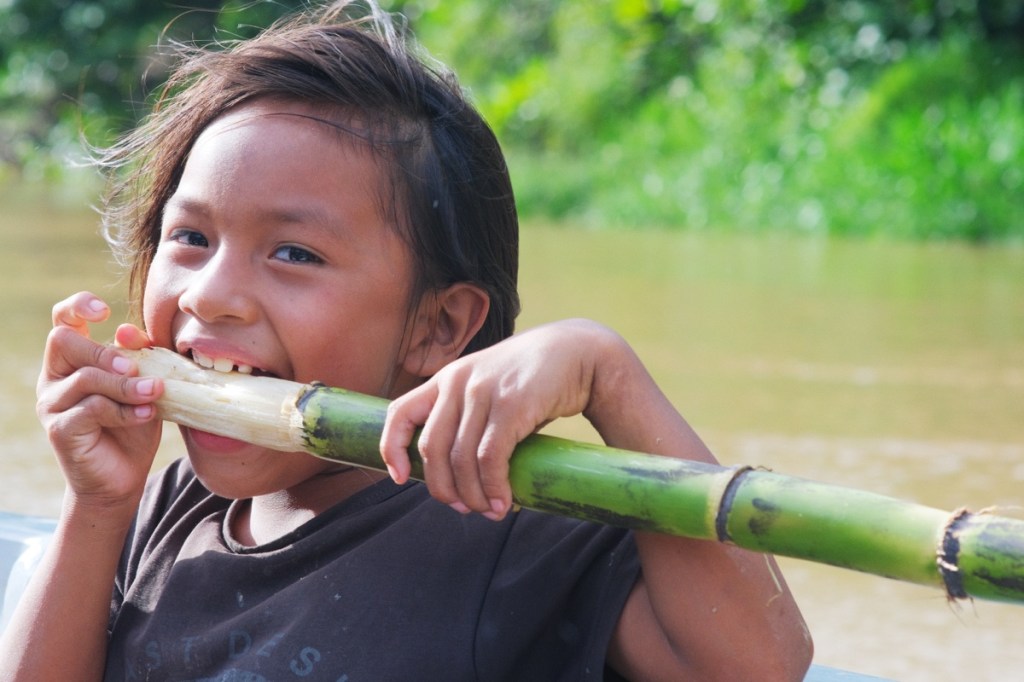
For hours we keep our eyes wide open; admiring the jungle, looking for birds and monkeys and crocodiles… and potential attackers! We’re sitting on a small wooden bench, on the floor or on the baril of gasoline. Yatey drives the boat, standing by the engine, and Raoul sits on the front to help navigate. The others quickly fall asleep, they know it’s a long ride. For us it’s the adventure of a lifetime, for them, it’s just a ride back to the village!
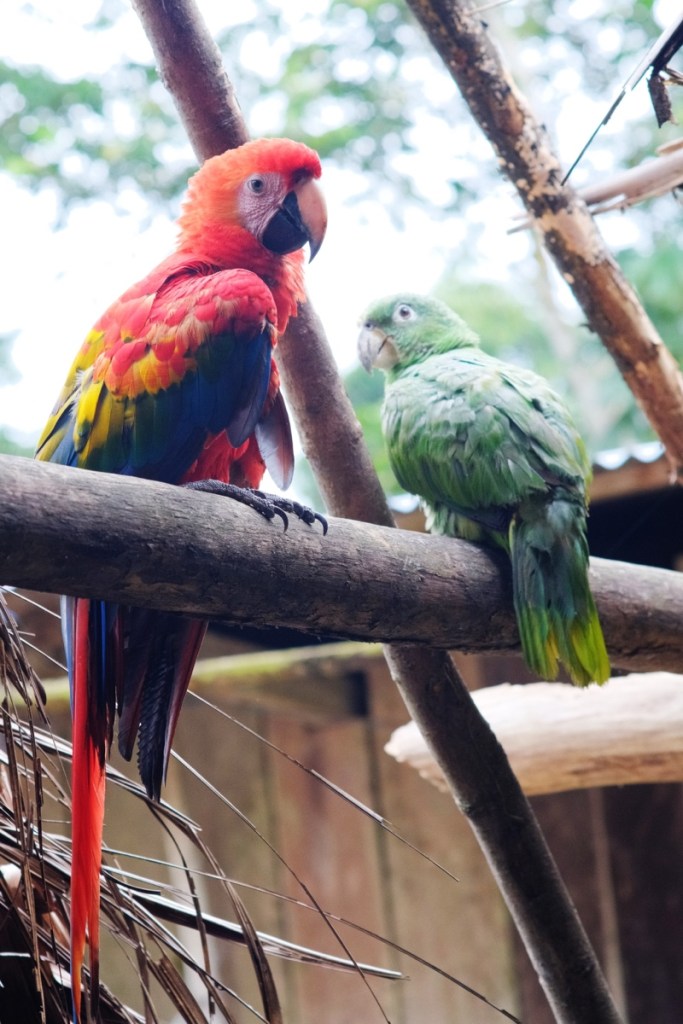
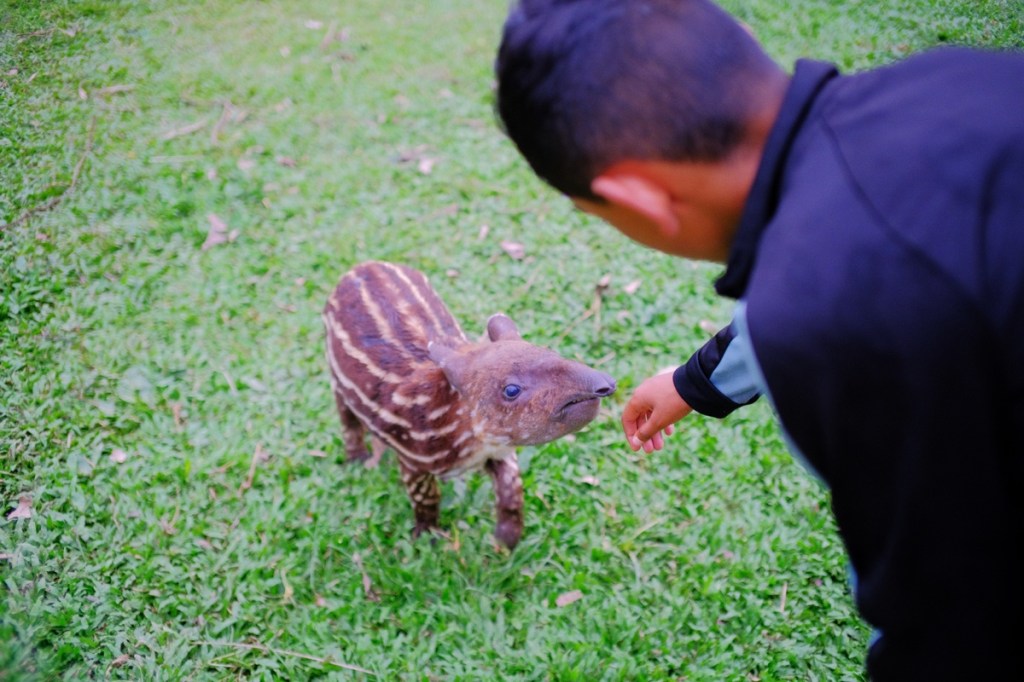
We manage to spot big parrots of various kinds, often flying in pairs, and giant herons flying close to us. We pass by a big tapir swimming, that ducks in the water and escapes to the shore. After a few hours we also start dozing off. Eventually we even pull out the guitar and ukulele to kill some time.
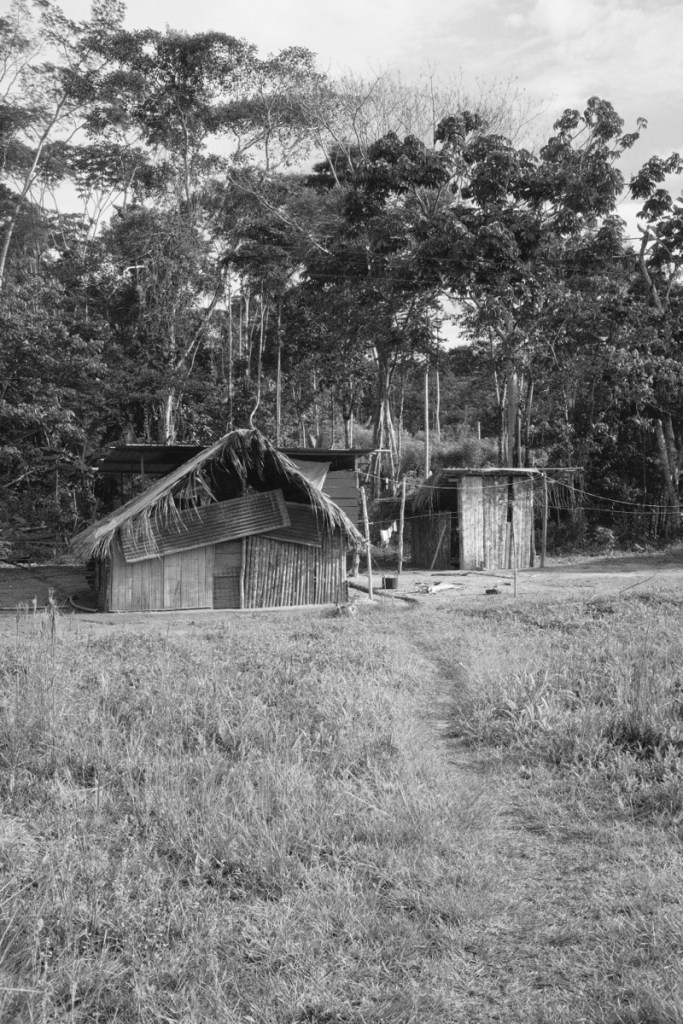
We make a short break at a first settlement where we meet one of Wareka’s wives and child, and pick up some people in the boat.
We reach around 6pm, just before nightfall and the rain, after 10 hours of navigating inside the jungle, towards the Peru border.
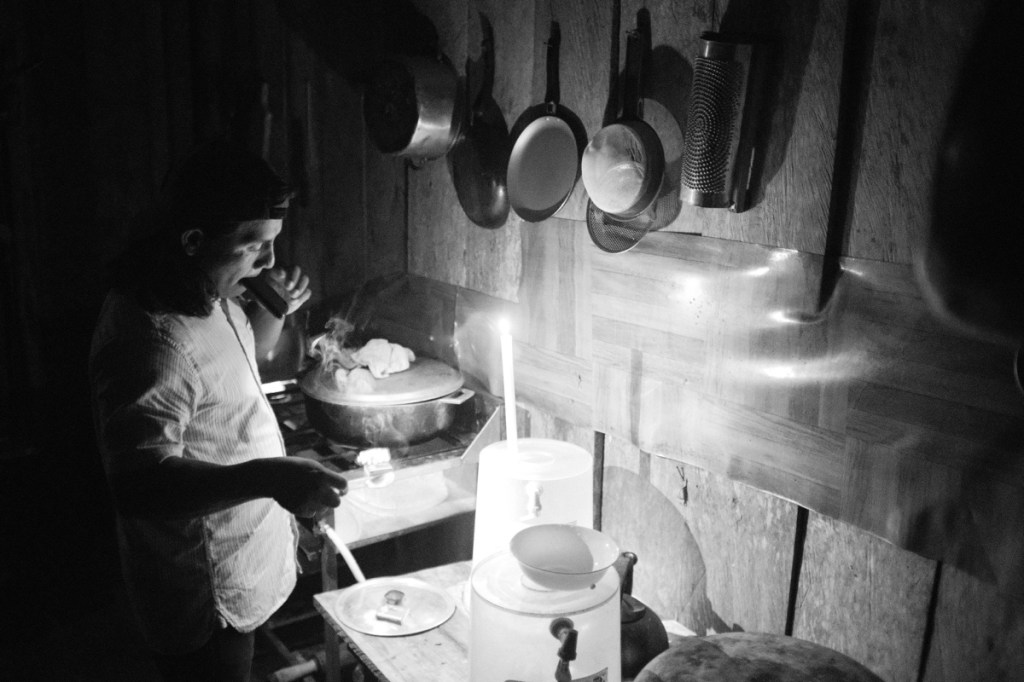
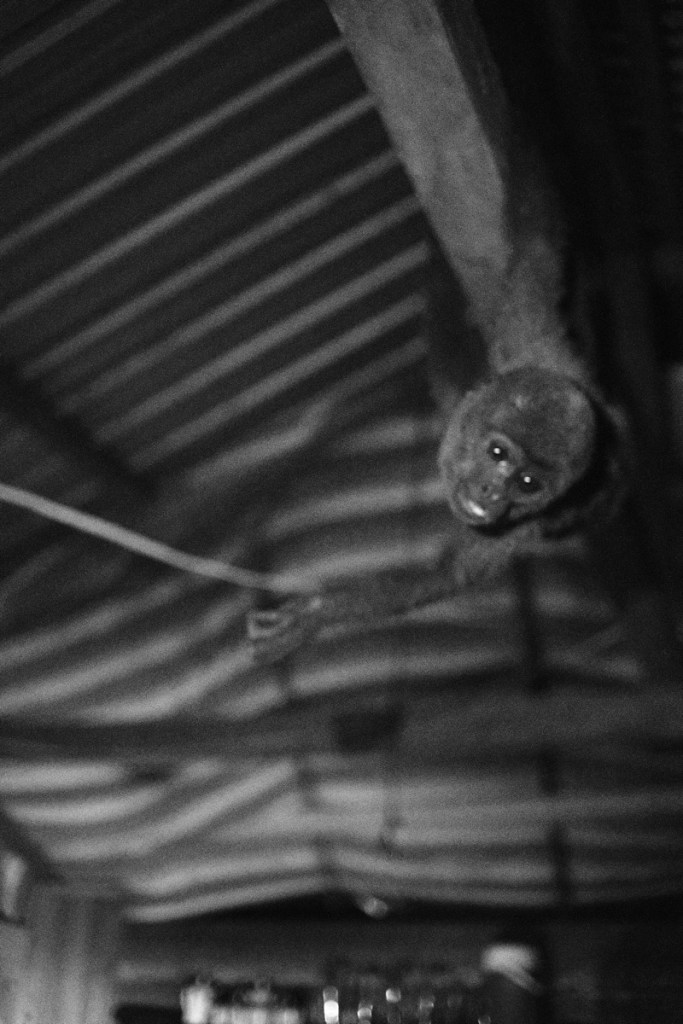
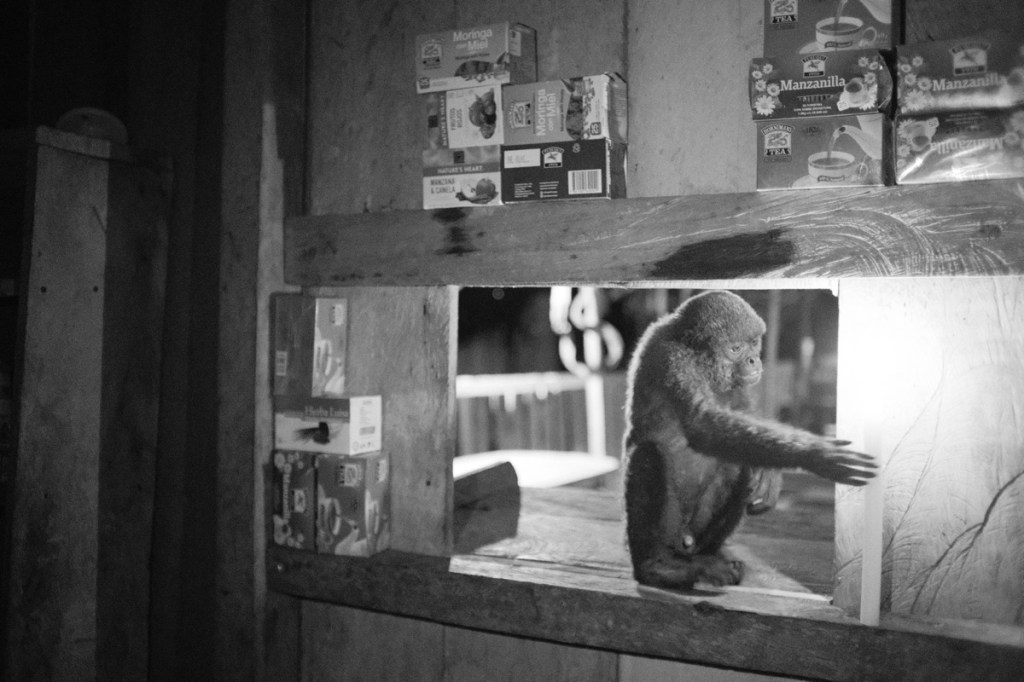
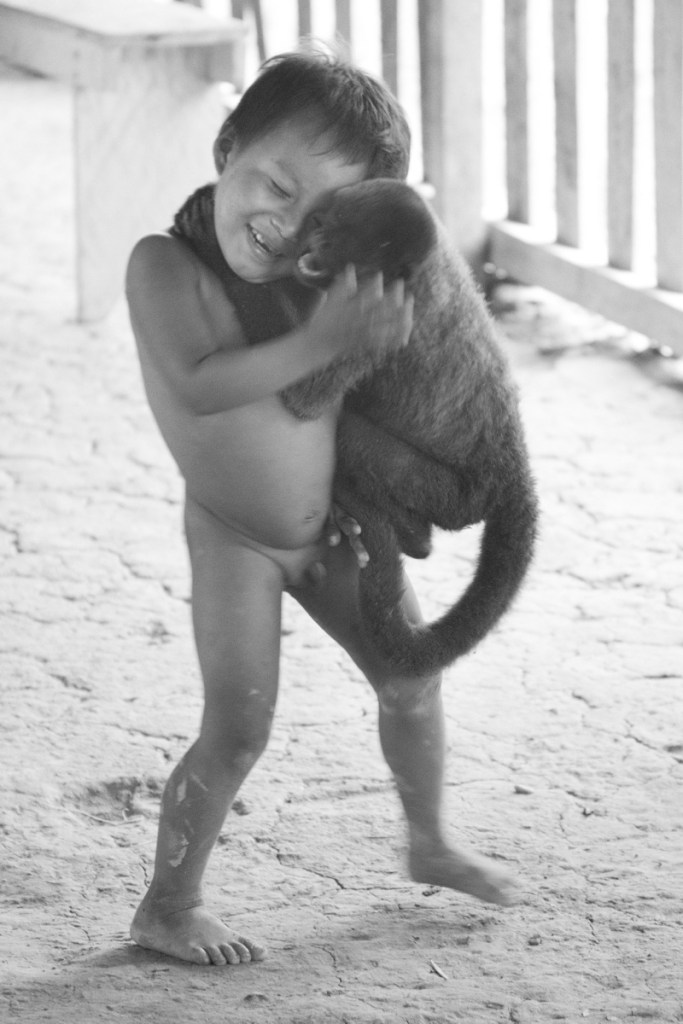
Already, Yate and Raoul start cooking the evening meal, with vegetables brought from Coca, while a young pet monkey jumps all around the kitchen and makes Leo nervous.
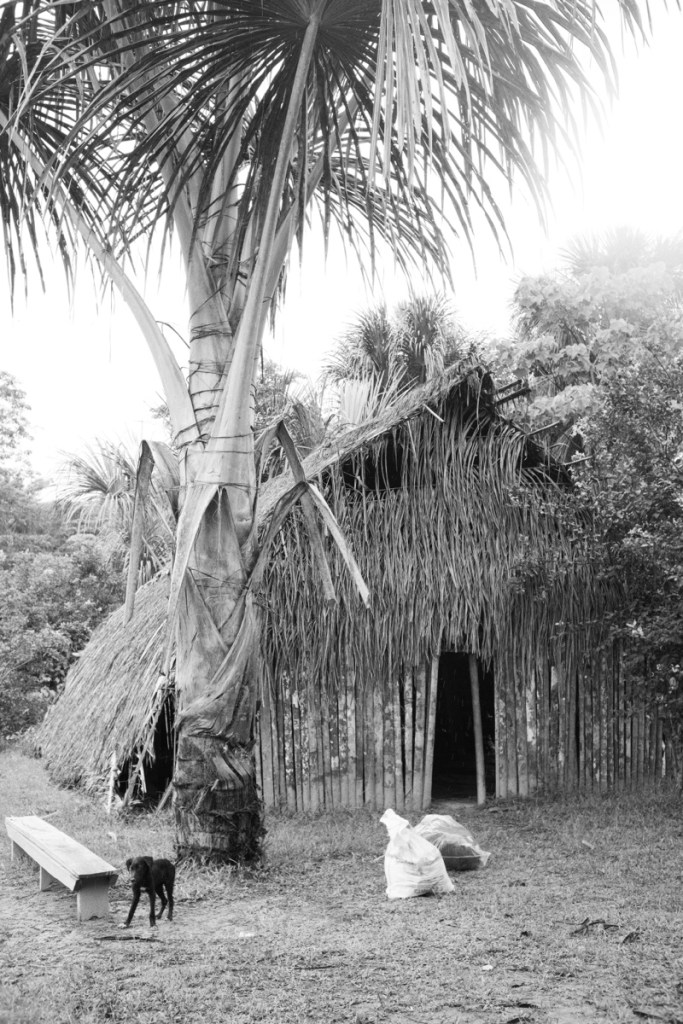
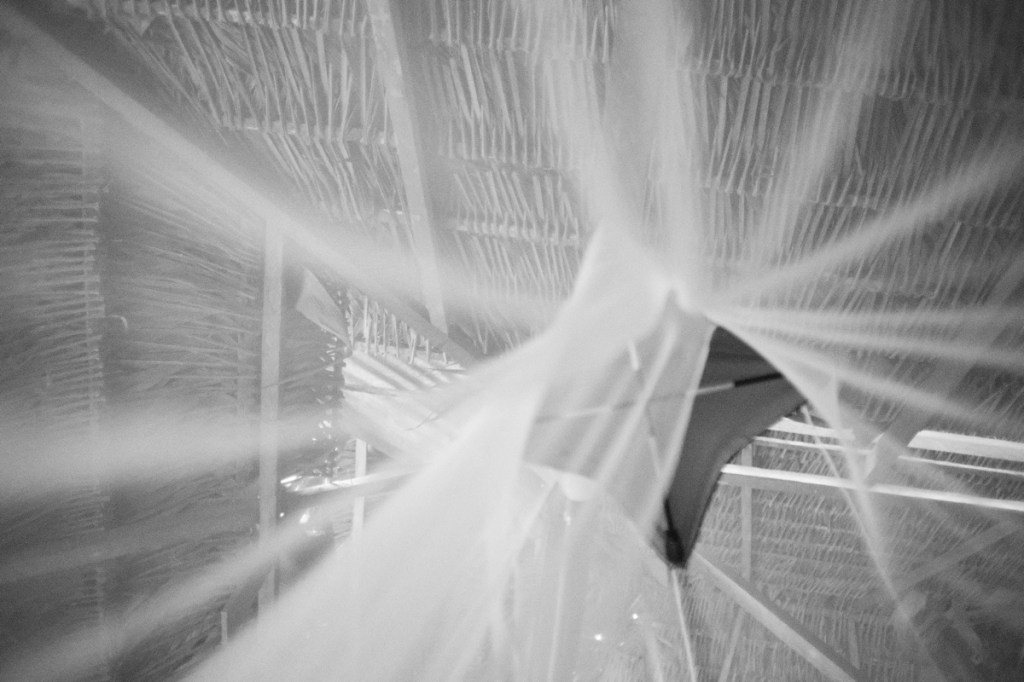
I was a bit anxious before leaving, but when we went to bed in our wooden cabin, it felt strangely familiar. The smell of humid wood, the nocturnal sounds of the jungle, the voices of the bats under the roof, the mosquito net above my head, reminded me of Iquitos in Peru, of Belem in Brazil, or even Chang Mai in Thailand, where I had already slept in the jungle many years ago.
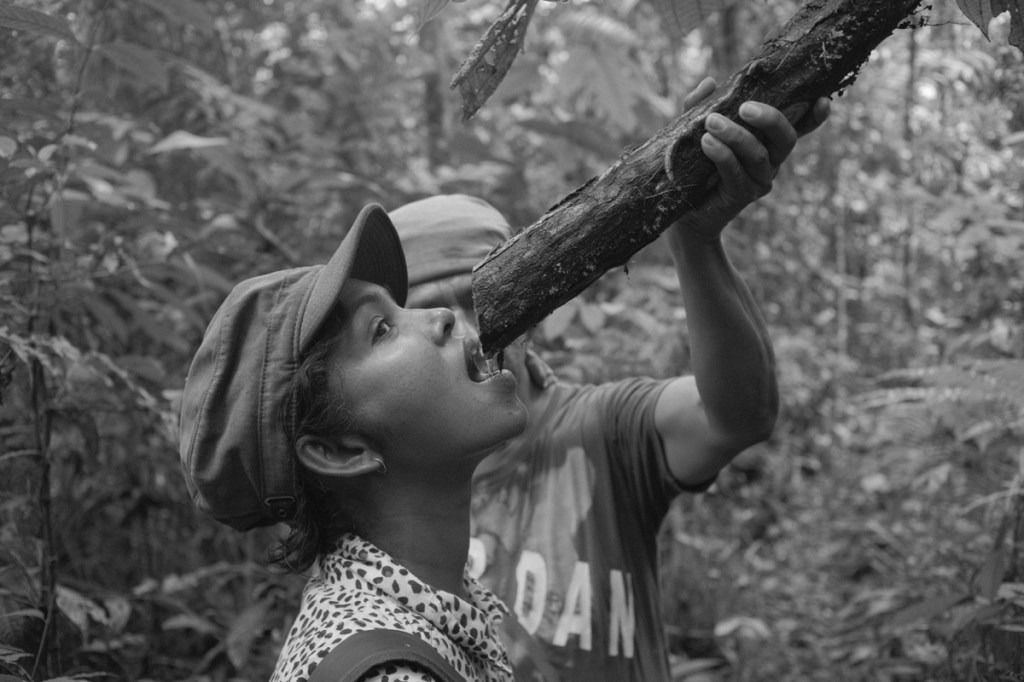
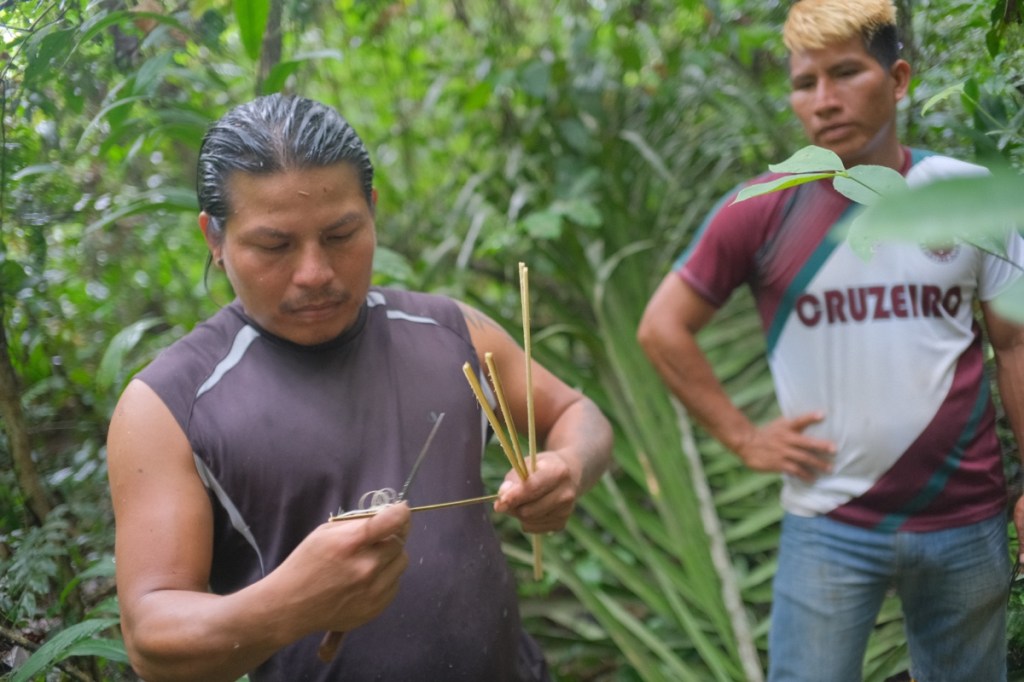
On the second day, after a breakfast of bread, butter, jam, coffee and eggs, Wareka and his father Guinto, took us for a walk in the « backyard », our first walk into the jungle, behind the settlement. They showed us some of the plants they use, out of the incredible biodiversity. Plants to cure fever or diarrhoea, plants to cure bites of venomous snakes, plants to imitate bird sounds, termites nests to make antiseptic, plants to use as soap and toothpaste, plants to drink fresh water from, tree ants that taste of lemon, plants to make razor sharp knives, plants to make strong threads that they use to make hamocs… and plants to make the darts that we’ll be using tomorrow and plants to make the poison that they put on the darts.
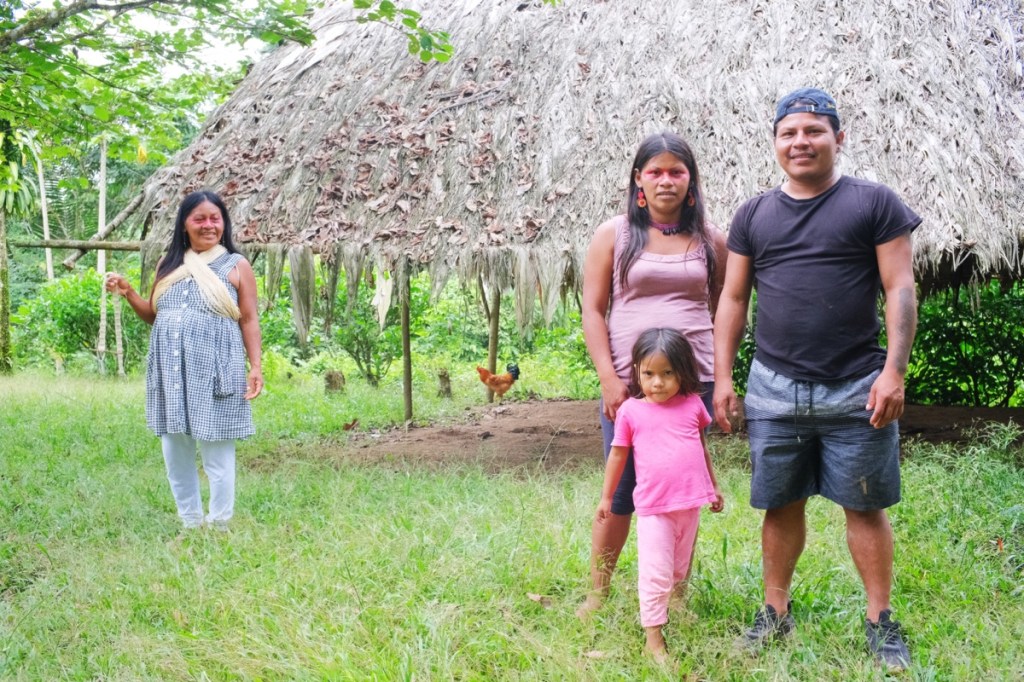
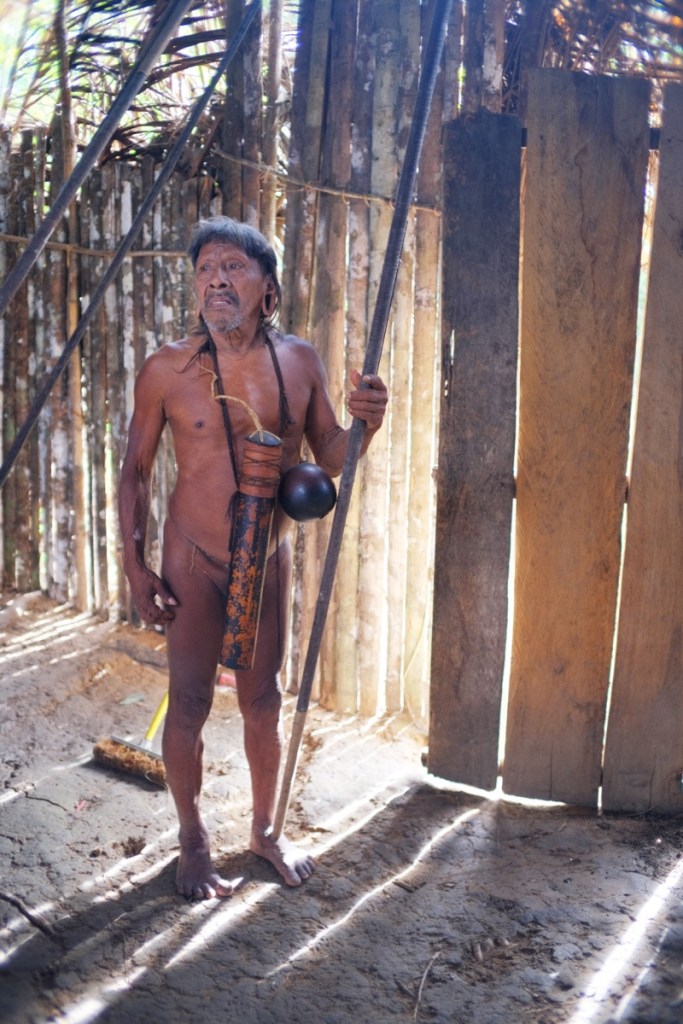
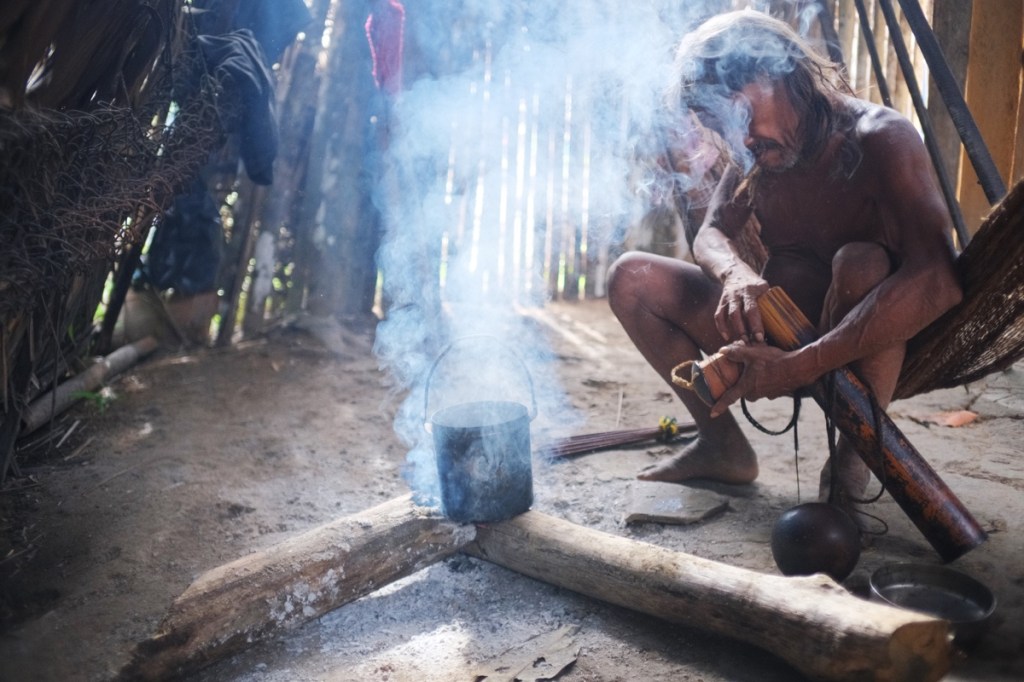
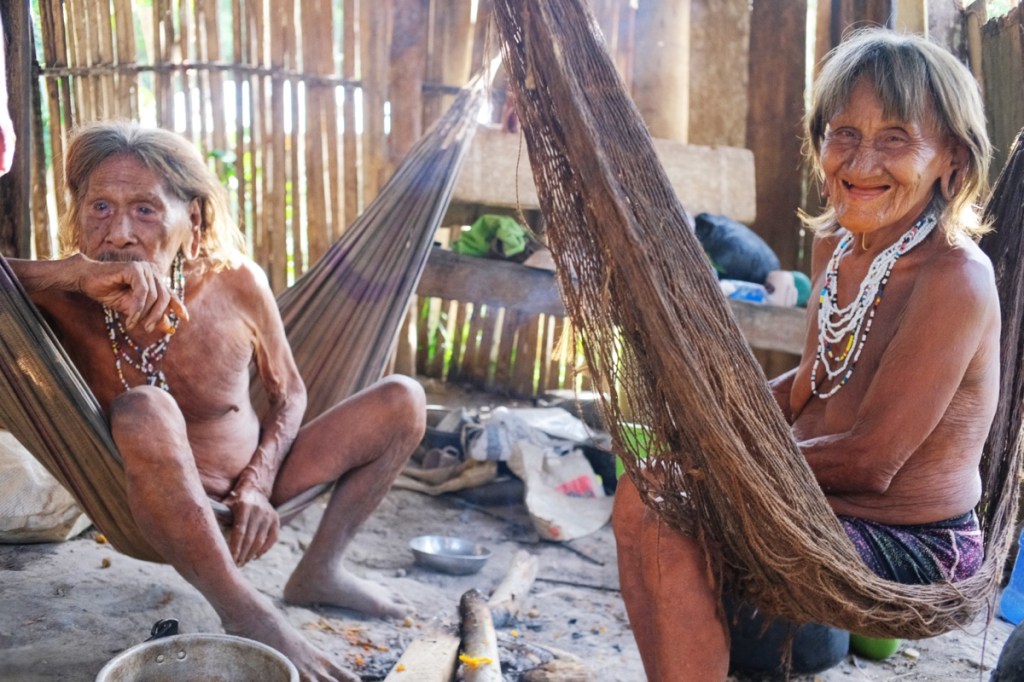
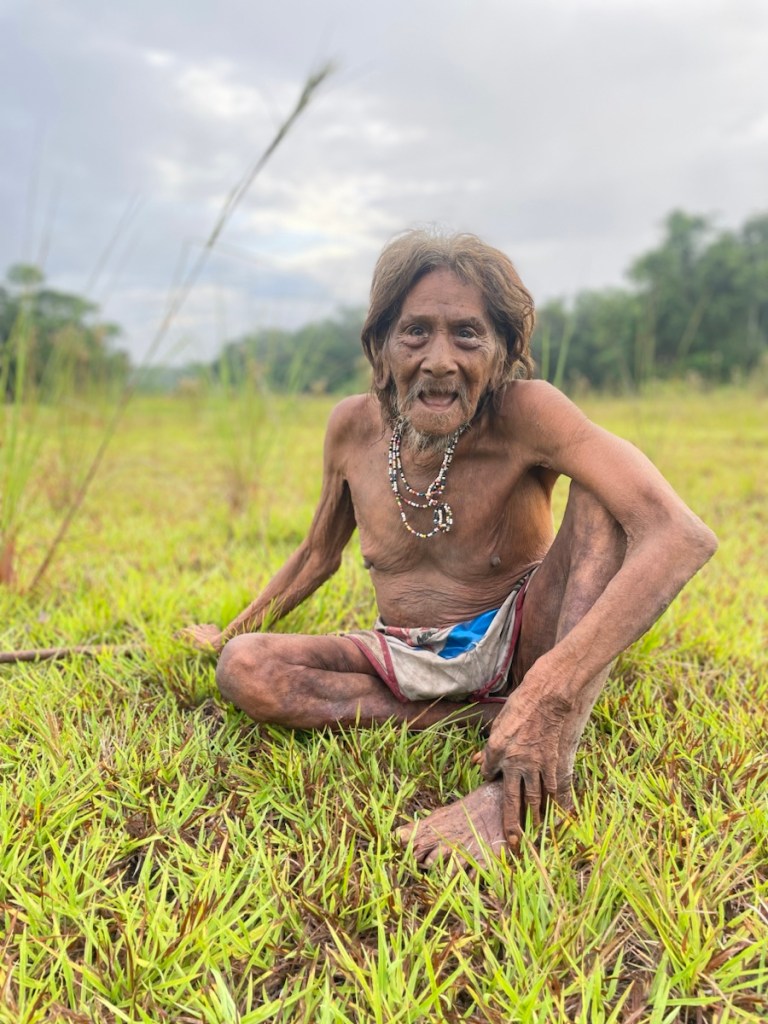
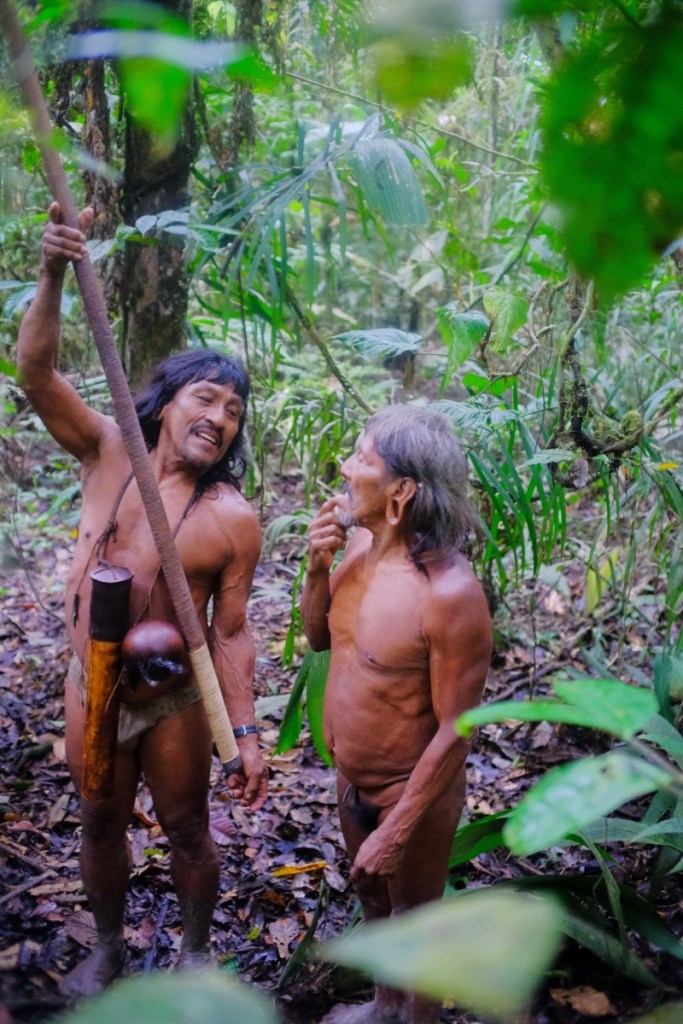
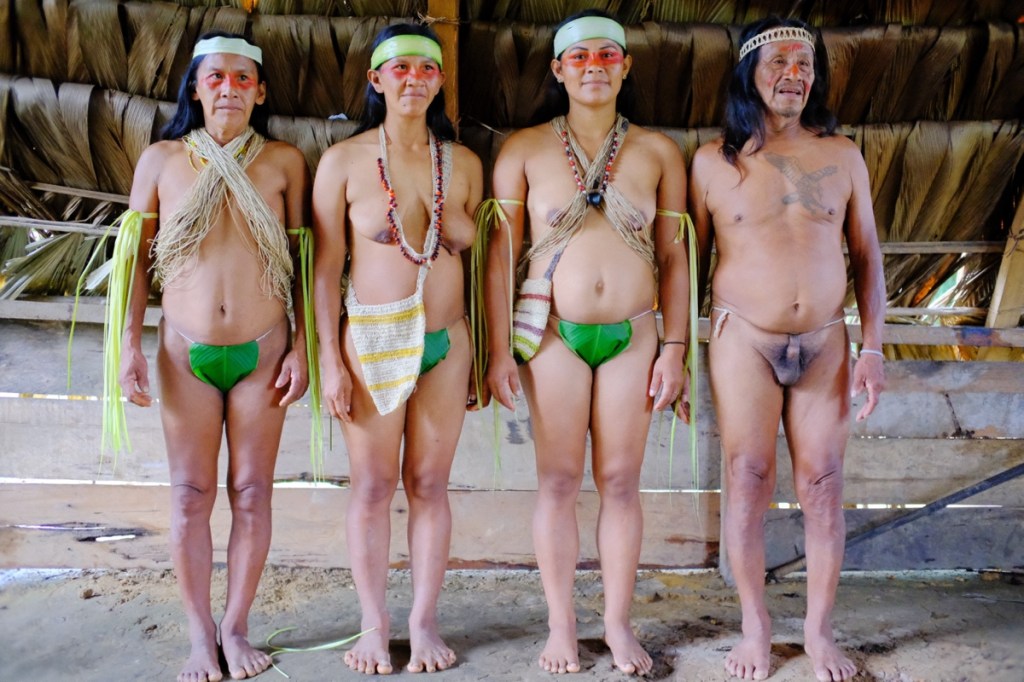
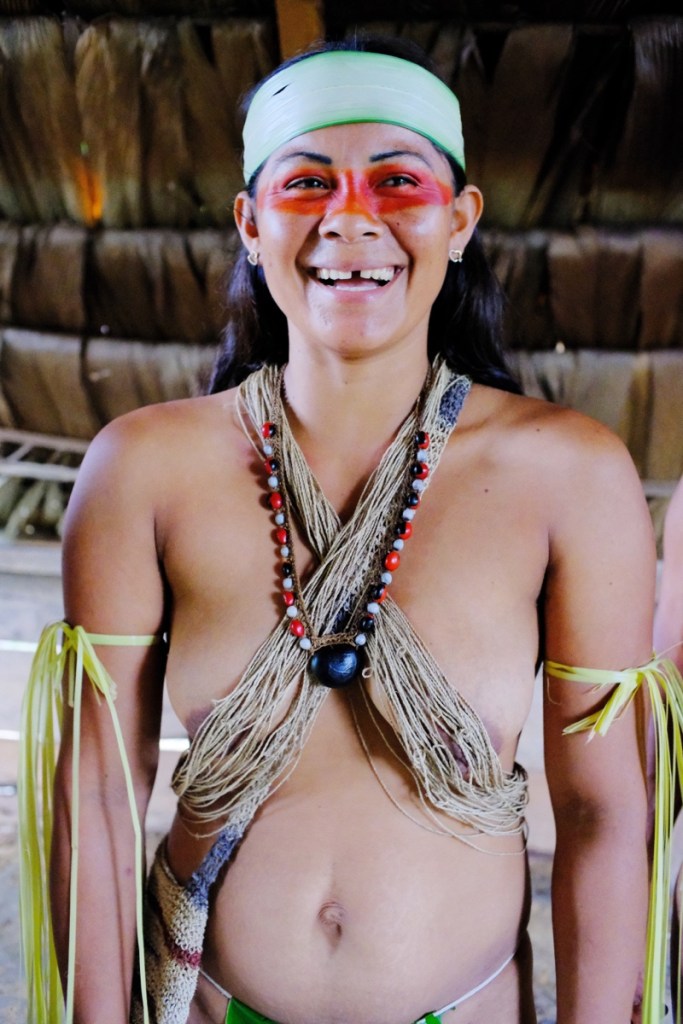
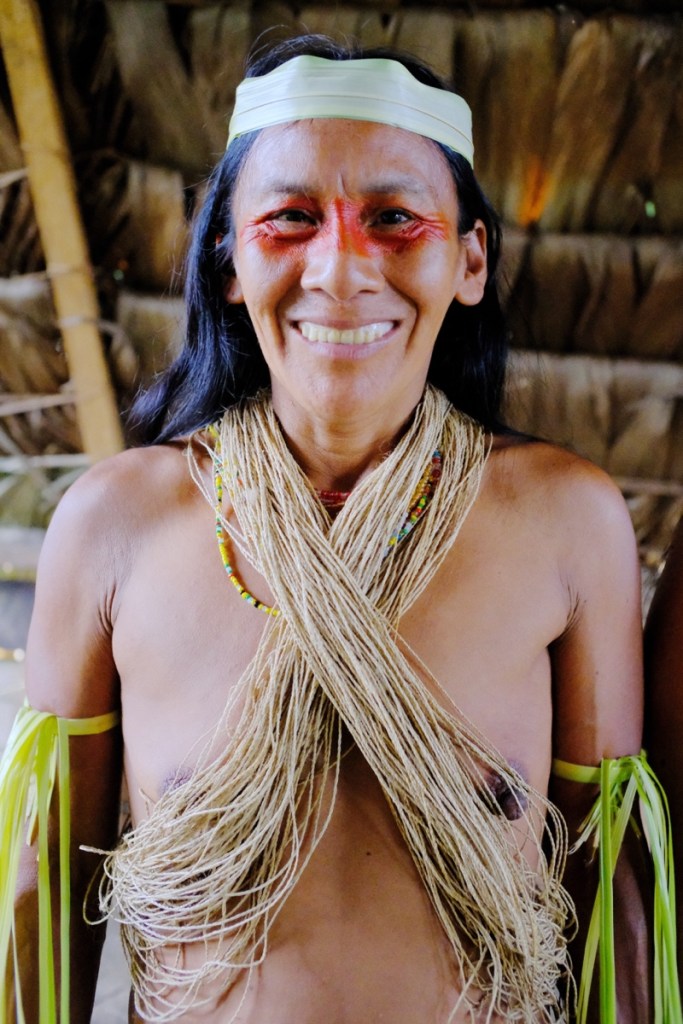
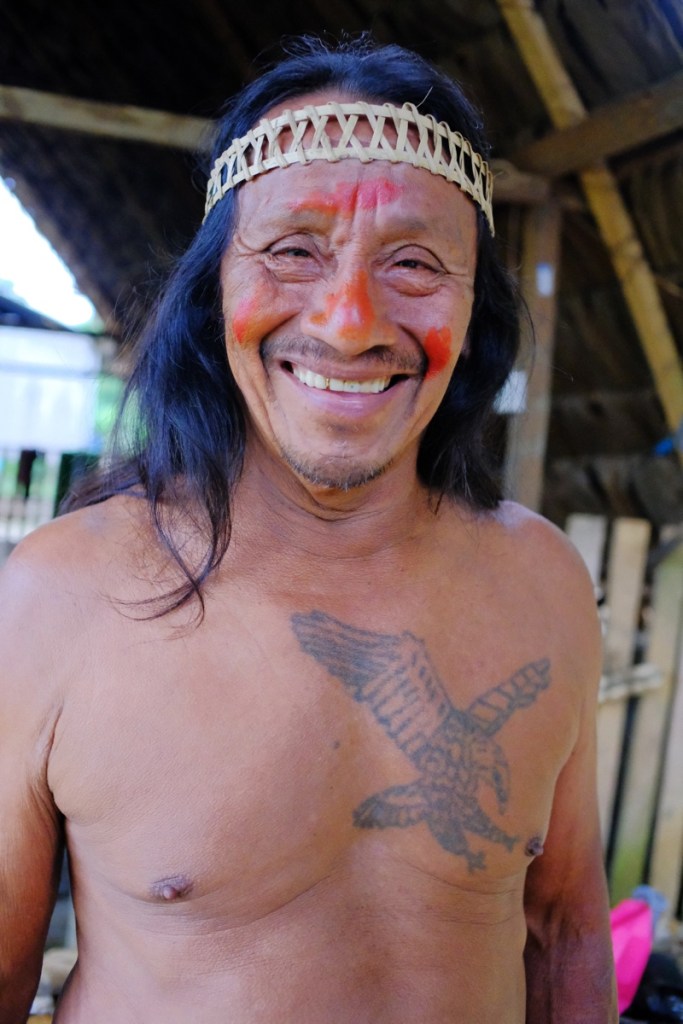
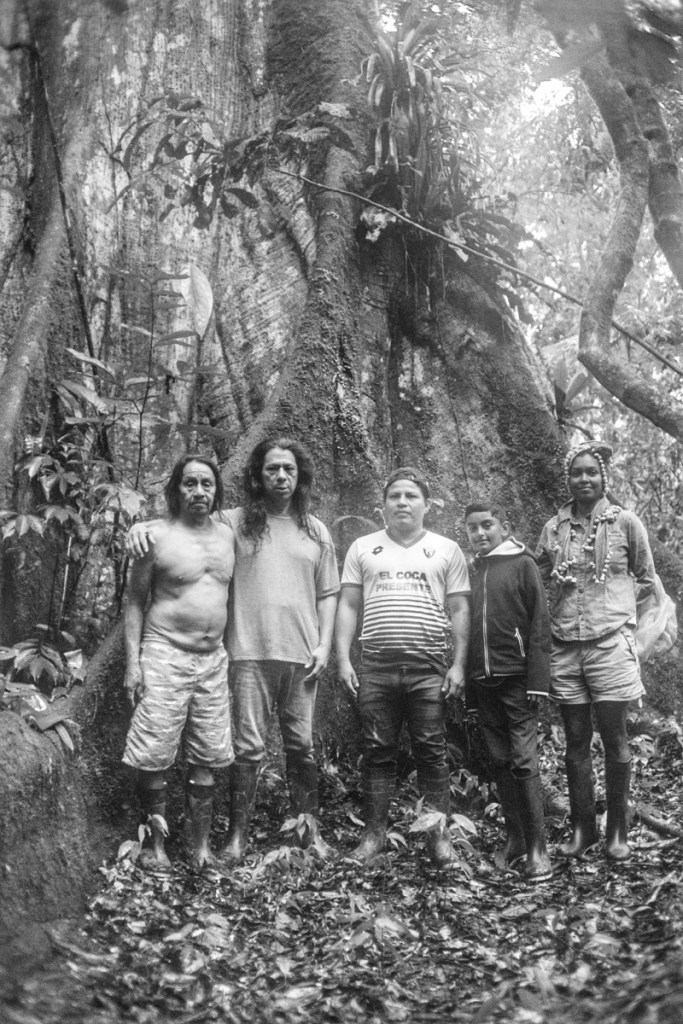
In the afternoon, we go meet Miniwa, a 75(ish) year old man chosen to become the next shaman. He lives with his wife in an isolated hut, further away from the main settlement, and welcomes us in the traditional outfit, which is no outfit at all. After greetings and some group photos, we enter his hut, where he demonstrates how he prepares the poisoned darts used for hunting.
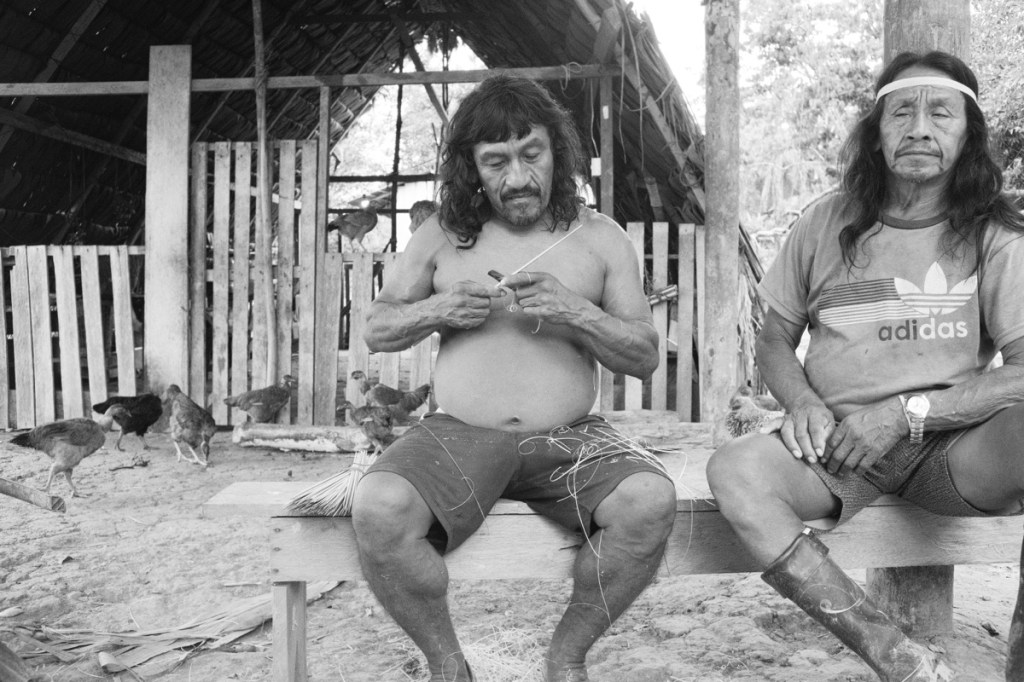
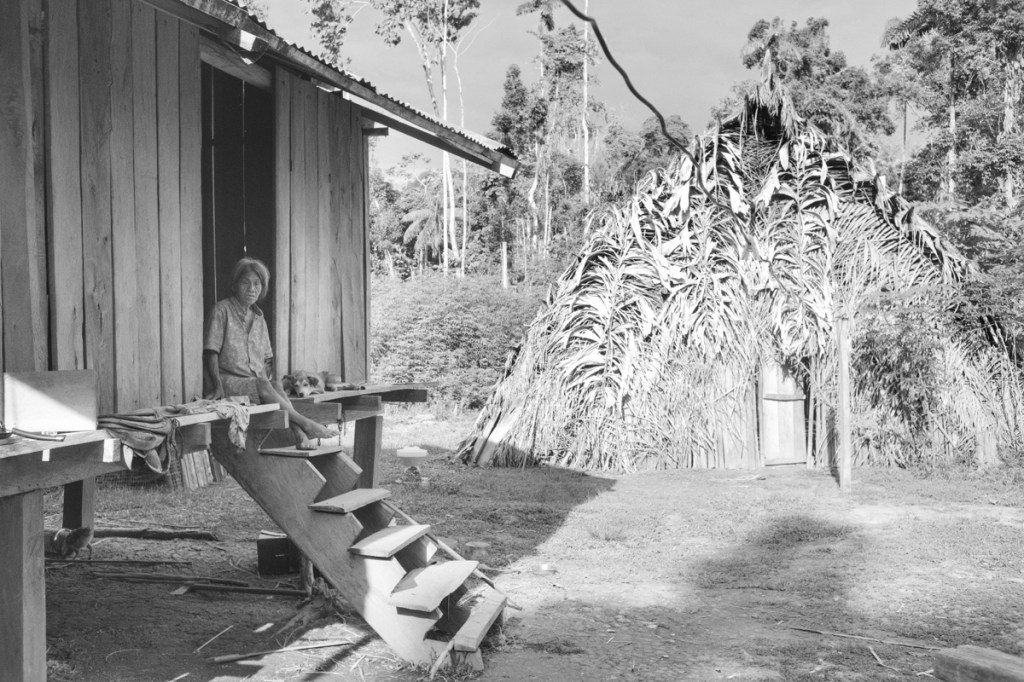
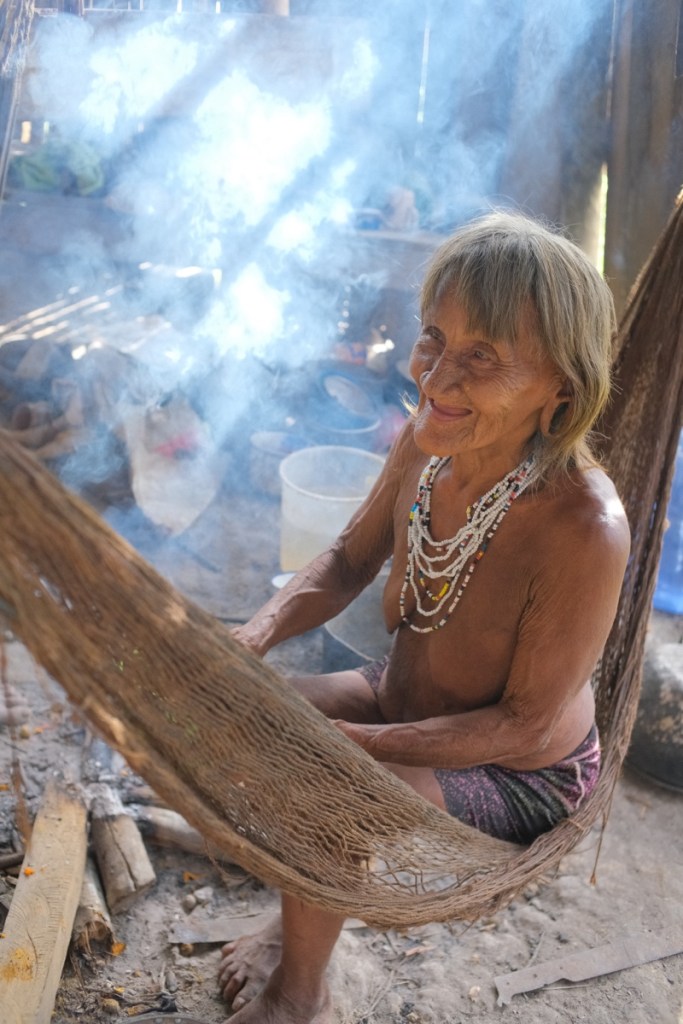
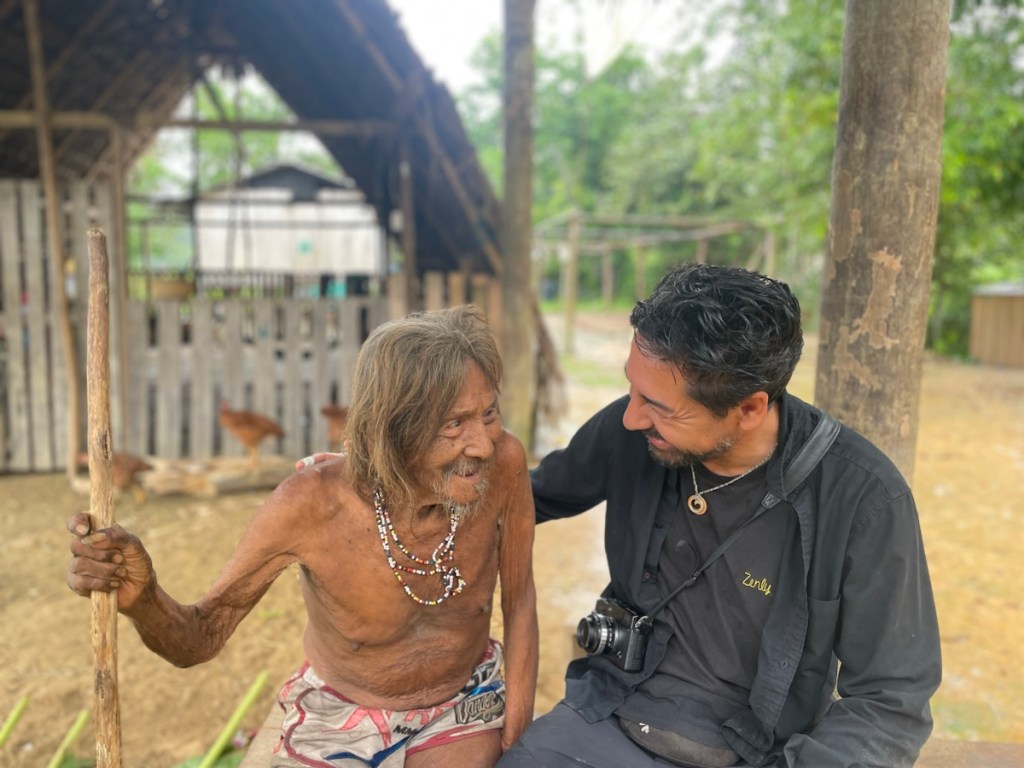
After leaving Miniwa, we get back to the far end of the main settlement to meet with Kempere the present shaman, who lives with his wife Mehiemo. Kempere is said to be 120 years old! It seems vastly exagerated but he certainly looks from another era. Before the woaronis became contact people, Kempere was leading the rebels that chased the oil companies and the army away from these parts of the jungle, with spears and blowpipes! In spite of their old age, they are both radiant with smiles. After Kempere’s death, Miniwa will be the new shaman.
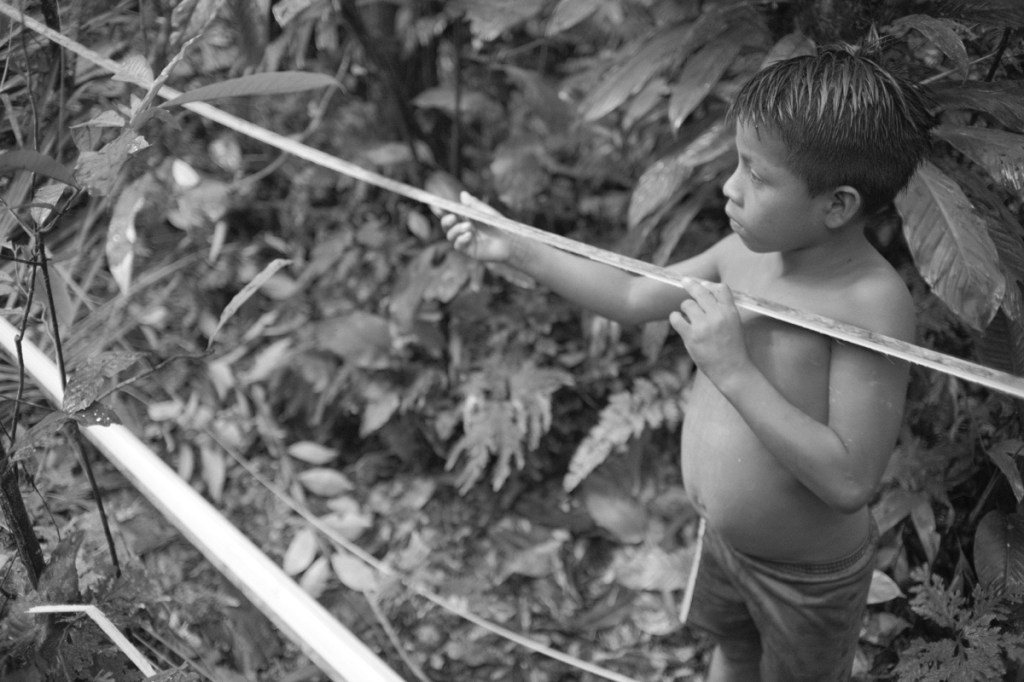
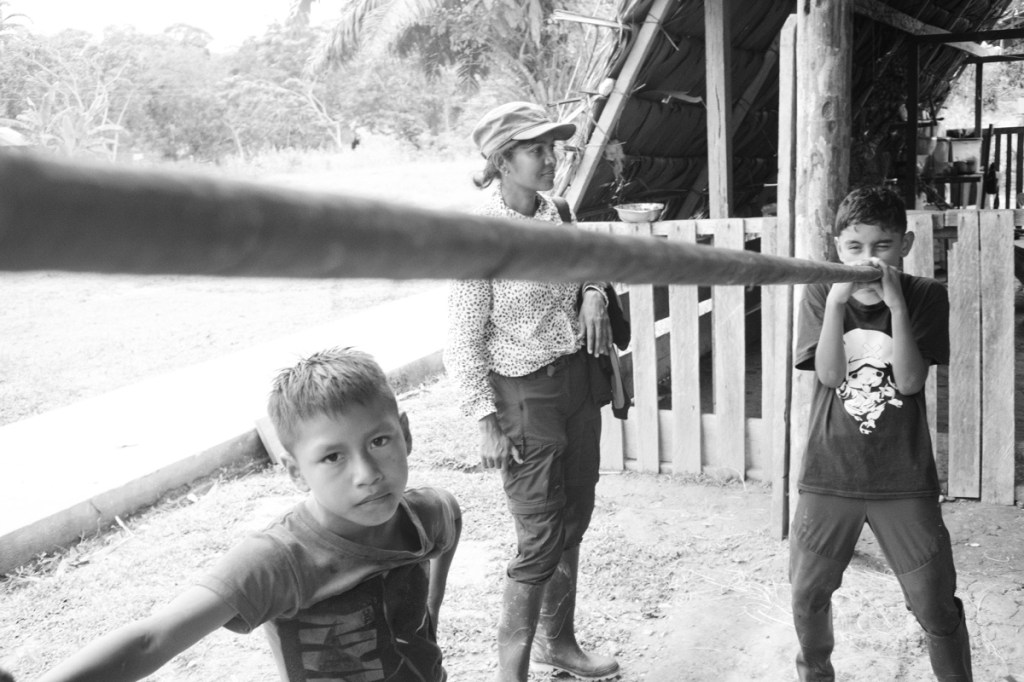
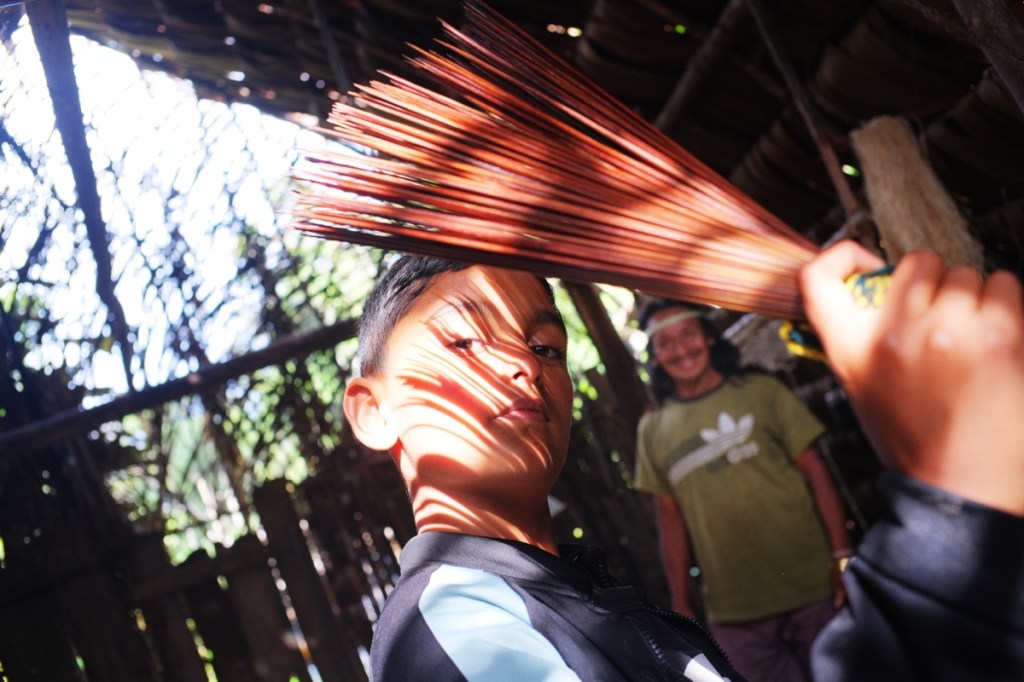
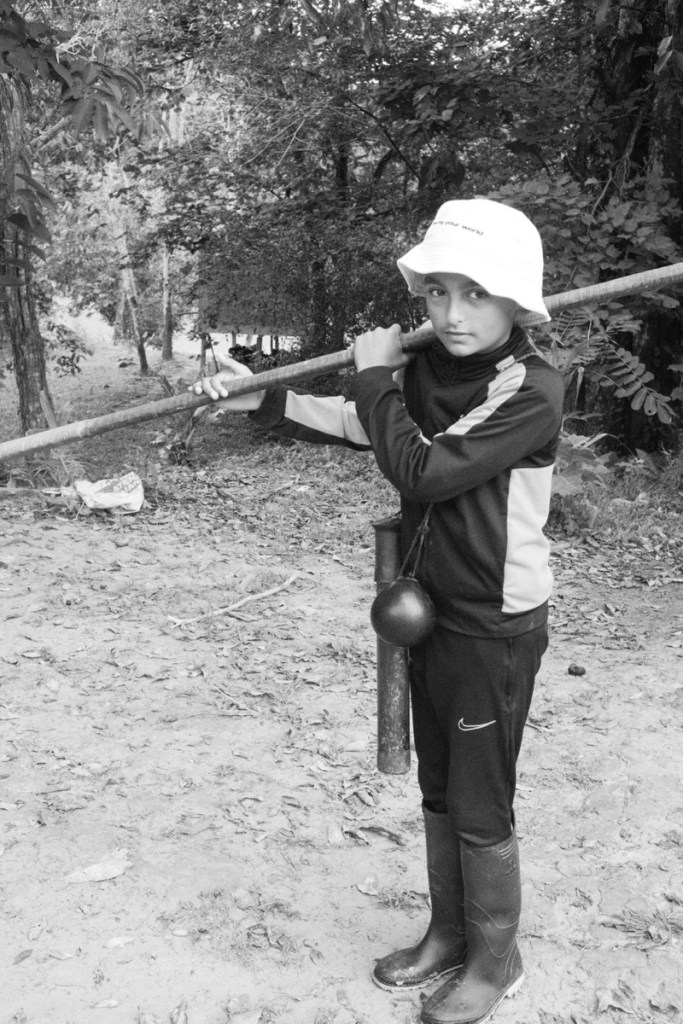
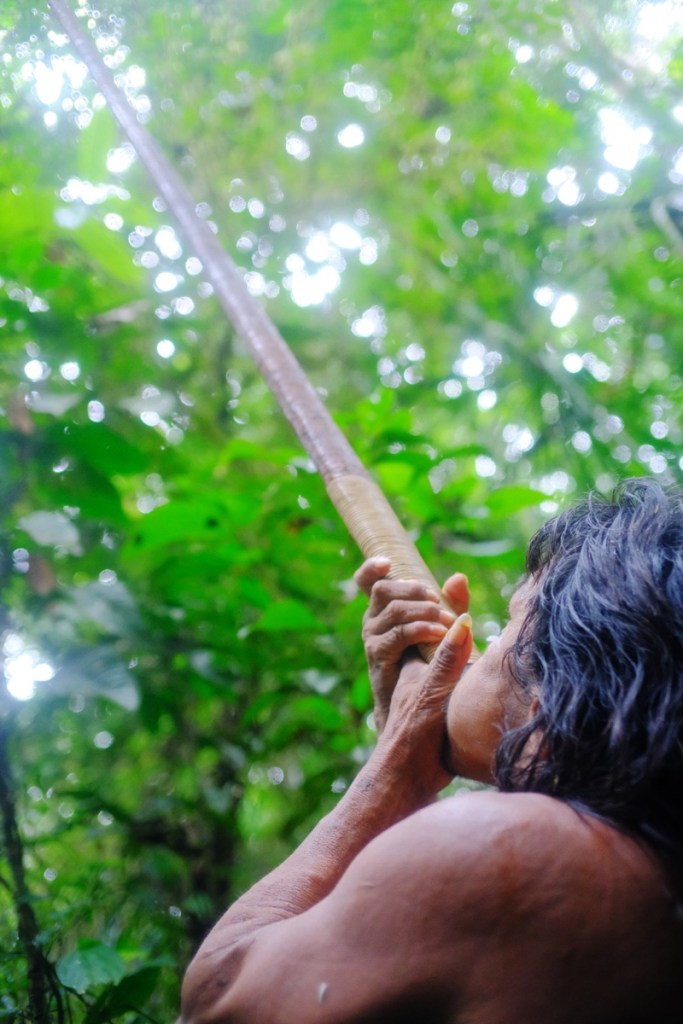
Wareka then introduces us to the handling of the blowpipe. Leo practices on a fruit and manages quite well but it’s very long and heavy so I have to hold the far end. Sensing the potential of a skilled hunter, one woman suggests Leo should marry her daughter!
Wareka tells me that before covid, Kempere could still walk properly. So the next morning I’m very surprised to find him walking alone, leaning on his walking stick, near our lodge. I walk up to him to help him go wherever he intends to go. He breathes heavily and sits to rest every few meters. Eventually I call a woman to help understand what he needs, but nobody is worried, he simply came for company, and he comes to sit with us for breakfast. Moments later, his wife comes running after him, always with the same radiant smile.
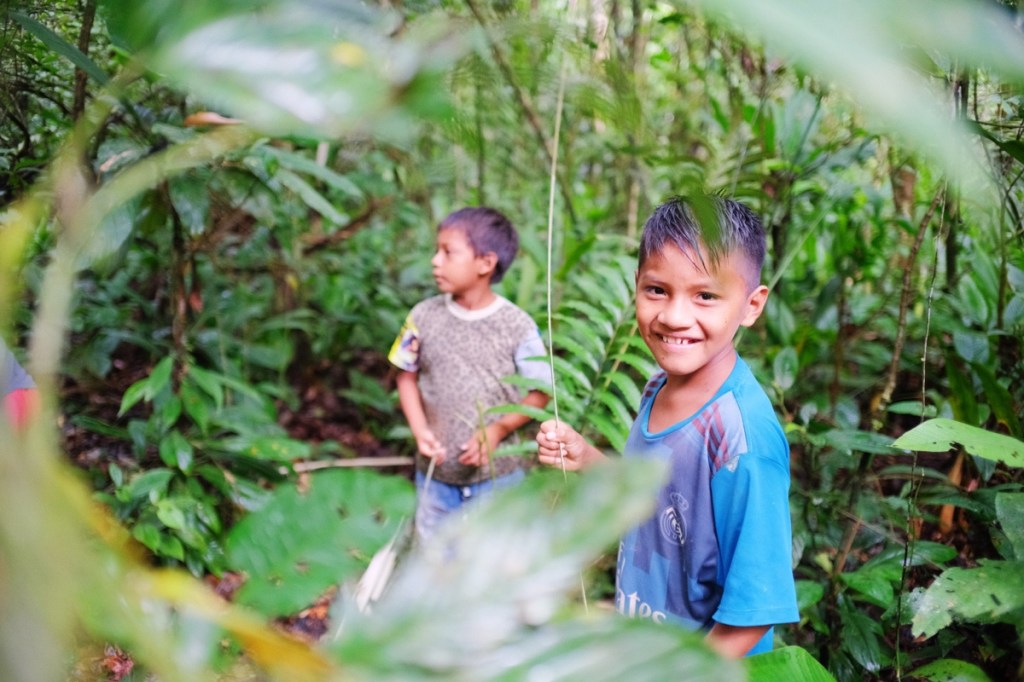
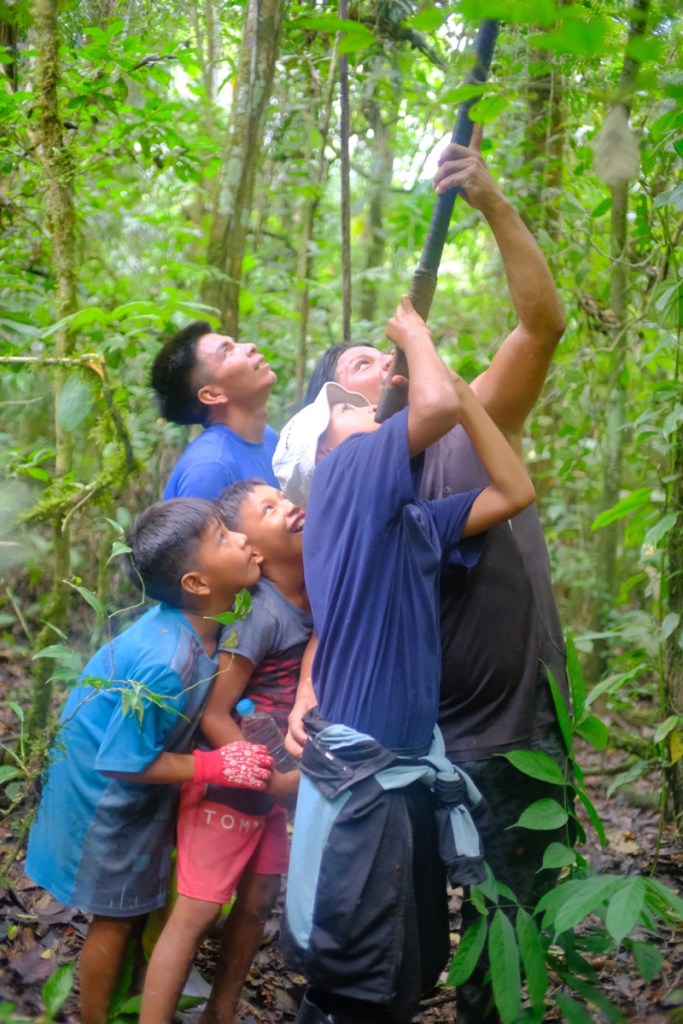
Today is the big day: we go hunting for monkeys. The team is comprised of Wareka, his father Guinto, his uncle Baiwa, his cousin Mauricio, Baiwa’s son who brought Dario, a german tourist, and Miniwa, the shaman to be. Two kids a bit younger than Leo come along. Raoul drives the boat, Paharito, Kipa and his wife have also come for fishing.
After a couple of hours deeper towards the Peru border, the boat stops and we wonder how they know where we are since nothing looks more like a jungle tree to us than the next jungle tree! But somehow they know, and indeed we are near the piranha lake where we’re supposed to be.
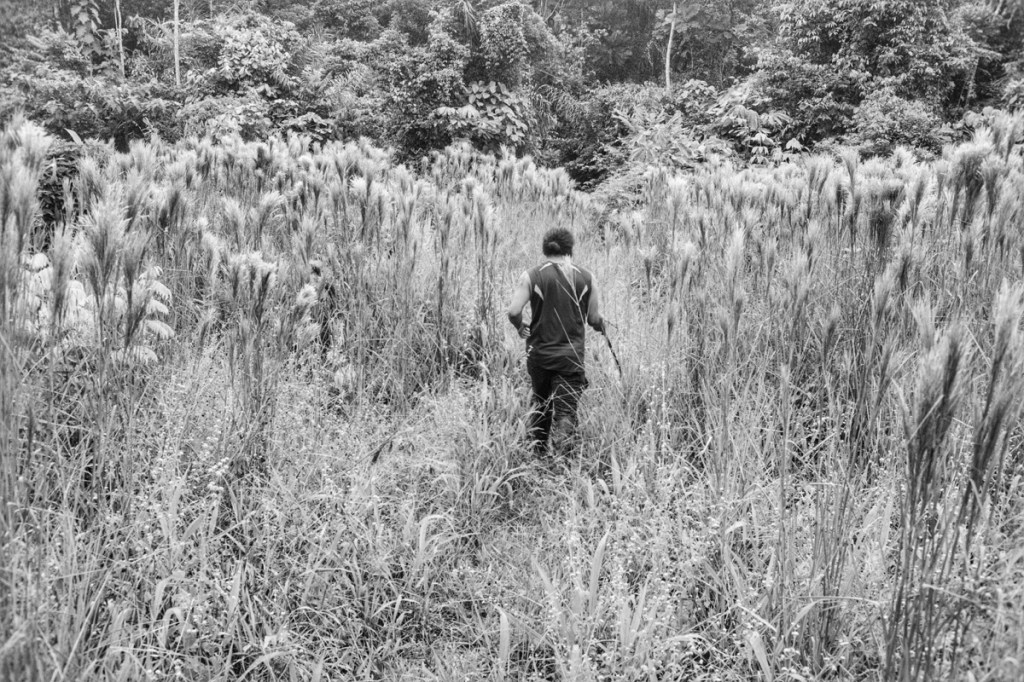
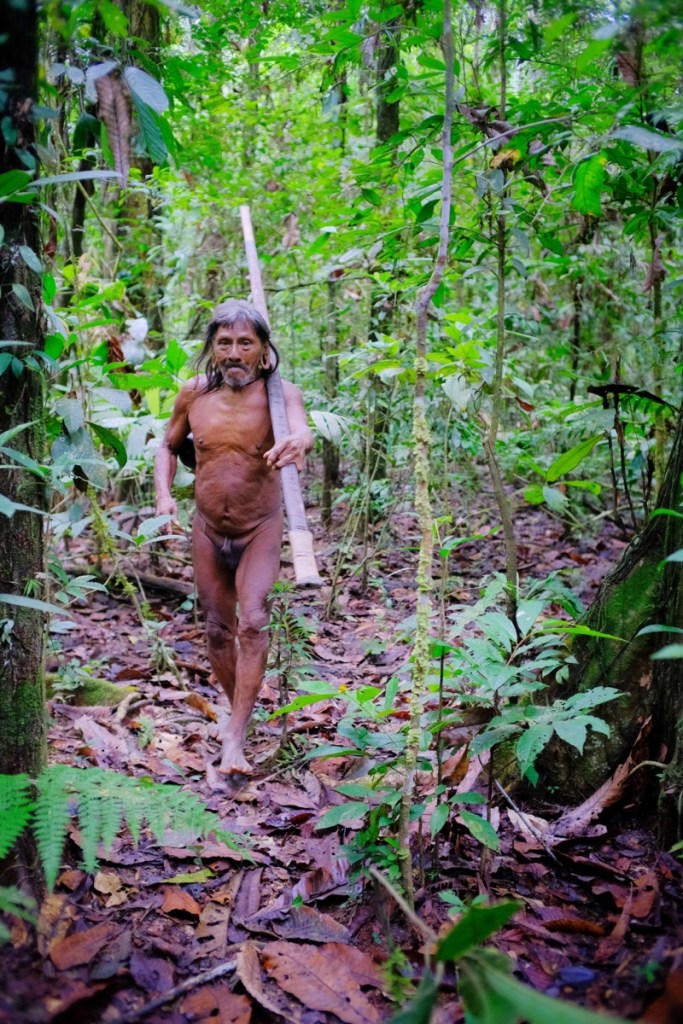
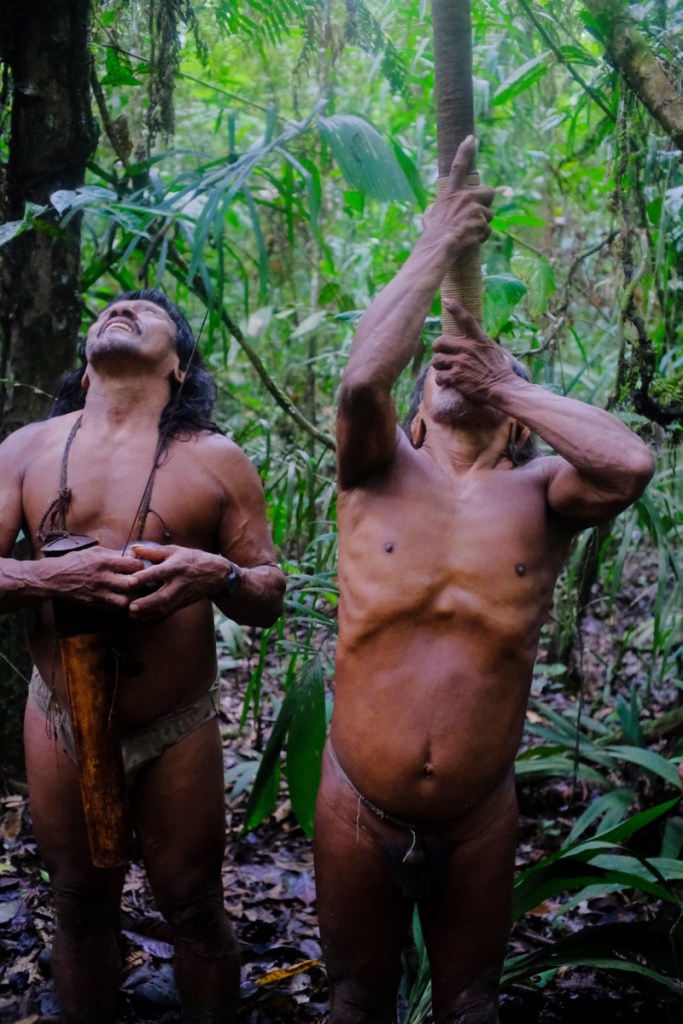
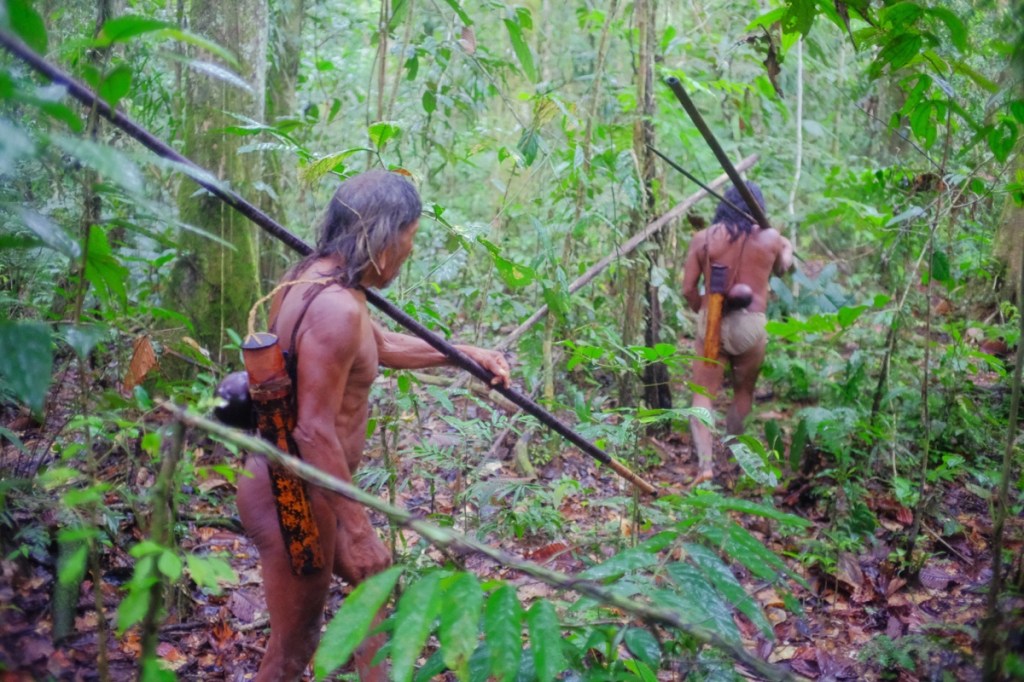
As soon as we debark, Baiwa and Miniwa remove their t-shirt and start running naked in the jungle, at an incredible pace, armed with their long spears and blowpipes! No path here, we’re just dashing through the thick forest and get entangled in vines. Soon we find open fruits on the ground, we hear the sounds and spot our first monkey perched high up on a tree. (They spot. We have the hardest time seeing anything, we’re too busy keeping up with the group and making sure we don’t get lost!)
Finding the monkey is one thing, killing it is another story! We make loud noises and shake branches to get the monkey to move and reveal its position, or move to a branch where we have better visibility. The monkey sees us and jumps away to another tree. We run after him, looking upwards for the monkey and downwards for the vines and holes on the ground. And we repeat the process. Every once in a while they see an opportunity, quickly load the blowpipe with a dart and blow it hard towards the canopy. (I can’t even see the damn monkey!)
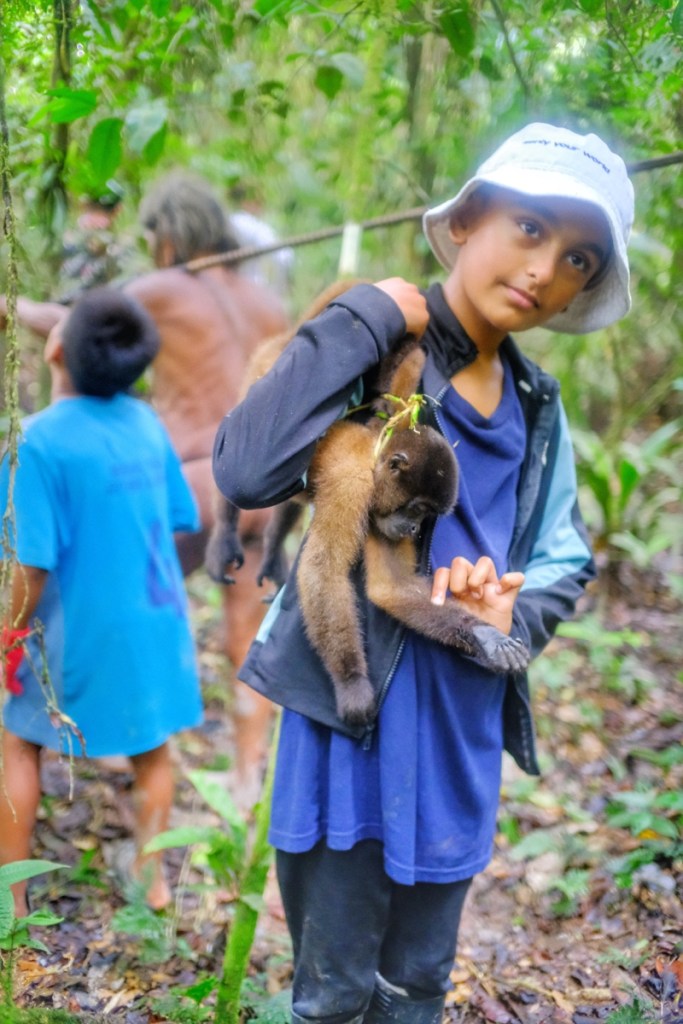
We run like this for hours, the group splits in two and we follow whoever we can. It’s hot and wet and it’s starting to rain. At some point Baiwa shows up with a first prey, a young monkey. Dario tells us how the 70 year old man climbed to the top of the tree in seconds to fetch his prey perched high on a branch. They attach his tail to his head with a thin vine and pass it to Leo, to carry it like a sort of handbag!
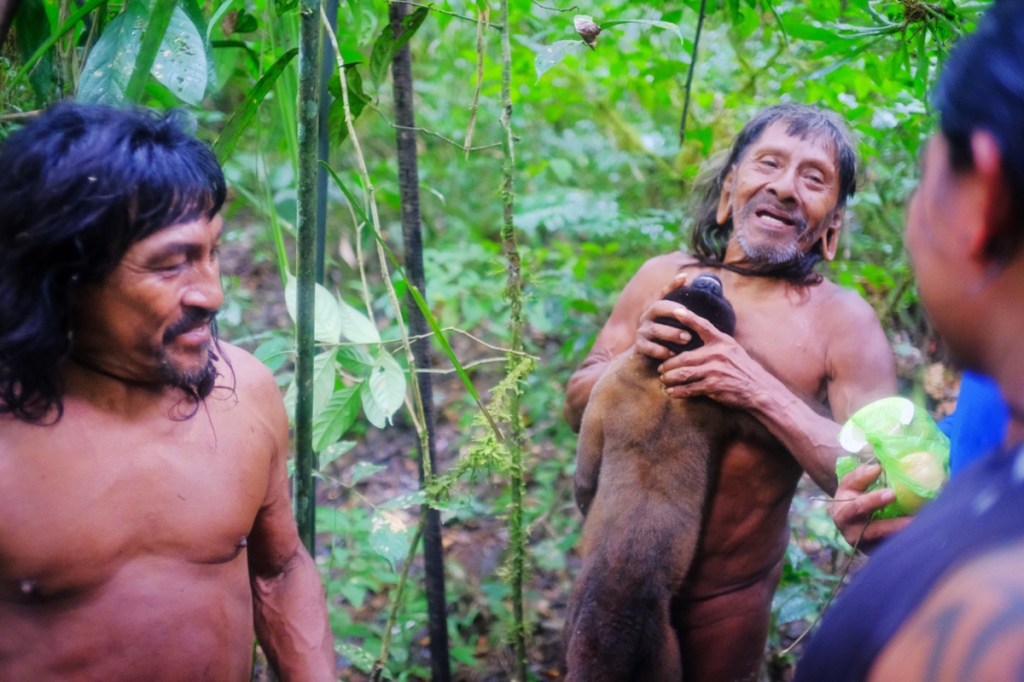
After some more running, the rain intensifies and we’re about to give up when Wareka blows and hits his target. An adult monkey drops a hundred meters just in front of me. The dart only paralyses the prey, they have to strangle him to death right after. Again they attach the head to the tail and pass it to me. The warm body is still shaken with spasms in the arms and legs as I put it on my shoulder.
That’s enough meat for today, but before we return, we’ll stop to fish some piranhas! After all this running inside the thick vegetation I have no idea where we are or which way the river is, but somehow they know and we make it back to the lake. Wareka cuts fishing rods out of some tree and attaches a nylon thread and a hook with some meat on it.
The shore of the lake is extremely muddy and slippery, and surrounded by branches with thick long spikes, so of course I manage to slip and slam right into the spikes!
We try for a short while but I only get one small fish, not even a piranha. The piranhas are too smart for me; they just eat the meat off the hook! But the ones who stayed on the boat already caught some.
On the way out I slip again , my leg in the water and my hands on the spikes. Never did I feel so close to being Sandra Bullock!
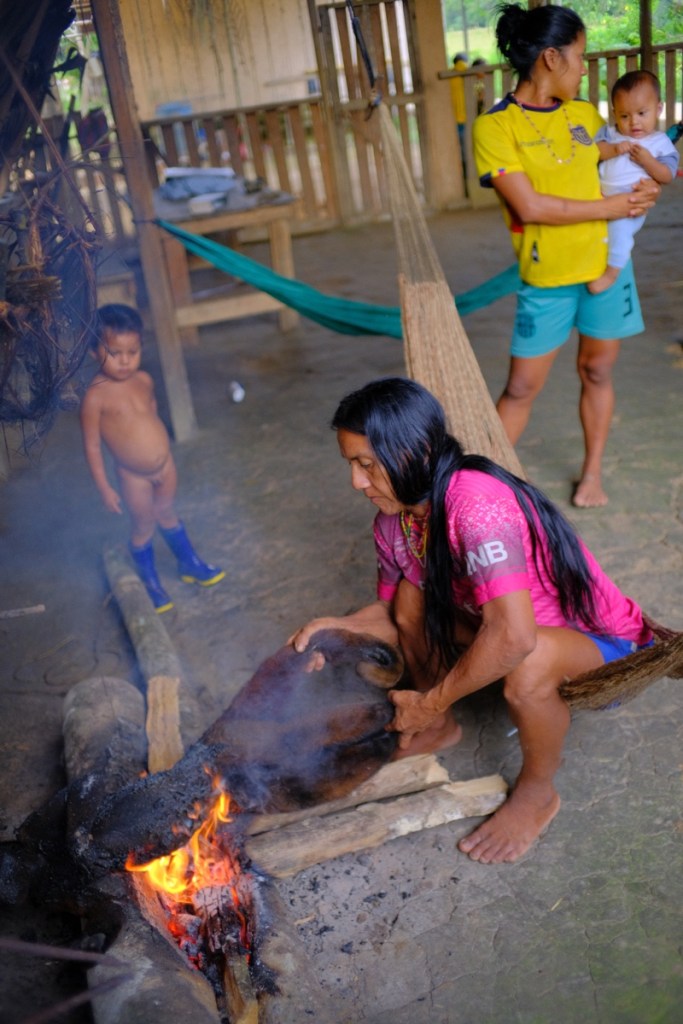
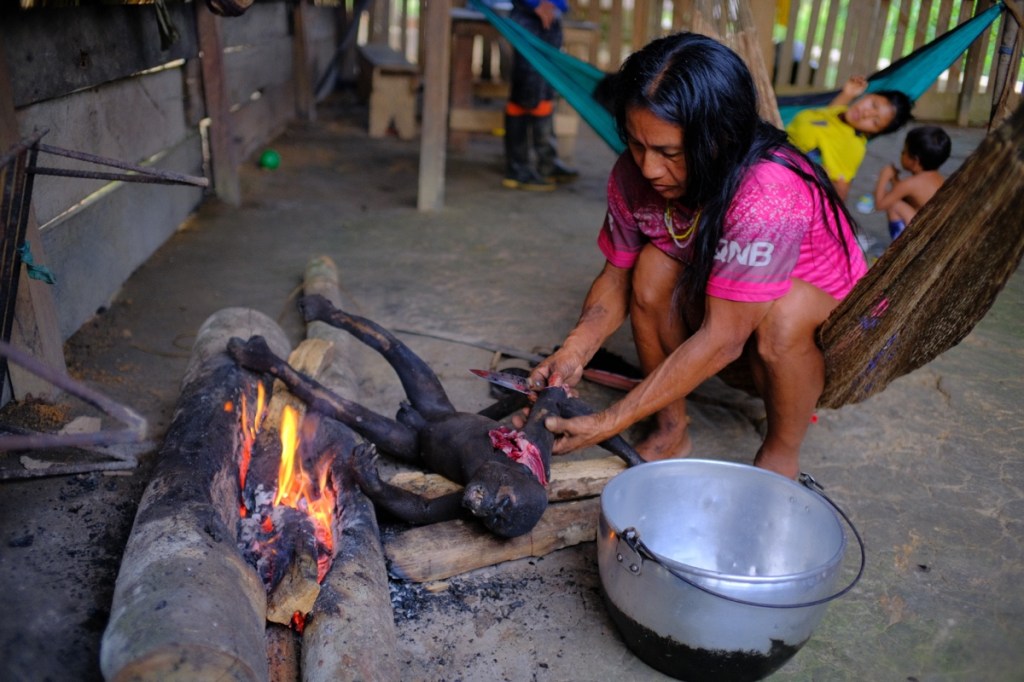
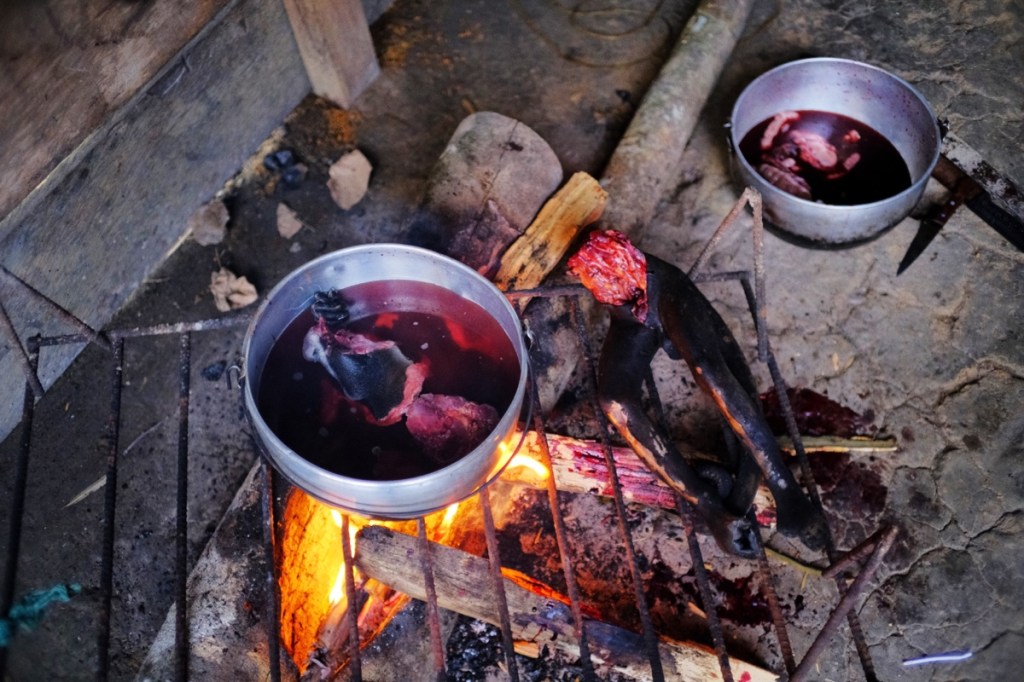
Back at the camp, a woman prepares the monkey for diner. She starts by burning and scraping off the hair. Then she removes the insides and genitals. Finally she cuts off the arms and head and torso and puts everything in a big pot, a first one to wash, and a second one to boil everything in water. Of course the human like shape made the whole scene slightly disturbing!
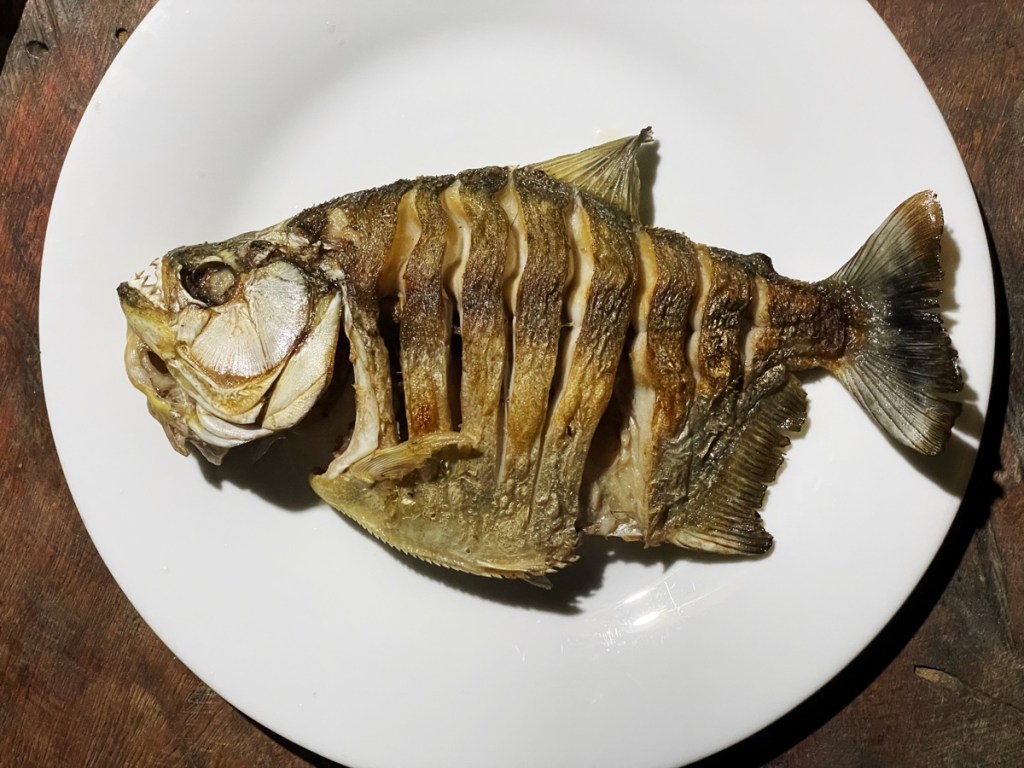
In the evening, after our normal dinner (vegetables, rice and chicken cutlet) we get to try the grilled piranha and a piece of boiled monkey arm. The piranha was delicious but we were a bit more reluctant to try the monkey. At least we had an easy piece of muscle (and not the head!). It had the typical strong flavour of game meat and the smokey smell of the fire. Still, more tender than I expected.
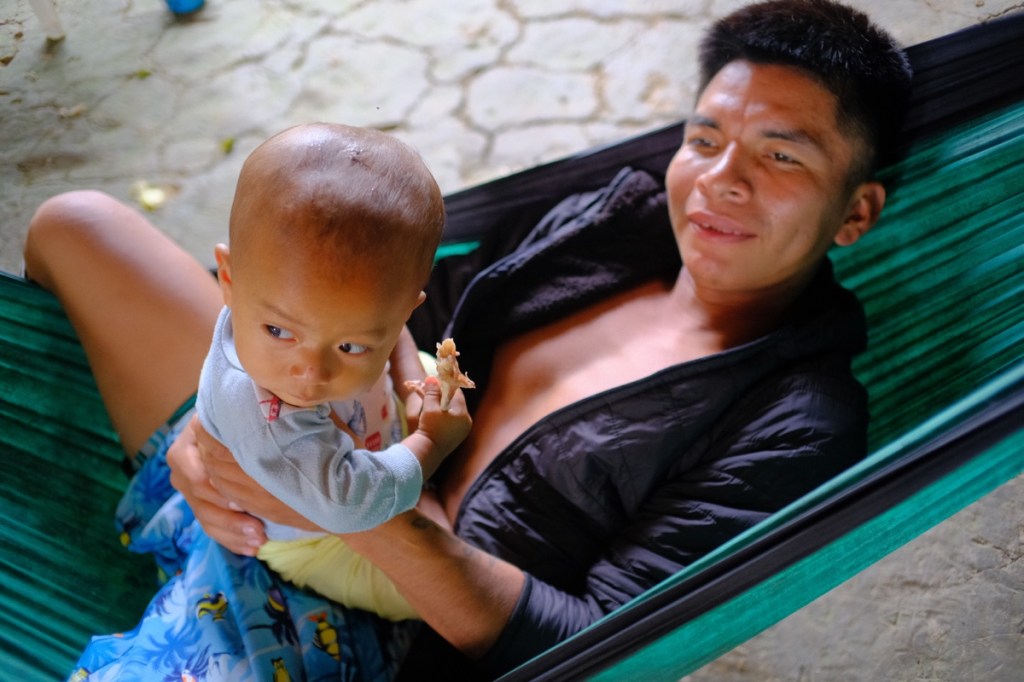
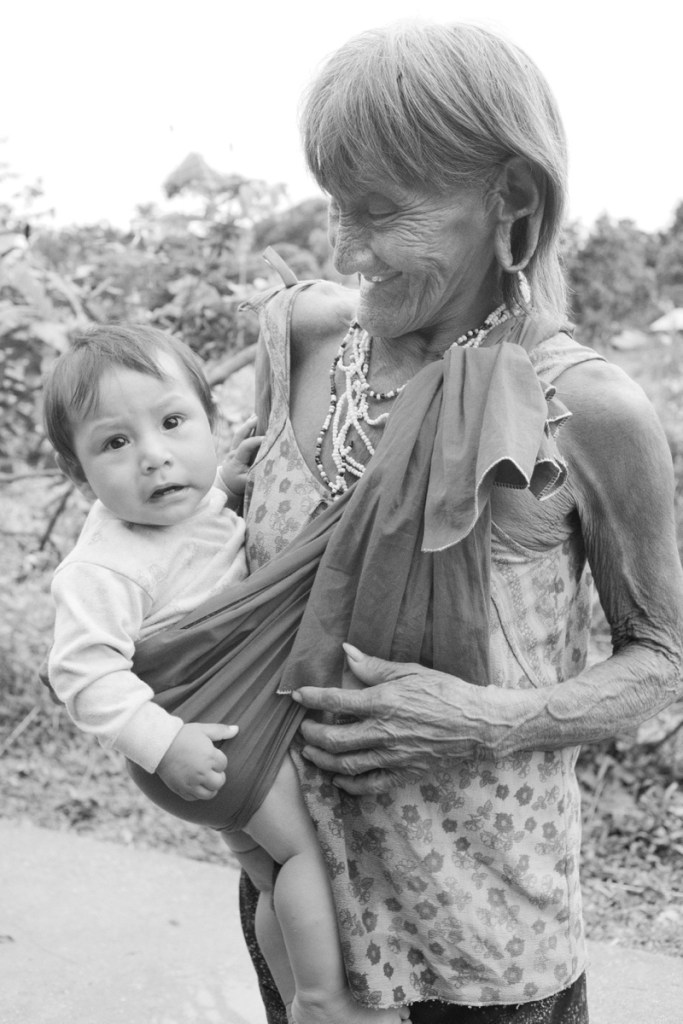
The next morning, a woman was nibling on a monkey hand, asking cheerfully how we liked the meat, while her baby in the hamoc was sucking an arm bone.
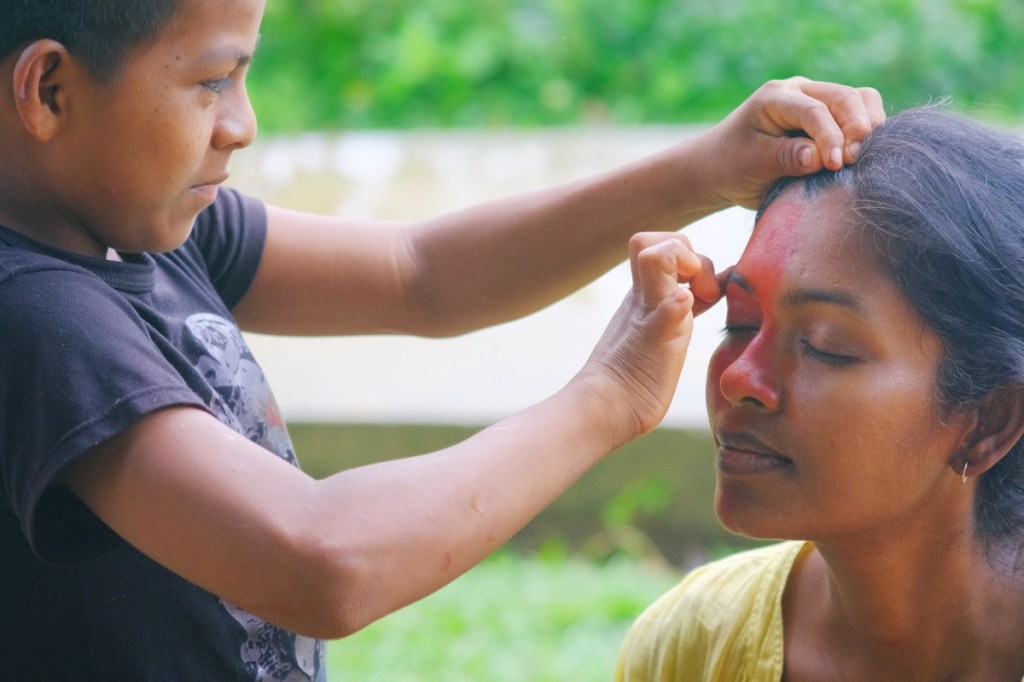
It was the fourth day, the women demonstrated ceremonial dances and chants and presented handicrafts. This type of representation for tourists usually makes me uneasy, but this was different ; they were people we knew by now, one of them had cooked the monkey, another had just extracted the splinters out of my hands an hour before. They were very at ease with their traditional nudity, and cheerful.
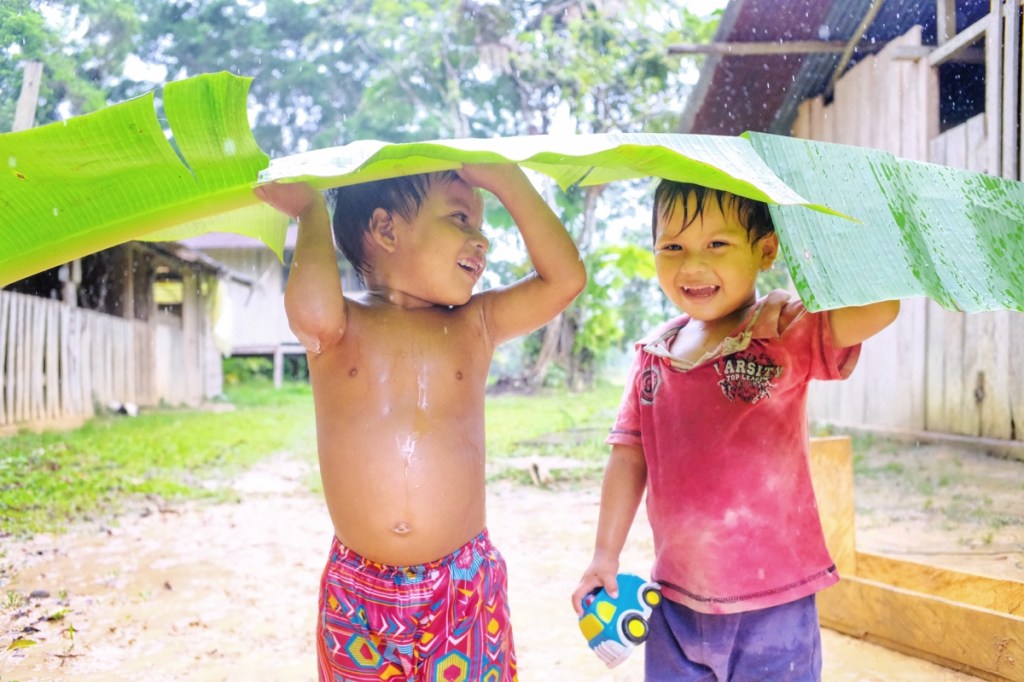
Then we went to a pond where birds usually gather in the morning to drink water. But the rain was pouring and we only managed to see one big macao parrot, where they normally come by dozens when it’s sunny. Back on the boat, the rain got even stronger, we were soaked and had to abort the rest of the activities. Leo was happy to get back to the playground to play football with the kids, like he’s done every evening.
And there we are on the fifth day, sitting in the canoe for 12 hours to get back to Coca, so I write this post to kill time. By chance the rain has stopped and we can enjoy the ride. We just passed a line of turtles on a floating branch, a bunch of monkeys doing flips in the branches, and a few more parrots and herons.
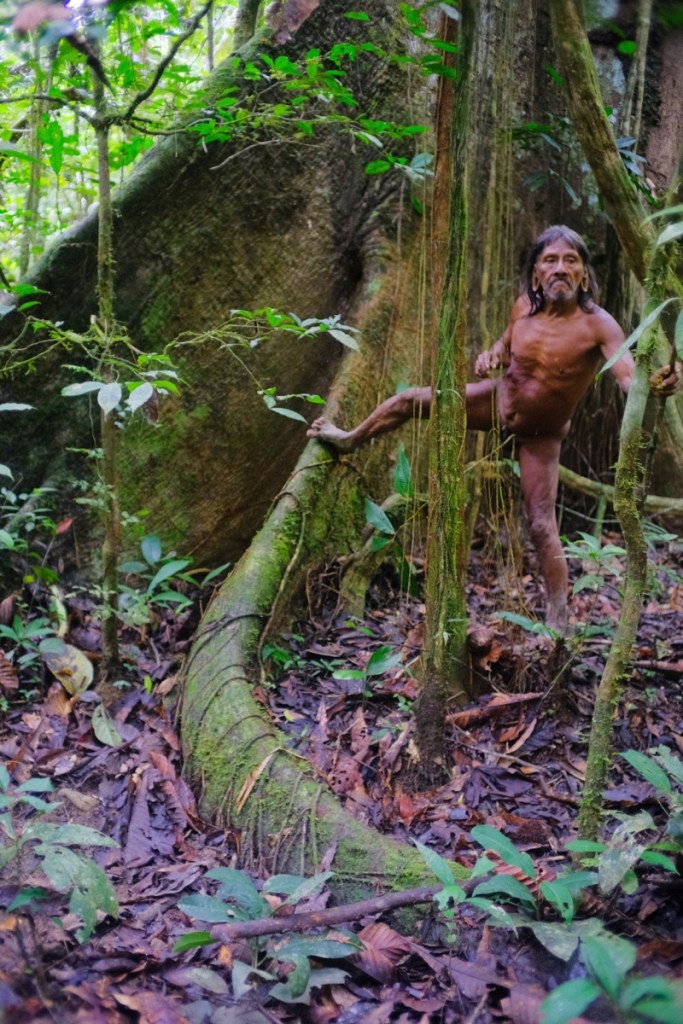
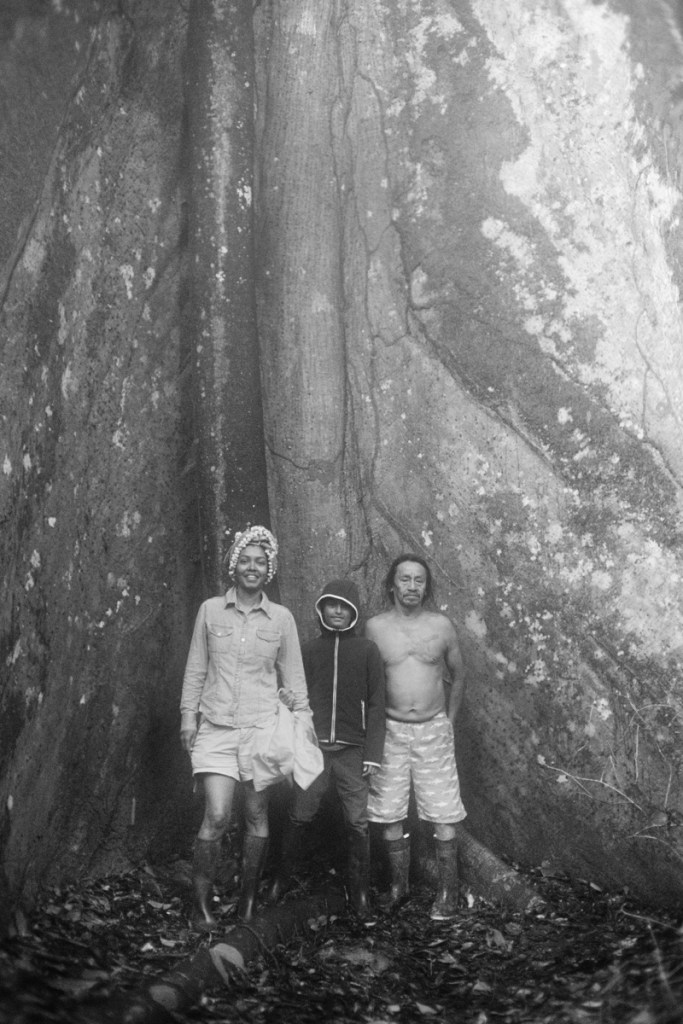
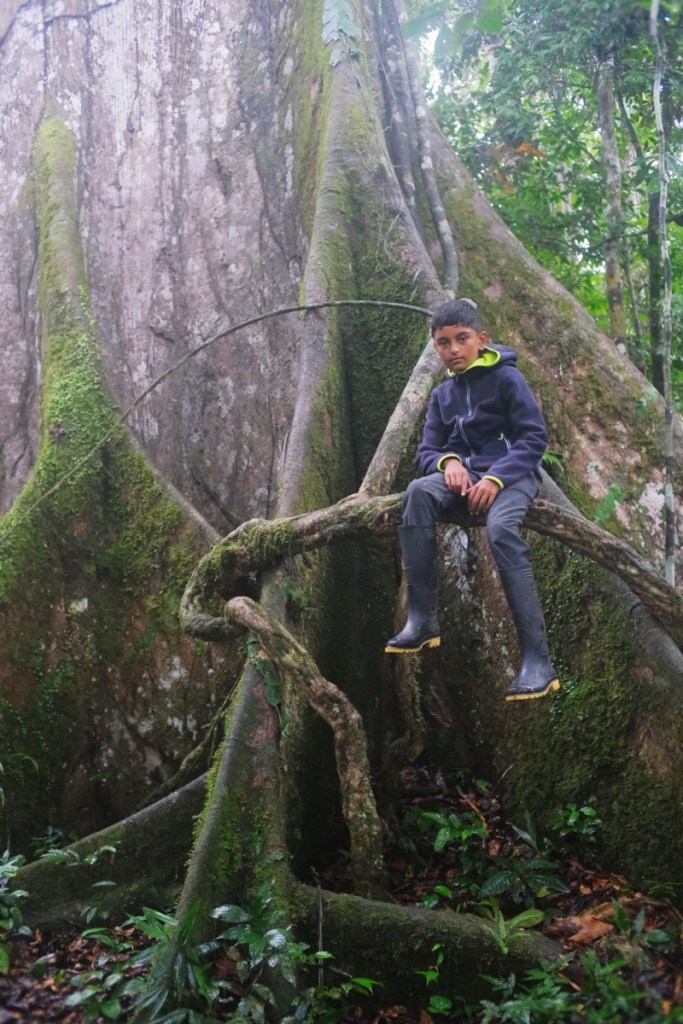
This morning I asked Wareka if we could quickly stop by the giant sequoia that we couldn’t see yesterday. It’s a magnificent tree with roots that start over 3 meters above ground creating cave like spaces around the base of the trunk.
In the end we didn’t get to see any anaconda, jaguar or crocodile but to connect with these people and to share with them a « page of the jungle book » was an unforgettable experience, that cannot compare to any National Geographic documentary.
As I was writing my little « Woaroni dictionary » and the names and ages of the people we met, I couldn’t help thinking about how much of the history that we « know » that has been transliterated in this manner, by various people, in various languages.. so many accumulated errors and misinterpretations that end up as facts and dates in our history books.
For contact and practical details, check out @amazonwaoraniexpeditions on instagram.

 Raahi - A traveling family
One response to “Jungle boogie – the real deal!”
Boy, what a journey! 🤩
LikeLiked by 1 person