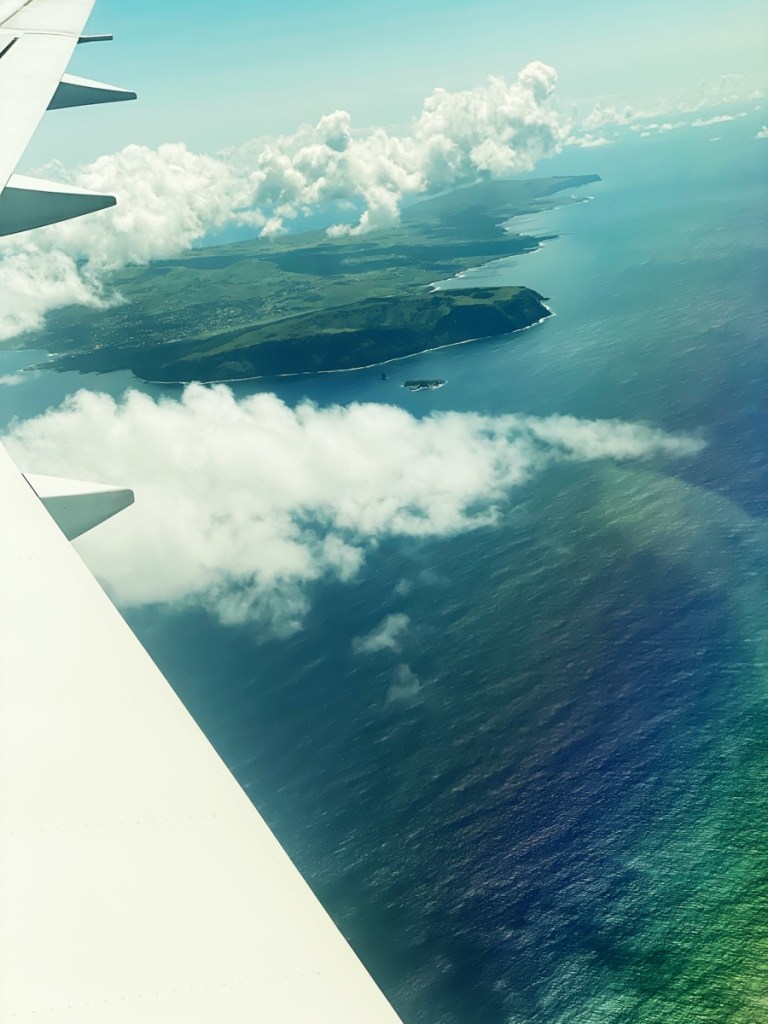
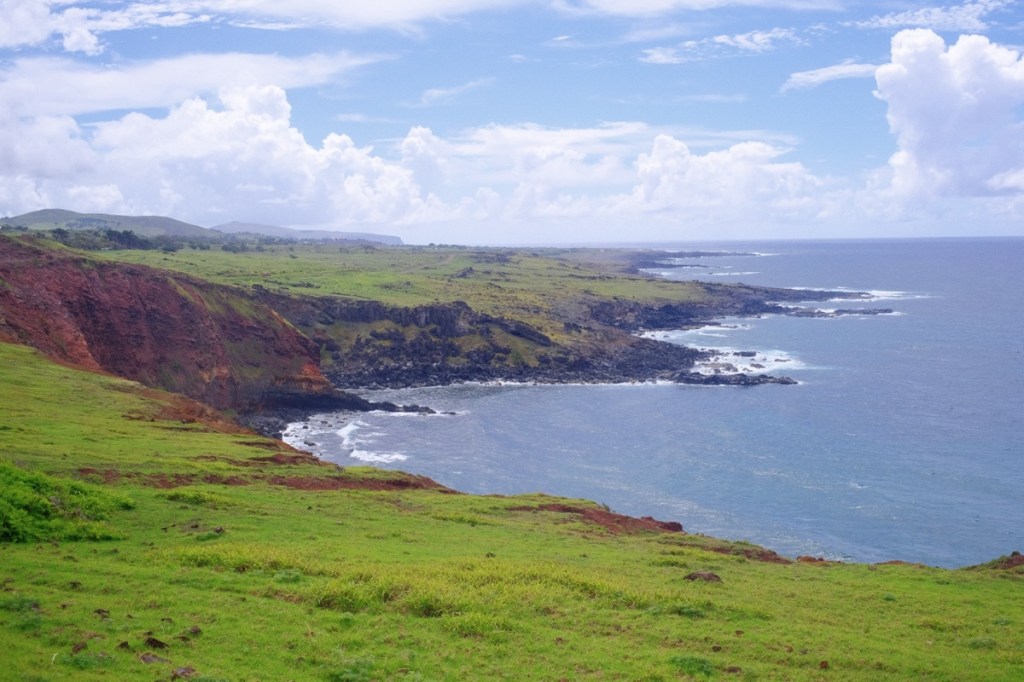
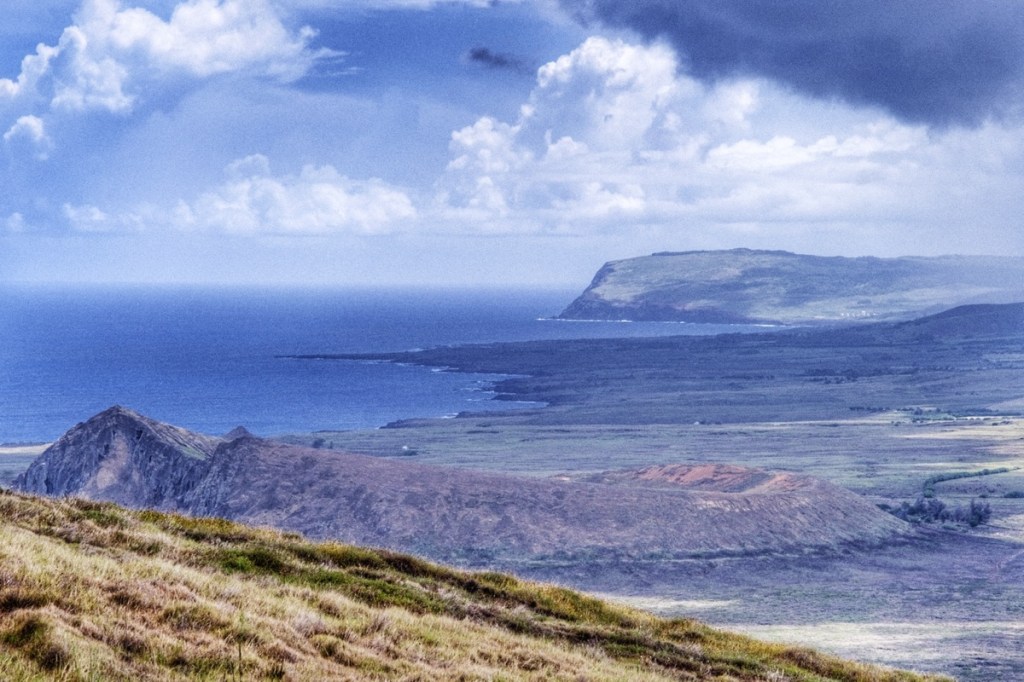
Every trip around the world should have its “end of the world” destination! And Easter Island fits the bill perfectly: 8000 souls on a rock lost in the immensity of the Pacific Ocean, 5000km away from the nearest continent and 2000km from the nearest neighbouring island.
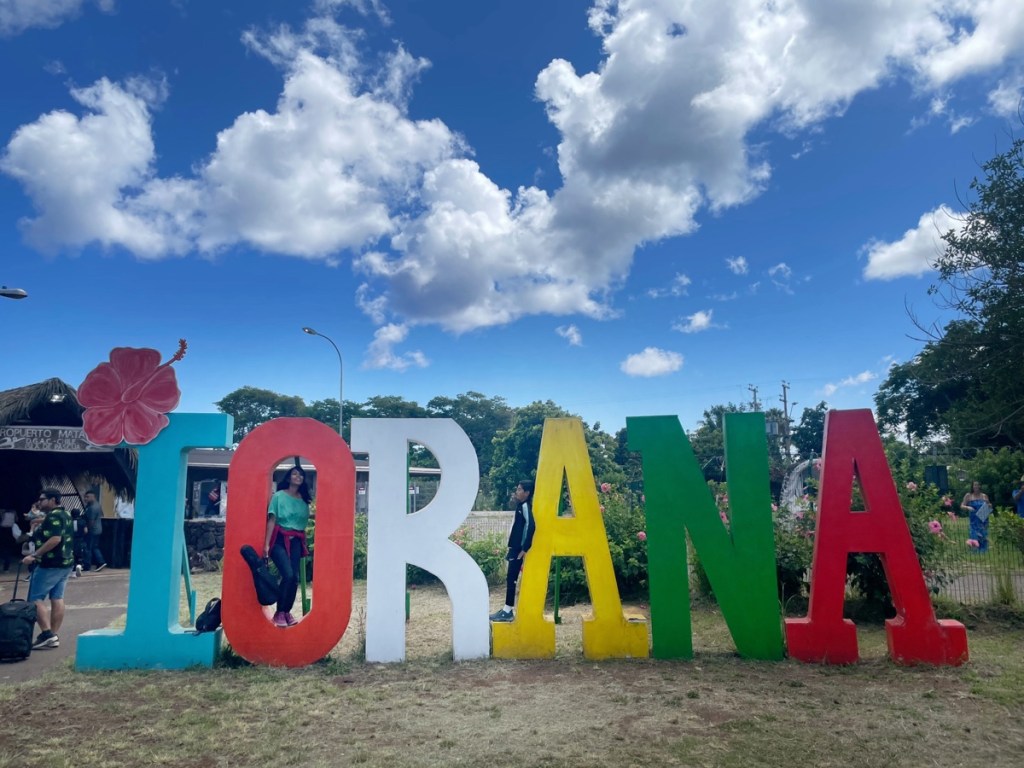
We landed on the island, almost like on an aircraft carrier, on a tarmac who’s length is almost the width of the island. Ground control is fairly straightforward here as there is only one flight per day, returning an hour later to Santiago. We got off the plane and passed a big sign saying IORANA. It means hello in Rapa Nui. Conveniently, it also means good bye, so the same sign can be used for arrivals and departures.
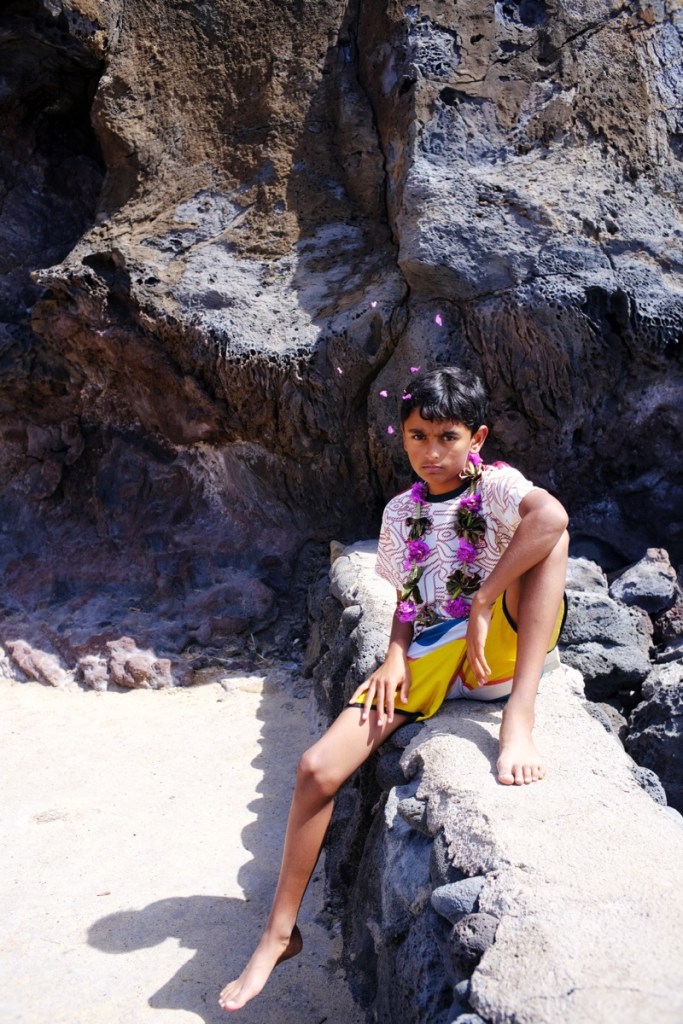
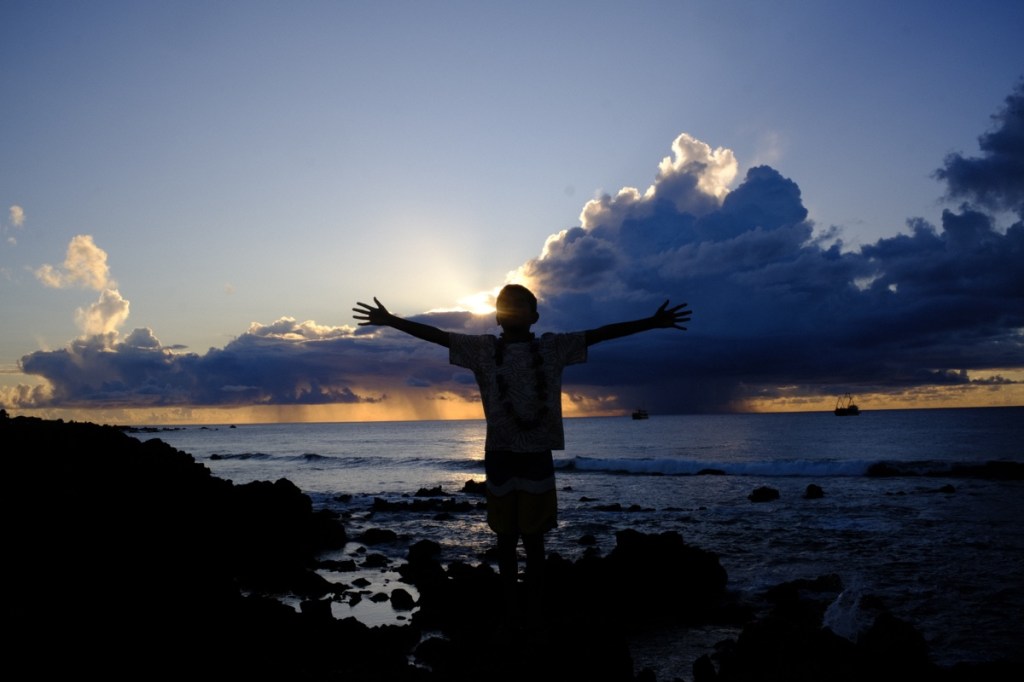
Patricia, our host was awaiting us and, following the Polynesian tradition, passed a flower necklace around our necks. We were happy to be picked up, for our heavy bags, but we simply walked with her, for 20mins to the hostel.
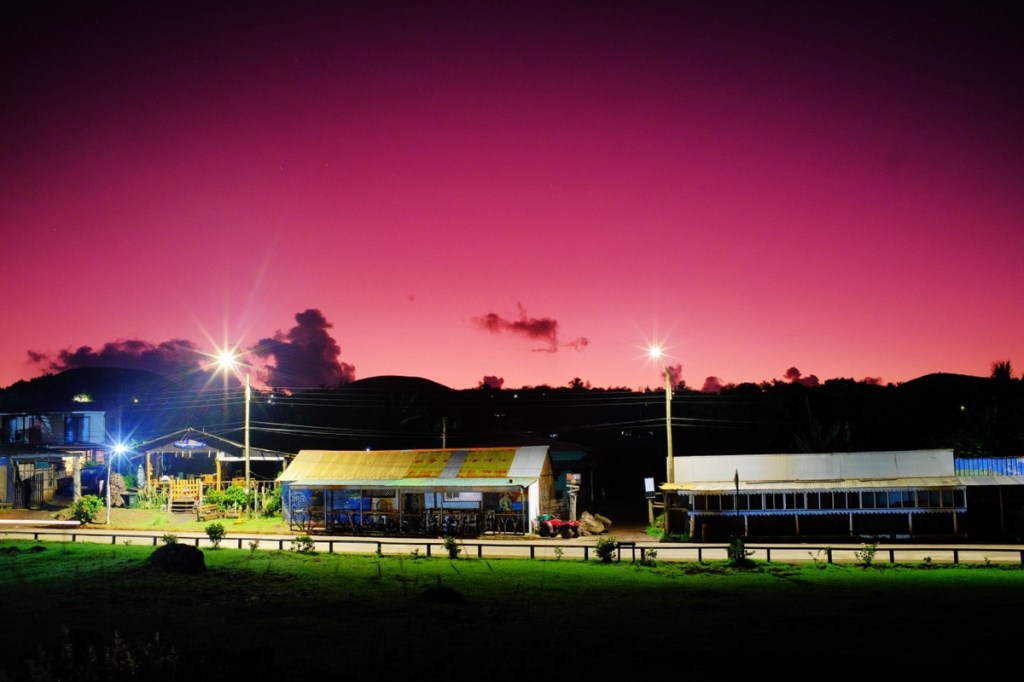
Everything is about the same price as in Paris. And much like in Paris, you can easily pay any small amount by card. In the end, the most notable difference with Paris is the total absence of Eiffel tower. And, yes, the fact that Paris is not a 150km2 volcanic island in the middle of the Pacific. Anyways.
The first Polynesians would have reached the island somewhere between 800ad and 1200ad. The name Rapa Nui, meaning « Big Paddle », would be derived from another another smaller island near Tahiti, called Rapa, which also has the triangular shape of an paddle.
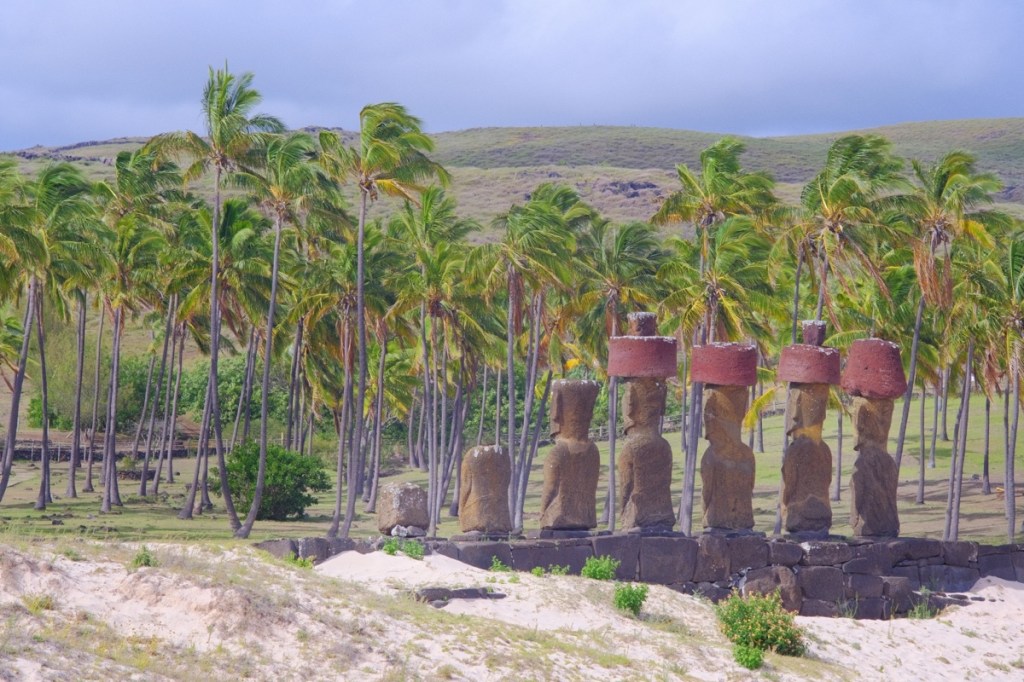
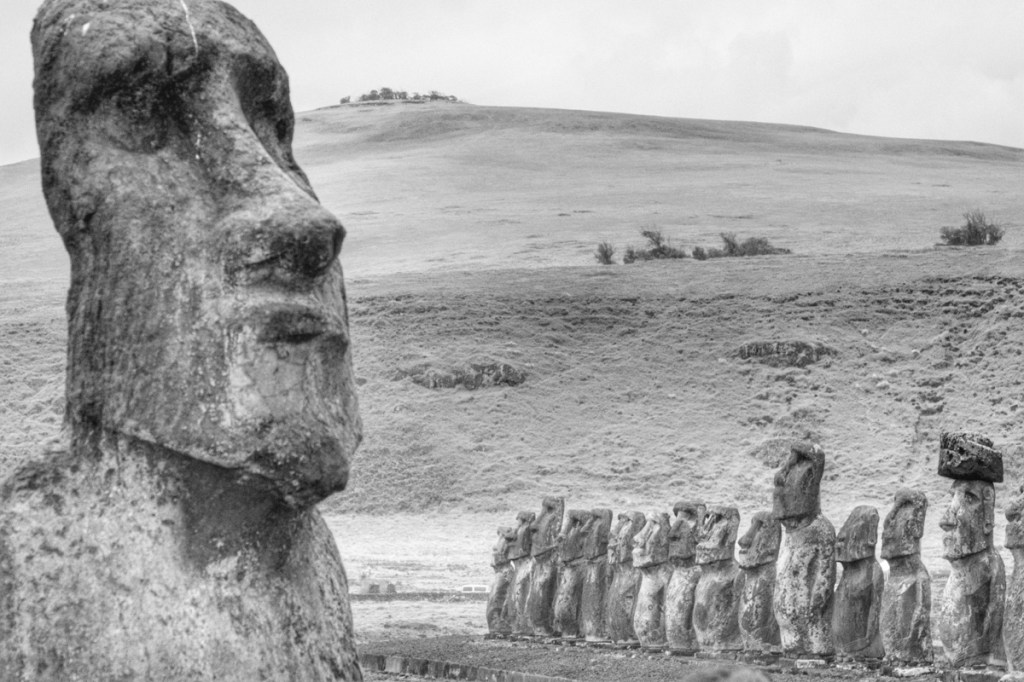
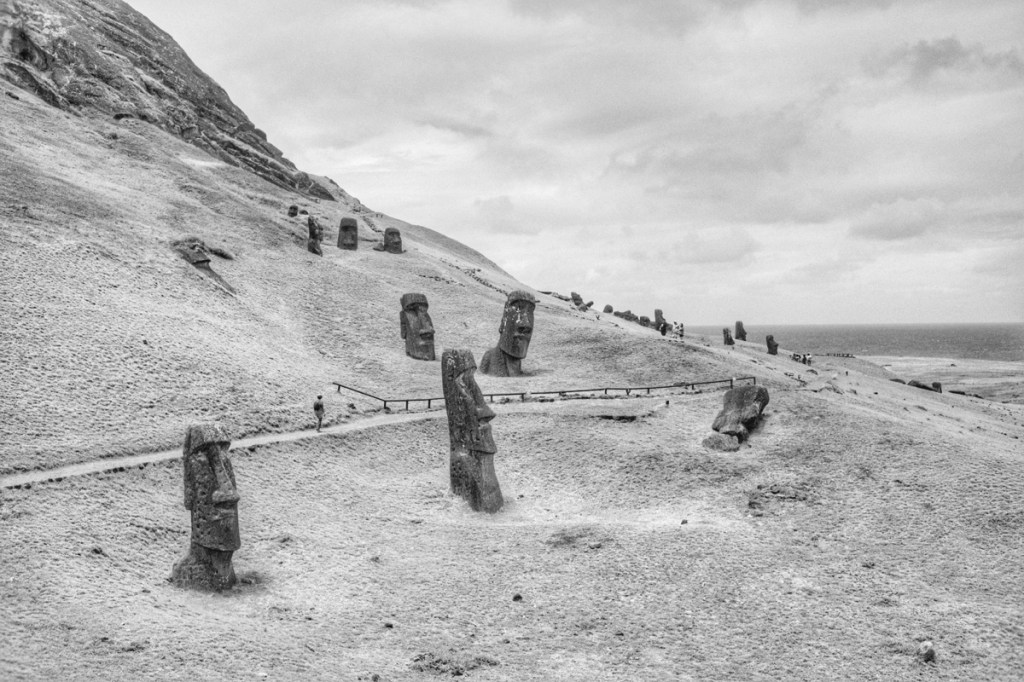
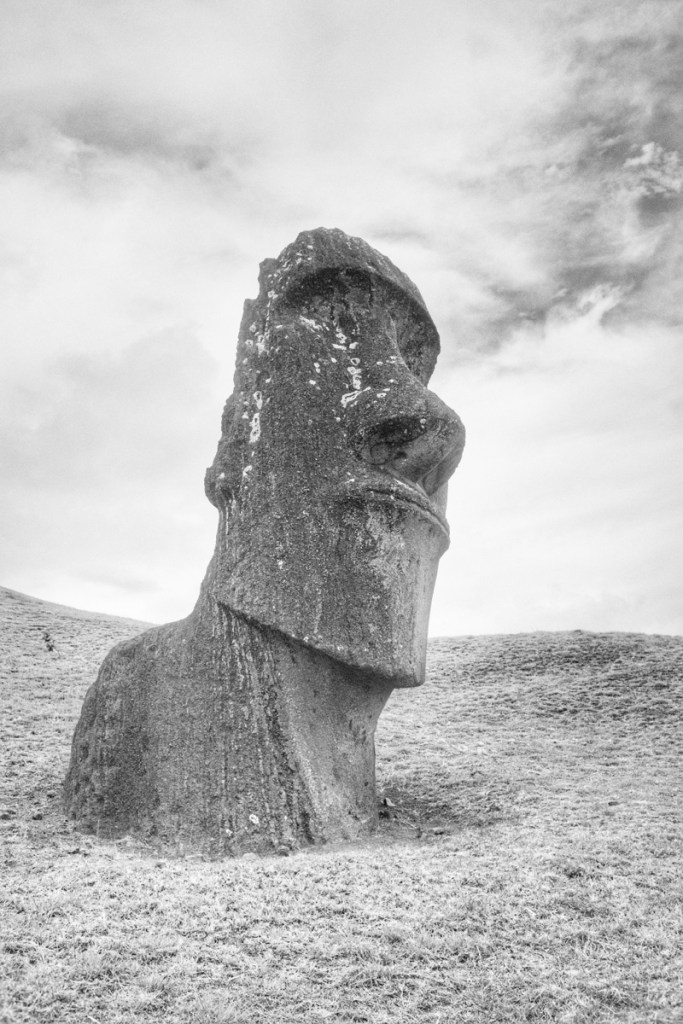
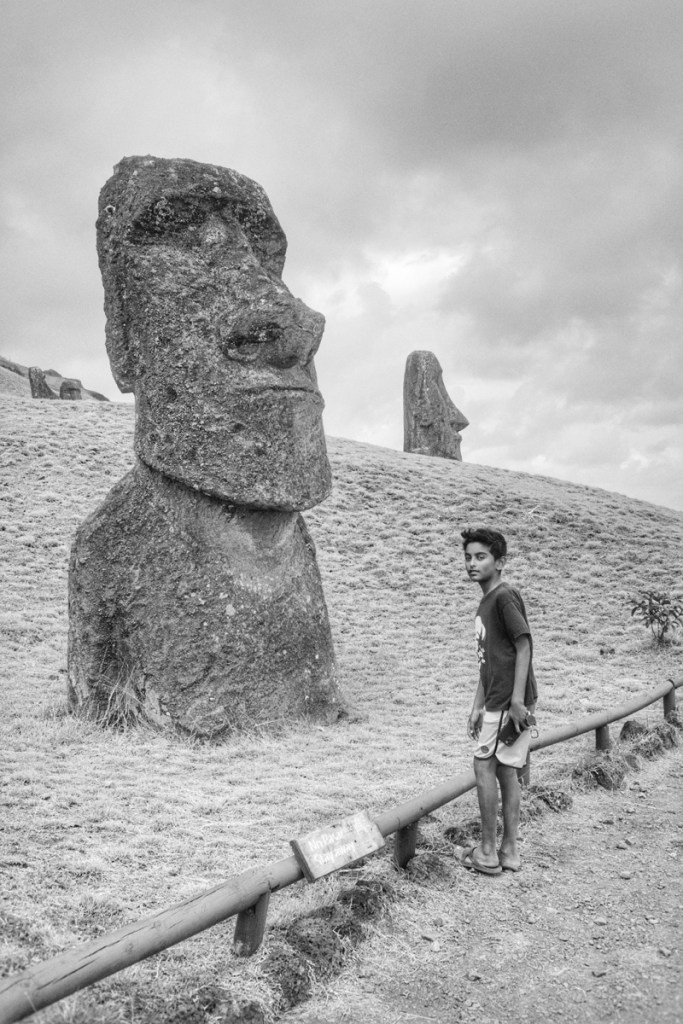
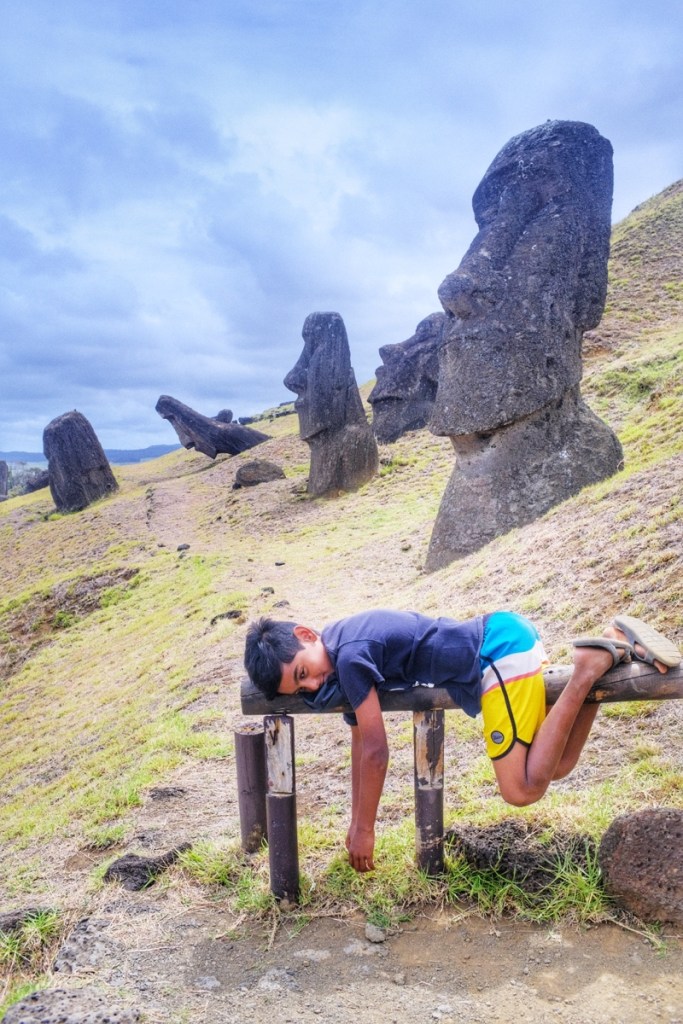
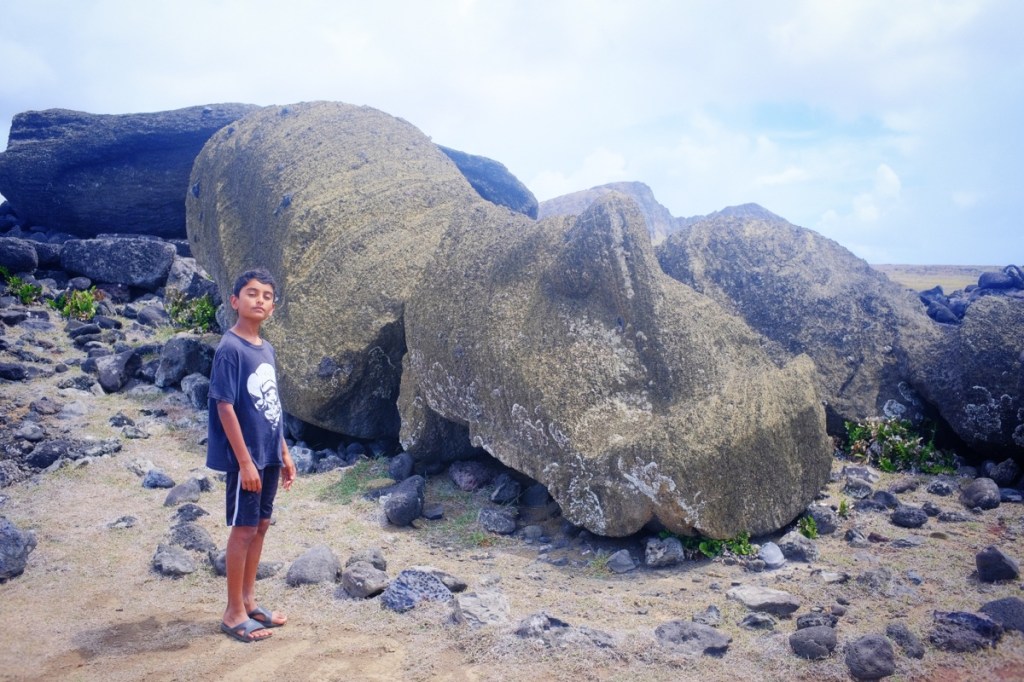
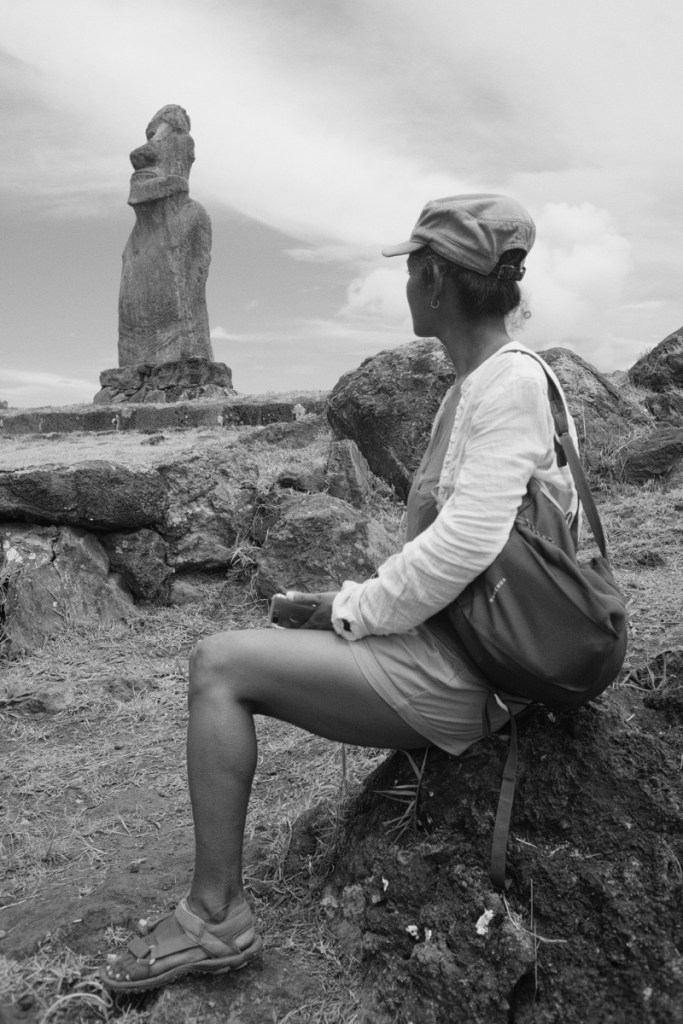
Rapa Nui is most famous for its Moais; massive sculptures of men torso and head, varying in size from 2 to 20 meters, often aligned on a Ohu, the platform on which they stand.
Each Moai stands on the tomb of an ancient member of the ruling class and is meant to keep his soul alive, to protect the island.
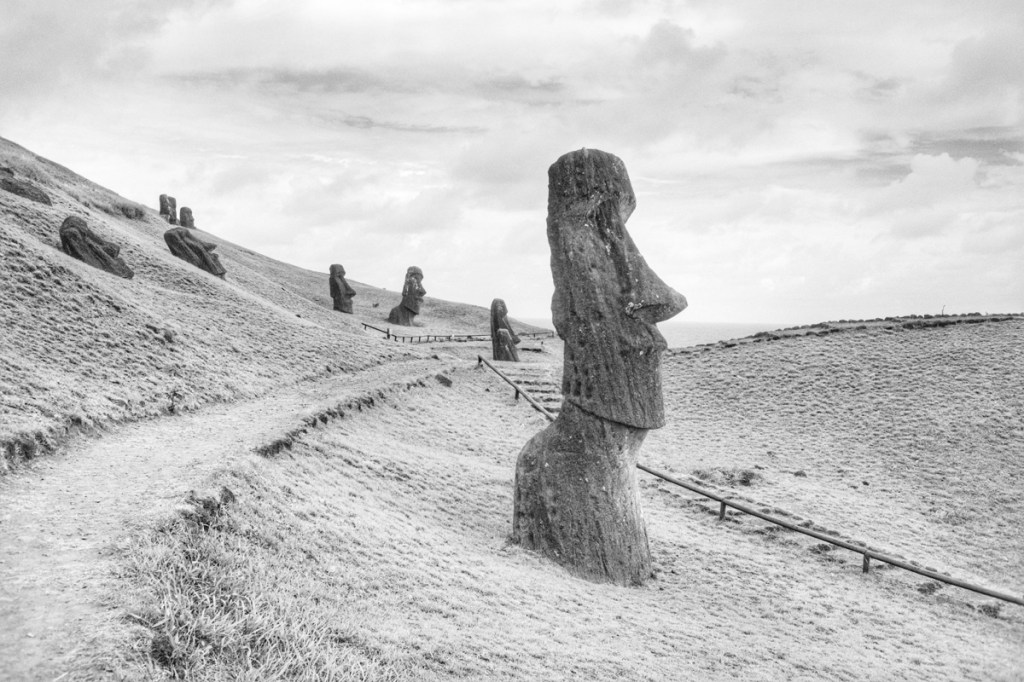
Much has been devised about how the Moais were transported from their place of manufacture to their Ohu. Turns out they just came “walking and dancing”! This is how the elders described the Moais pivoting on their base, like you do when you move your fridge!
The Moais protection story worked well for the ruling class for as long as the population was small and the land generous enough. After a while, somewhere around 1700, resources became scarce and people realised that the Moais weren’t protecting them much, so the ruling class was overthrown and the Moais pushed to the ground and abandoned.
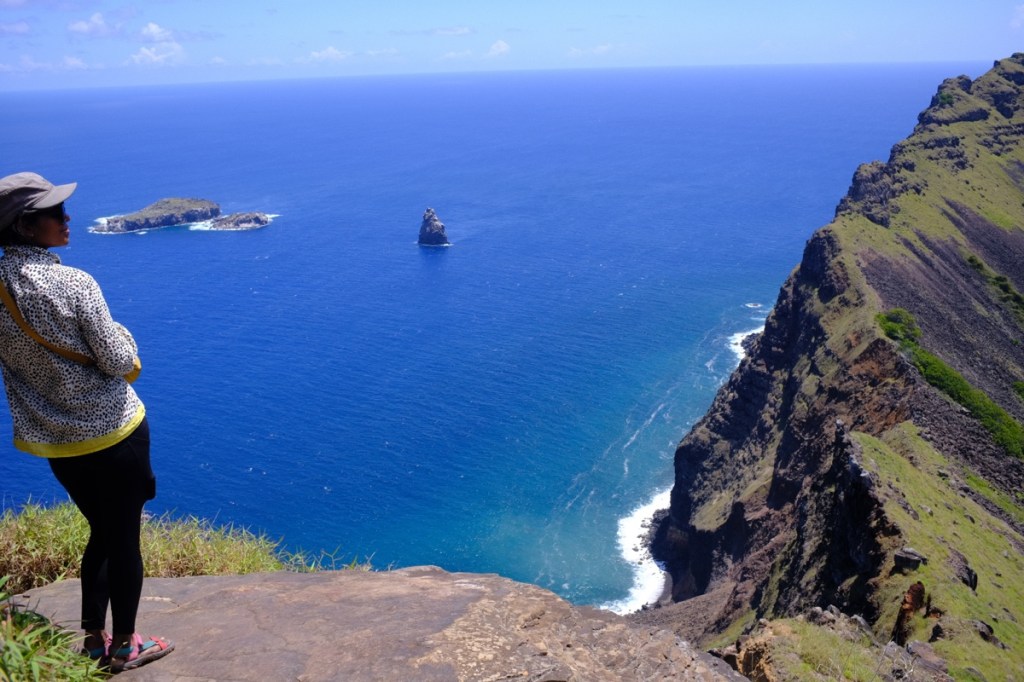
After that a new system was adopted, sightly more democratic -or meritocratic- where each year,, selected members of each clan (some 20 to 30 on the island) would compete to become Tangata Manu, the Birdman. The one capable of bringing the first egg of a migratory bird from a nearby islet, was turned into a deity. The ceremony, held in Orongo, in the south of the island, turned into a council of the elders.
Oh by the way, don’t take anything I write here for solid truth! I merely report -and interpret- whatever I understood from what some guide told me – which he himself reported and interpreted! .. You know, it’s like that moment where oral tradition is finally written down and makes the history books 😛
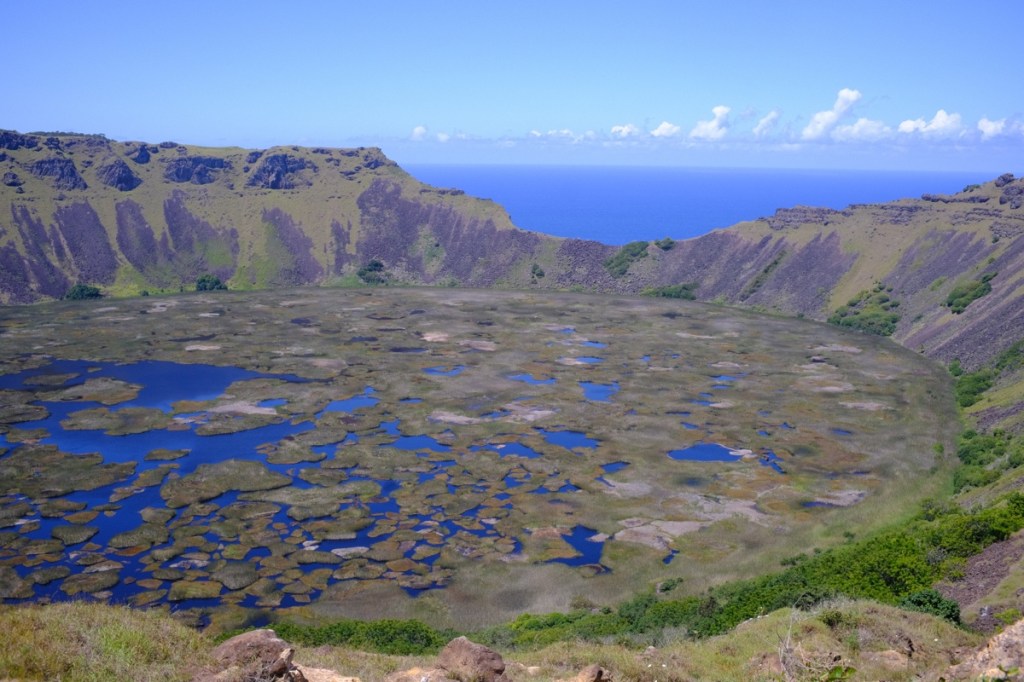
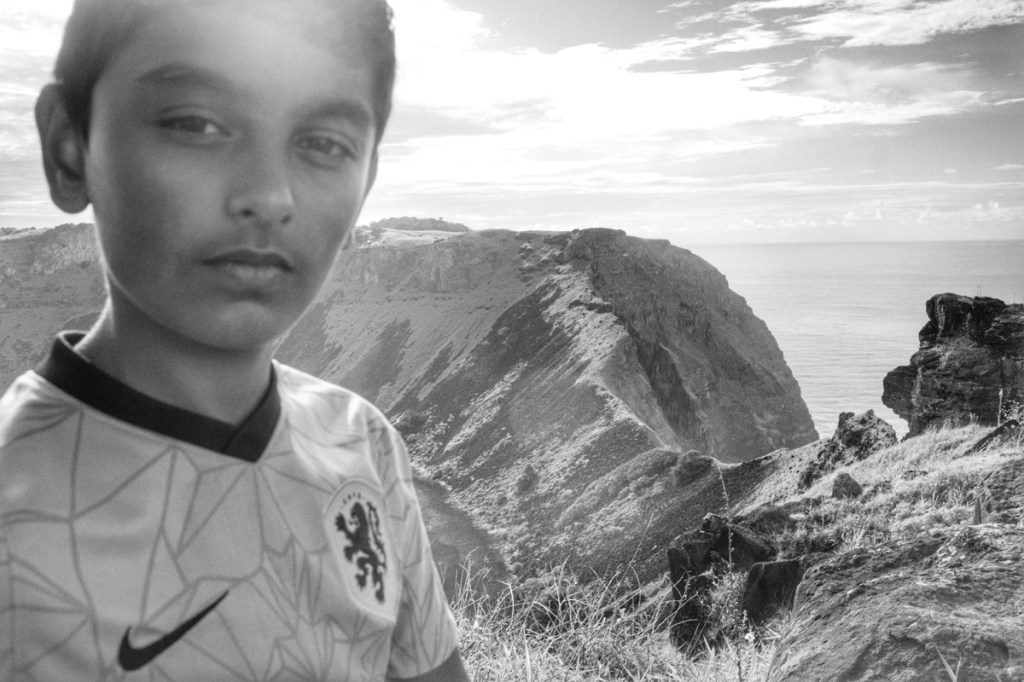
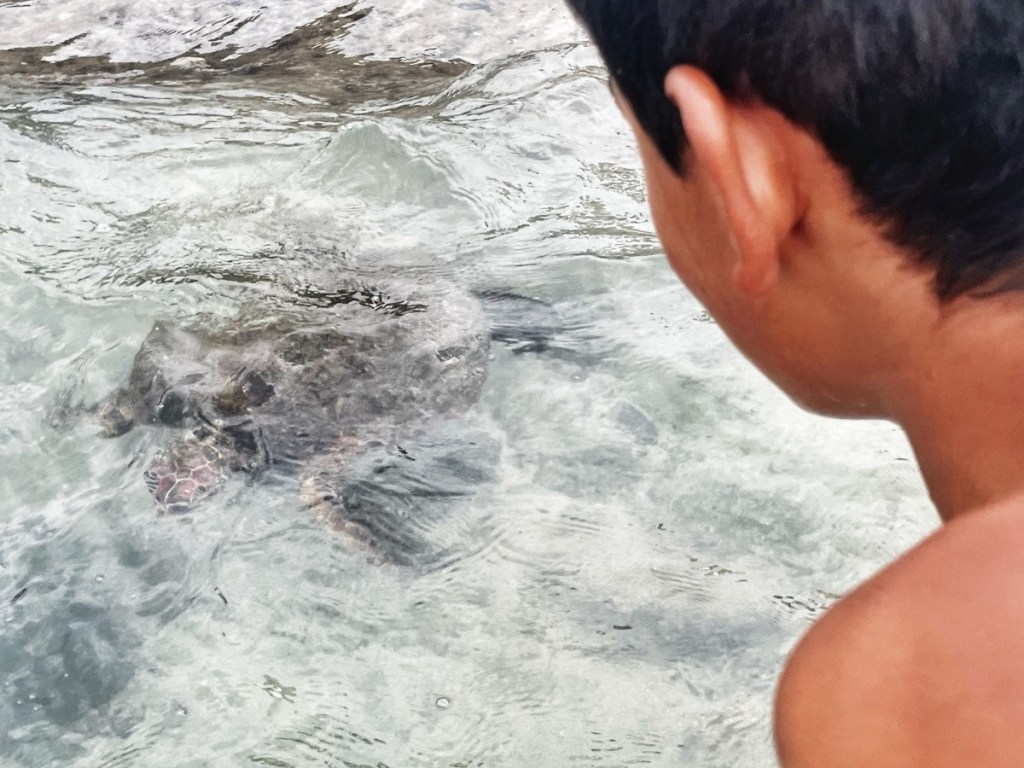
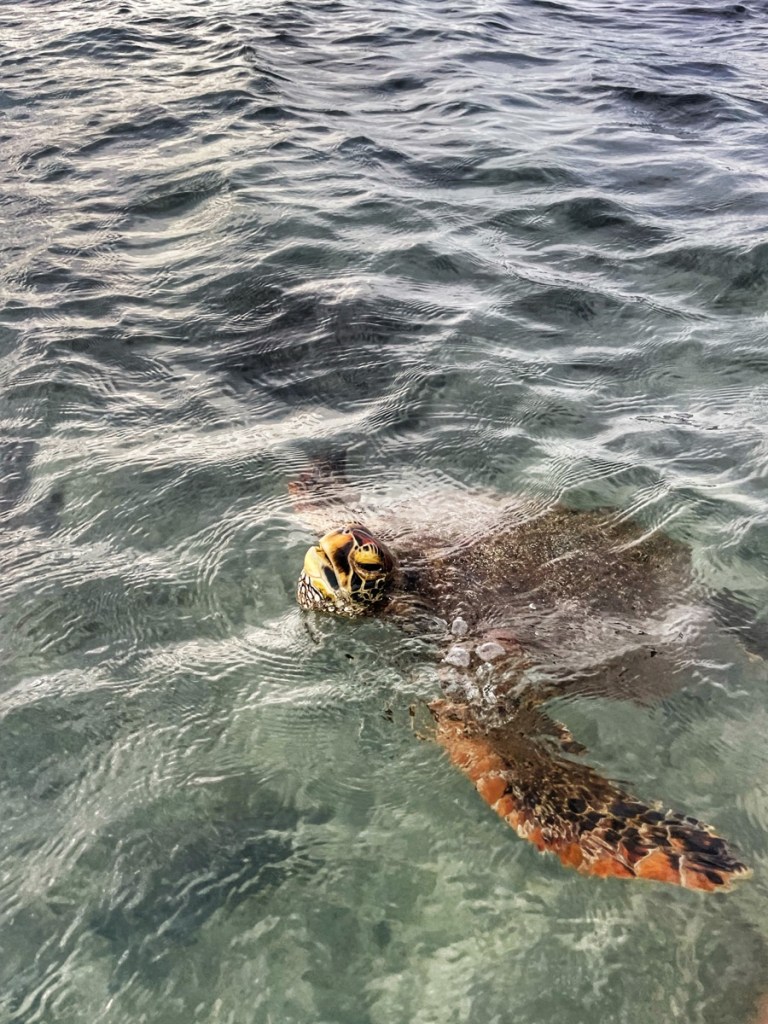
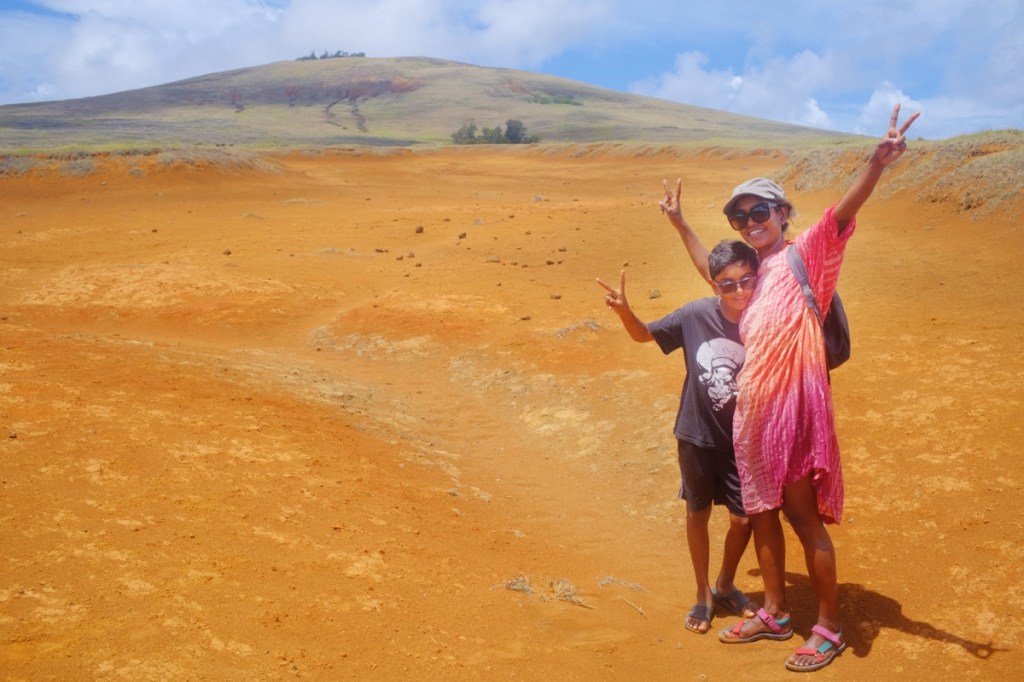
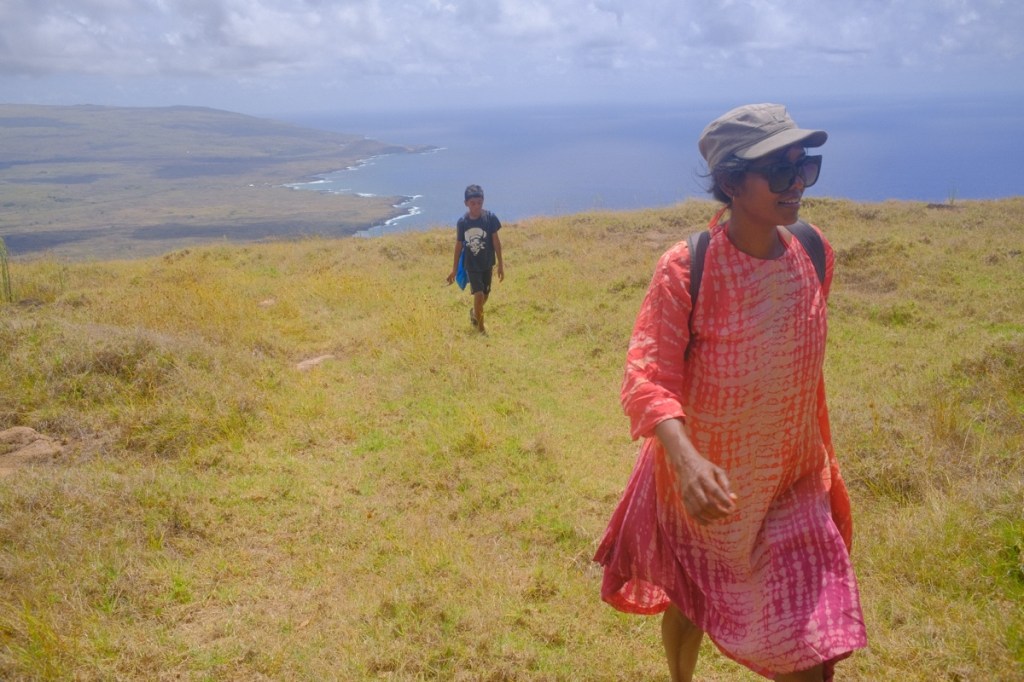
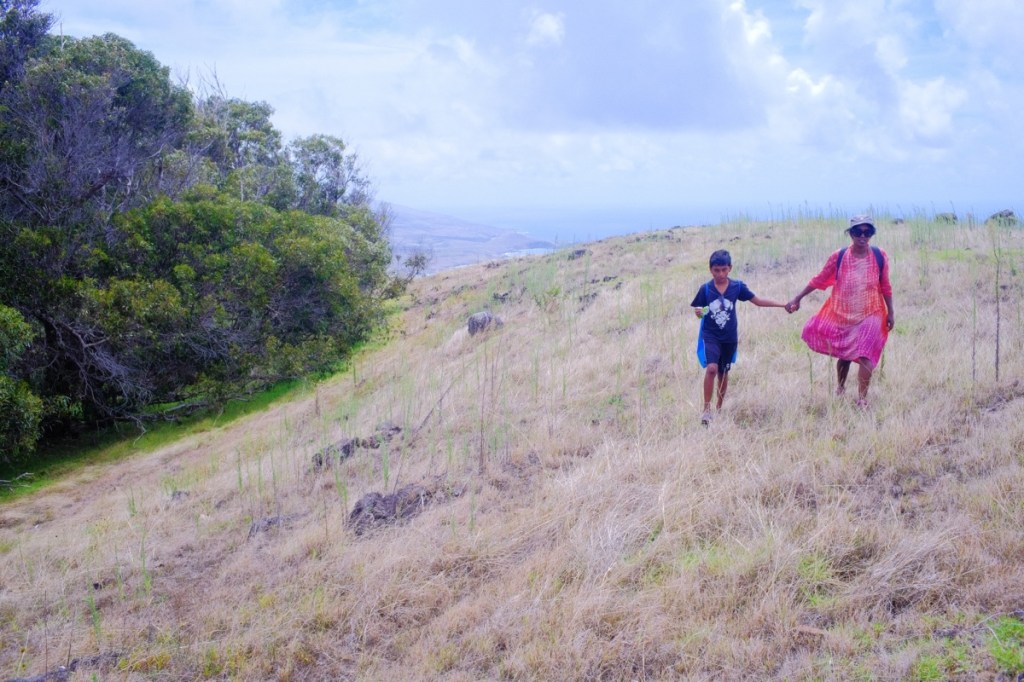
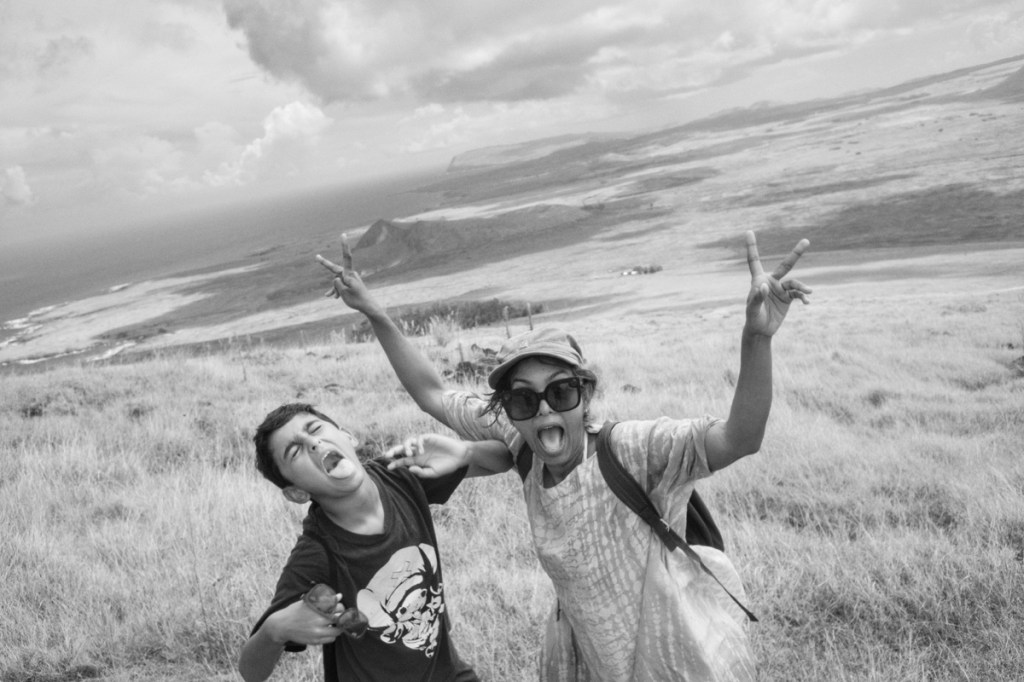
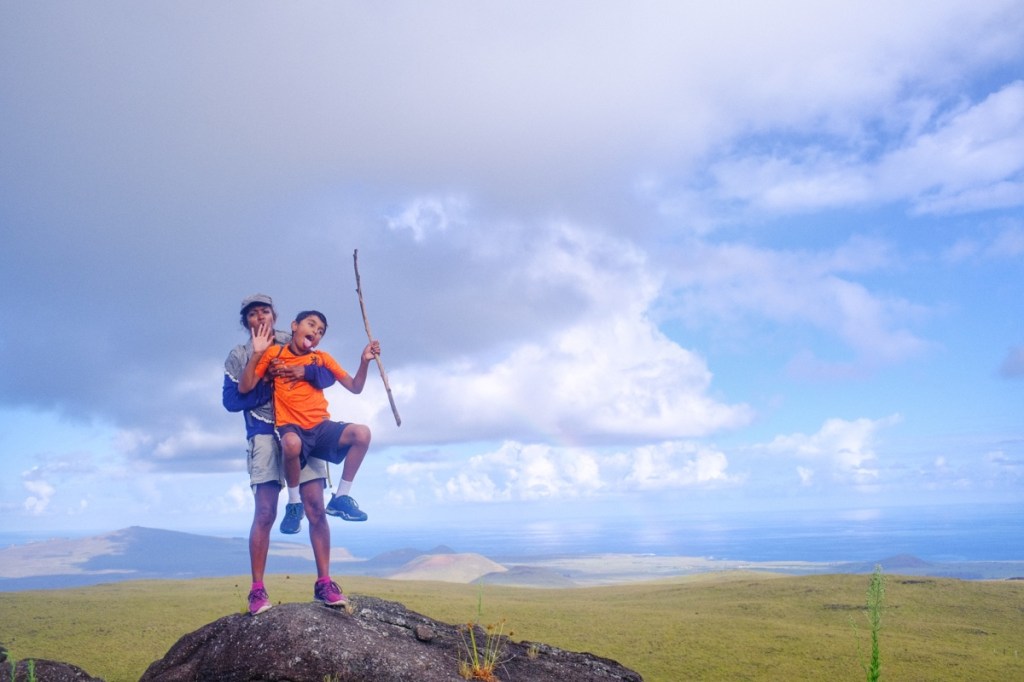
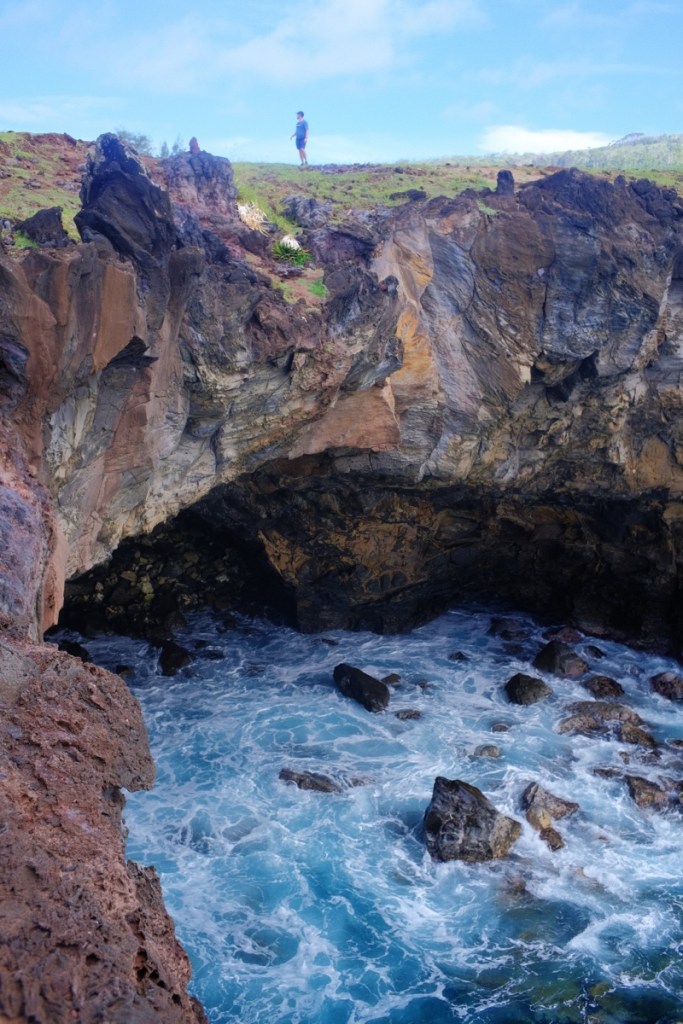
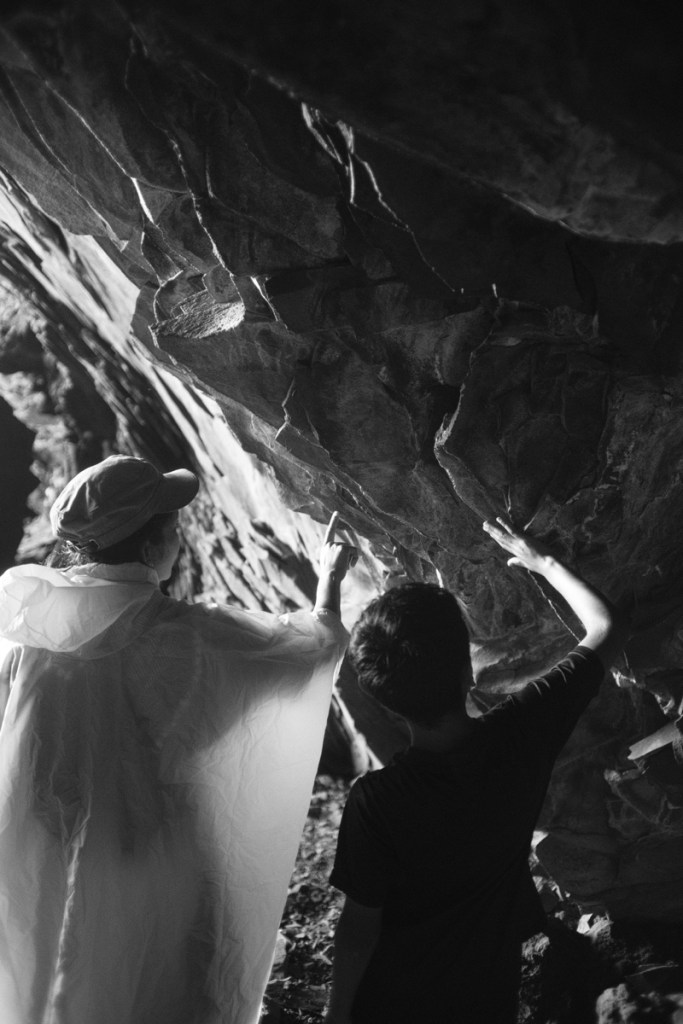
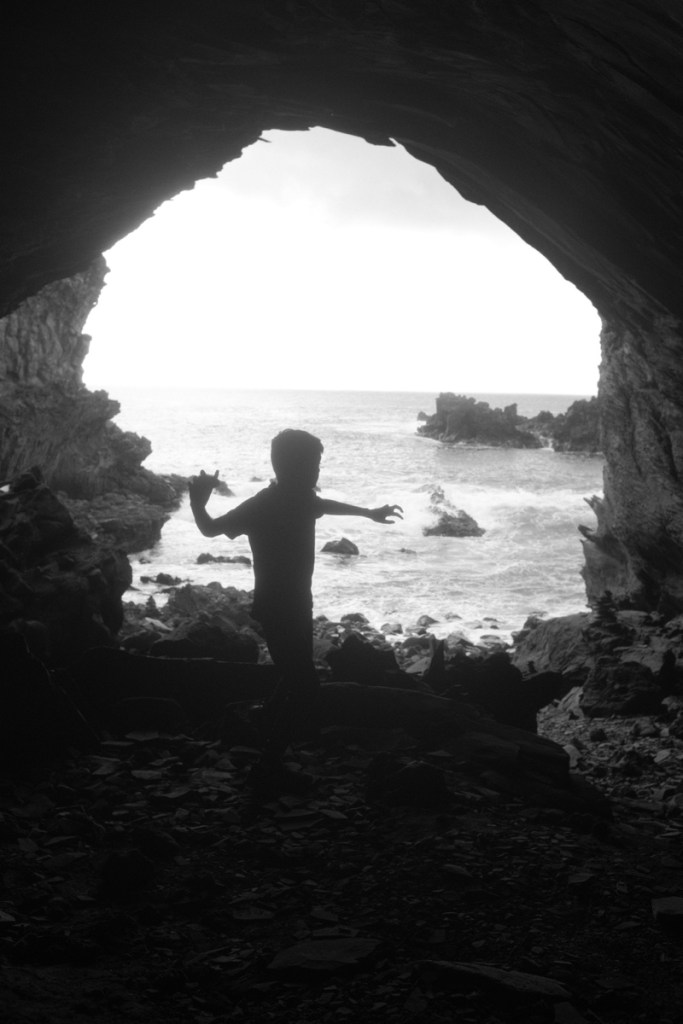
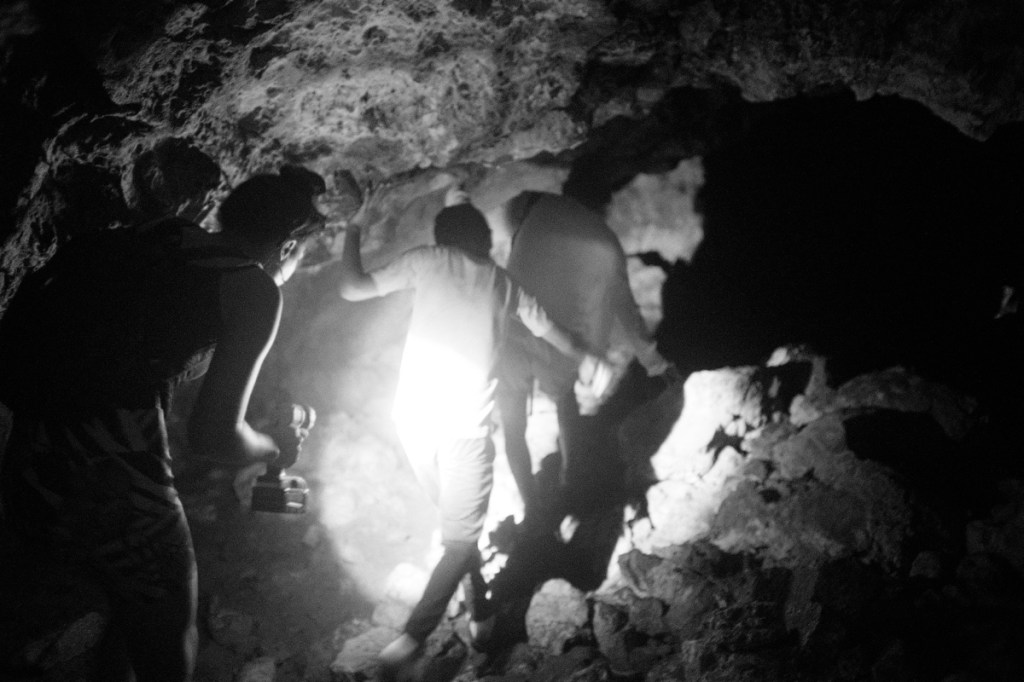
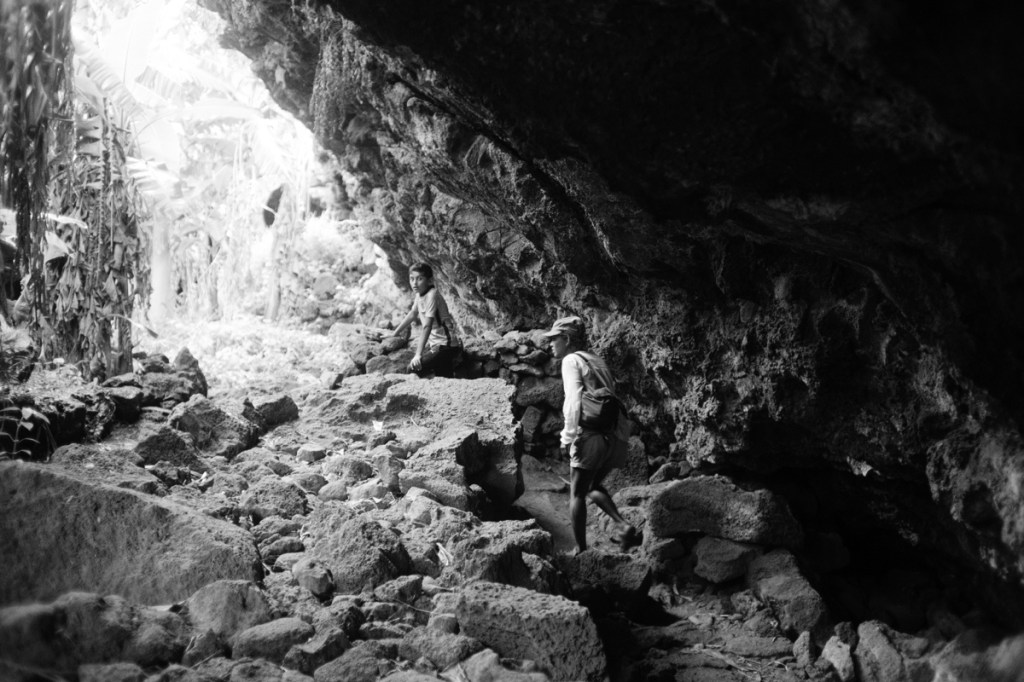
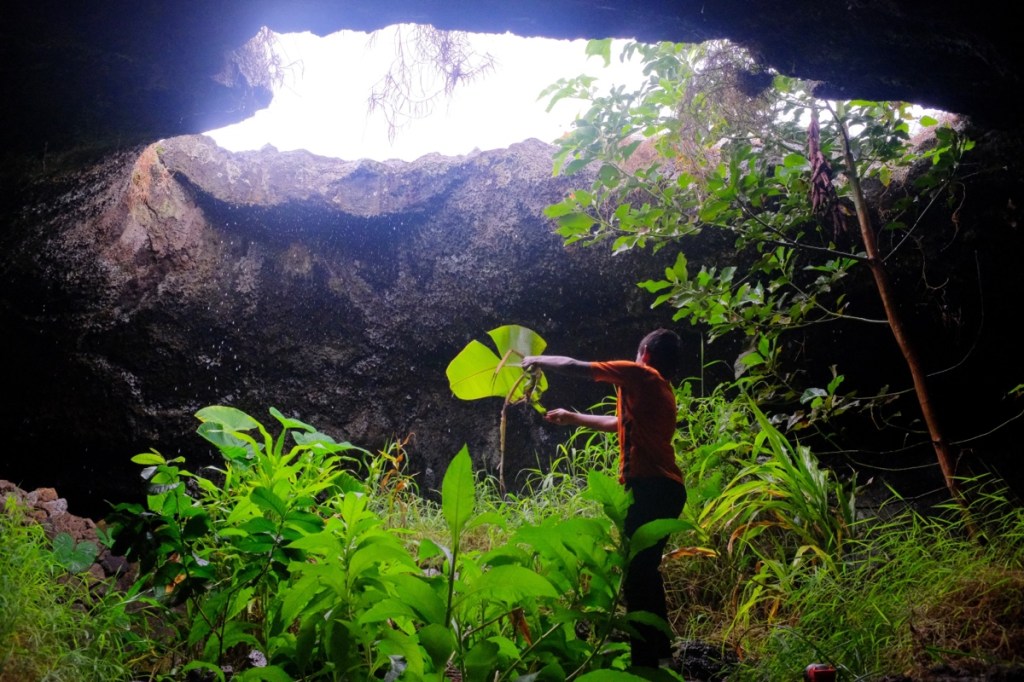
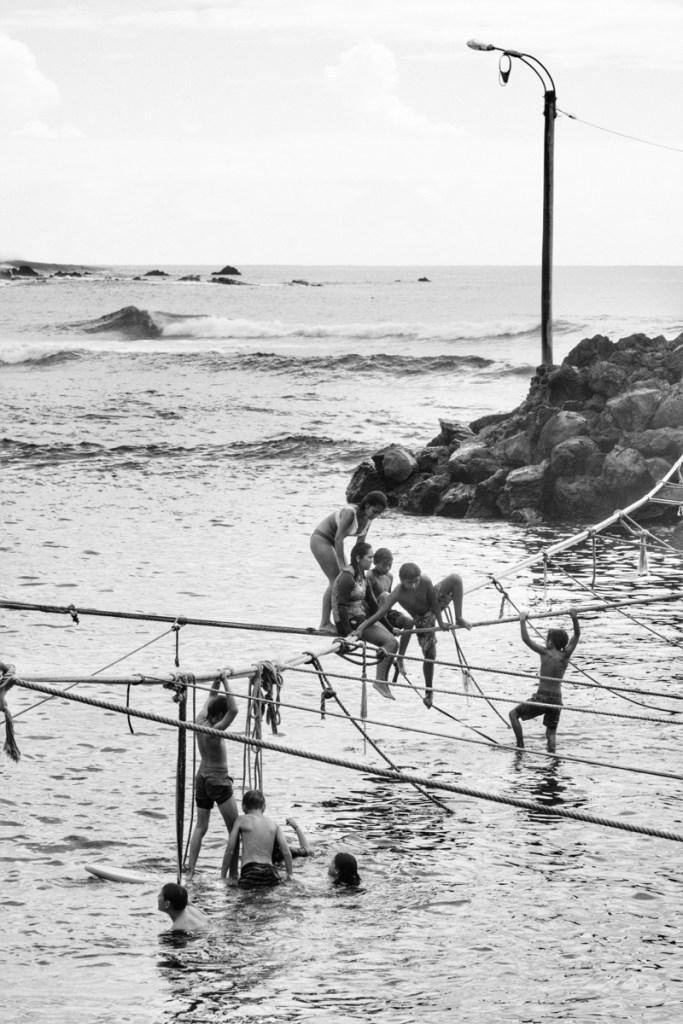
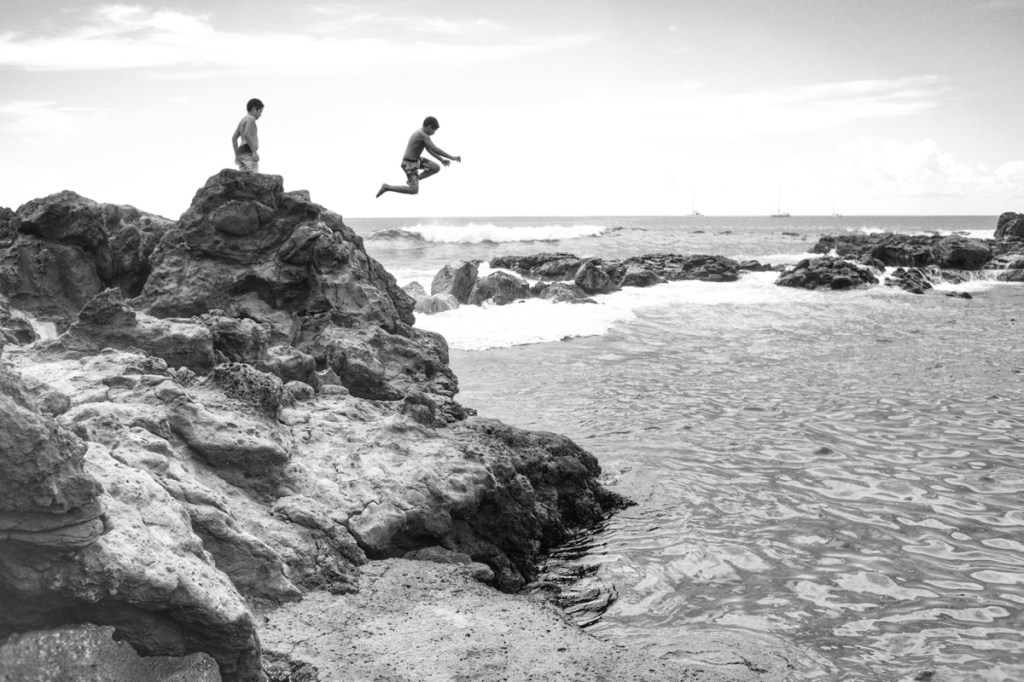
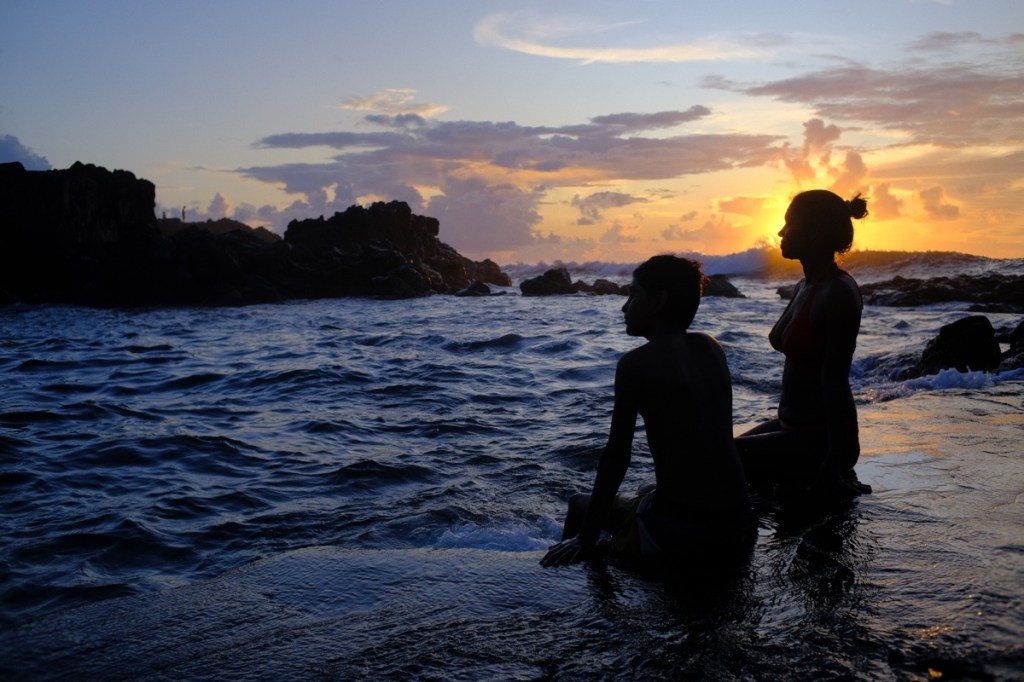
Besides listening to Moais stories, we also climbed the 3 main volcanoes that for the skeleton of the island, and visited gigantic underground galleries formed by flowing lava. And of course we bathed in the warm waters of the pacific, while big beautiful turtles came swimming right next to us ❤️
 Raahi - A traveling family